Science1 publisherNot yet confirmed elsewhere3 min readPublished
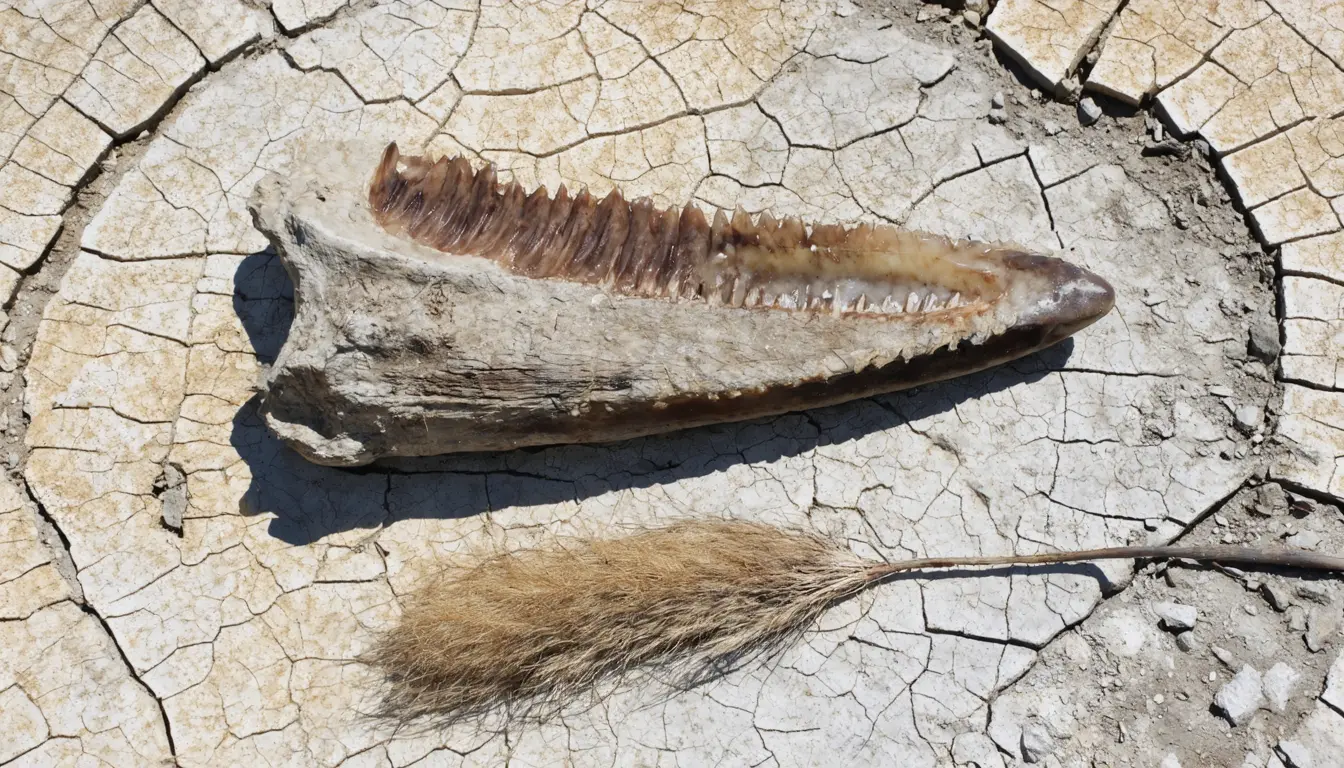
Capybara relative's 9-million-year-old molar points to a wet interval in the Atacama Desert
Researchers found a 9-million-year-old molar from a water-dependent capybara relative in Chile's Atacama Desert. It adds to evidence that the desert had wet intervals long after its hyperarid core began forming in the Eocene.
The Scientist · Science desk
What happened
- Microscopic plant remains from the site show that palms, grasses, gingers and other flowering plants grew there, possibly as a subtropical forest.
- Samantha Hopkins of the University of Oregon, who was not involved, said the tooth is too large to have been blown in by wind or carried far.
- The authors propose that the animals reached the site along South America's western coast, skirting an Andes barrier about 5,500 metres high.
Compiled by The ScientistSomething wrong?How this is made
Why it matters
- constraint Any account of how the Atacama dried out now has to fit a period wet enough for a semiaquatic grazer roughly 25 million to 39 million years after the hyperarid core began forming.
- capability The coastal-route proposal can be tested: if capybara relatives bypassed the Andes, their fossils should turn up along the Pacific side of the continent.
- constraint With one tooth from one site in a three-million-year layer, the find shows there was water at one place, and cannot yet show how long or how widely the desert stayed wet.
A single molar is a thin base for a claim about climate. Its weight comes from the habits of the animal it belonged to. Living capybaras, the largest rodents on Earth, stay close to stable freshwater and eat plants that need water to grow [4]. The driest part of the Atacama now gets less than 2 mm of rain a month, with the Chilean Coast Range blocking Pacific rain to the west and the Andes blocking Atlantic rain to the east [5][16].
"Finding a capybara tooth in a marine deposit in what today is one of the driest regions on Earth is just freakish," Priscilla Martinez, a University of Arizona geoscientist and co-author of the paper in Scientific Reports, said in a statement [7][2].
Samantha Hopkins, who teaches Earth sciences at the University of Oregon and had no role in the research, told Live Science it is unlikely the tooth reached the site without capybaras living there [12]. "If you wanted to find a way that this capybara could be here while the Atacama was still as dry as it is today, you'd have a hard row to hoe," she wrote [13]. Large carcasses can float for miles, she noted, but "if you're going to invoke a large enough waterway to do this, you've demonstrated that the Atacama wasn't as dry as it is today anyway" [14].
The plant record points the same way. Microscopic plant fragments called phytoliths show that palms, grasses, gingers and other flowering plants grew at the site [9]. One animal proxy and one botanical proxy agreeing is a stronger design than either alone. Earlier work has reported that the Atacama was once wet enough for crocodiles and freshwater fish [10].
Recent research puts the start of the hyperarid core between 47.8 million and 33.9 million years ago, about 20 million years before the Andes formed, and suggests the mountains intensified the dryness without causing it [6]. The capybara lived roughly 25 million to 39 million years after that onset [17]. The tooth tests whether the desert stayed hyperarid without a break once it began drying, and the evidence from this site says it did not. Live Science frames the result as support for the hypothesis of "a sporadically moist Atacama" [11].
How the animals got there is less settled. According to Live Science, the researchers are not sure; the Andes stood as a barrier about 5,500 metres high between the animals' habitats and the fossil site, so the team proposes a route along South America's western coast, following wetlands and rivers [19]. The paper's title calls it "a transcontinental dispersal pathway" [2]. Capybaras do not live in Chile today, according to the International Union for Conservation of Nature [15].
The tooth came from a layer recording a shallow sea between 7 million and 10 million years ago [8], a window of three million years [18]. The published account does not give the duration of the wet conditions or their extent beyond this one site.
What to watch
- Late Miocene fossil or phytolith finds from other Atacama localities, which would show whether the wet interval was regional or confined to this site.
- Capybara-relative fossils along Chile's or Peru's Pacific margin that would support or undercut the proposed coastal dispersal route.
Clarity's read
What the record supports and how the coverage leans. The claims behind it follow.
Reality
- Evidence55
- Adoption
- Insufficient
- Hype gap+10
- Incentives
- Insufficient
- Confidence50
Claim ledger
Ranked by verification strength, evidence, and original report placement.
- [1]
Researchers discovered a roughly 9 million year old molar belonging to a large, water-loving extinct relative of modern capybaras in the Atacama Desert of northern Chile.
- [2]
The study, by Gutstein, Martinez and colleagues, was published Sept. 5 in Scientific Reports under the title 'Late Miocene capybara in the Atacama Desert reveals a wetter climate and a transcontinental dispersal pathway.'
- [3]
The fossilized molar adds to previous evidence suggesting it is unlikely the Atacama was continuously dry for the last 40 million years.
- [4]
Capybaras, the world's largest rodent, exclusively live close to stable freshwater sources and feed on plants that also require water to grow.
- [5]
The driest part of the Atacama's hyperarid region gets less than 2 mm of rainfall a month.
- [6]
Recent research estimates the Atacama's hyperarid core started forming between 47.8 million and 33.9 million years ago, in the Mid- to Late-Eocene, 20 million years before the Andes formed, suggesting the mountains were not the cause of aridification and may have only intensified it.
- [7]
"Finding a capybara tooth in a marine deposit in what today is one of the driest regions on Earth is just freakish," Priscilla Martinez, a geoscientist at the University of Arizona and co-author, said in a statement.
- [8]
The tooth was found in a layer holding the remains of a shallow marine environment that existed between 7 million and 10 million years ago.
- [9]
Researchers also found phytoliths, microscopic pieces of plants, revealing that palm trees, grasses, gingers and other flowering plants grew there, in what may have been a subtropical forest.
- [10]
A growing body of evidence indicates the Atacama Desert was once wet enough for crocodiles and freshwater fish to thrive and palms to grow.
- [11]
Live Science reported that capybara relatives living there in the late Miocene, as semiaquatic animals, are further evidence for the hypothesis of a sporadically moist Atacama.
- [12]
Samantha Hopkins, an Earth sciences professor at the University of Oregon not involved in the study, said it is unlikely the tooth reached the site without capybaras living there; the tooth's size makes long-distance transport hard, desert wind could not have blown it that far, and large carcasses can float down waterways for miles.
- [13]
"If you wanted to find a way that this capybara could be here while the Atacama was still as dry as it is today, you'd have a hard row to hoe," Hopkins told Live Science in an email.
- [14]
"if you're going to invoke a large enough waterway to do this, you've demonstrated that the Atacama wasn't as dry as it is today anyway."
- [15]
Capybaras are native to South America but today are not found in Chile, according to the International Union for Conservation of Nature.
- [16]
The Atacama is bounded by the Chilean Coast Range to the west, which blocks rain from the Pacific, and the Andes to the east, which obstruct rain from the Atlantic.
- [17]
The capybara relative lived roughly 25 million to 39 million years after the Atacama's hyperarid core began forming.
- [18]
The marine layer holding the tooth spans a window of about three million years.
- [19]
The researchers are not sure how capybaras reached the Atacama; the Andes formed a barrier about 5,500 metres (18,000 feet) high between their habitats and the site, and the researchers theorized the animals migrated along South America's western coast following wetlands, rivers and other water sources.
Sources
1 independent publisher whose own reporting we read for this story.
Topics and entities
Follow any of these and your For You feed starts watching them — no settings page required.
Entities
- Atacama DesertFollow
- Scientific ReportsFollow
- Priscilla MartinezFollow
- Samantha HopkinsFollow
- University of ArizonaFollow
- University of OregonFollow
- International Union for Conservation of NatureFollow
- CapybaraFollow