ProductNot yet confirmed elsewhere1 publisher2 min readPublished
Ukraine's Buntar Aerospace raises $16 million to grow beyond one reconnaissance drone
Ukrainian drone maker Buntar Aerospace raised $16 million, taking its total to $30 million, to build more and reach beyond reconnaissance. The defense and civilian lines that money is meant to open are still plans without product names.
The Product Desk
What happened
- Freedom Fund and an unnamed international growth equity investor led the round, with Gardar, Iron Wolf and Autonomy Capital also taking part.
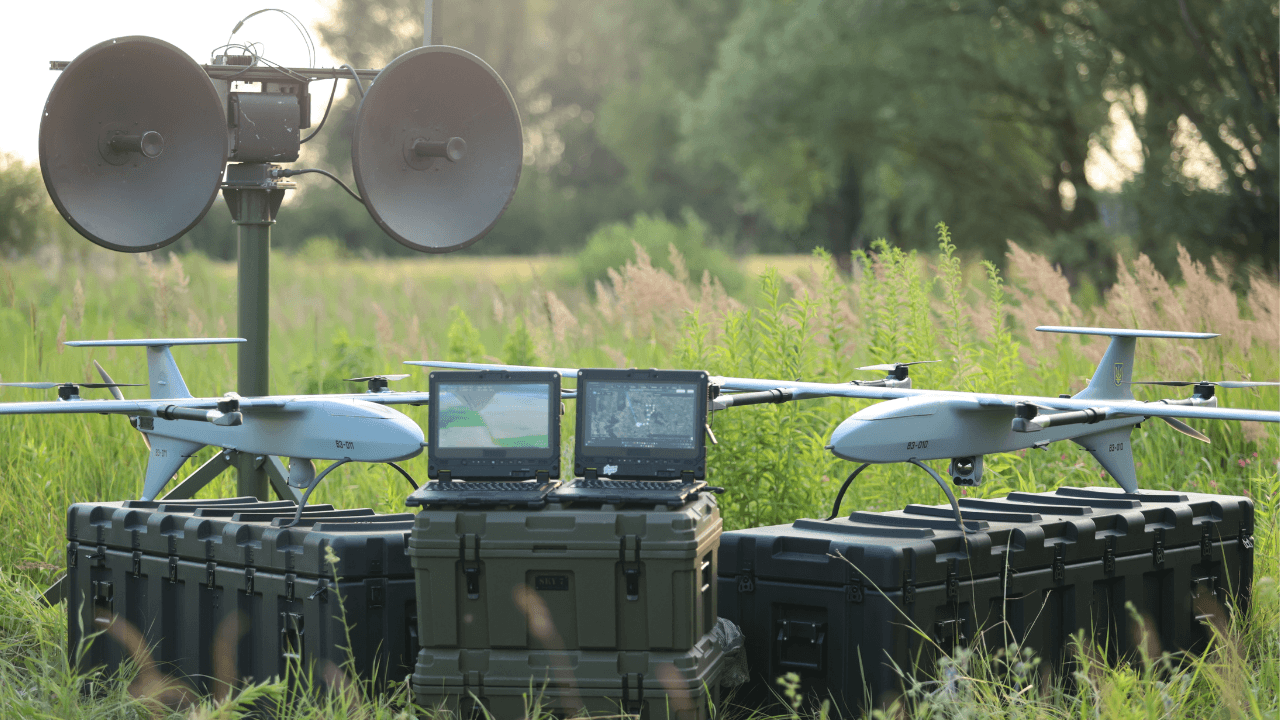
- Buntar's business today rests on two products, the Buntar-3 reconnaissance drone and Buntar Copilot, AI software built to support drone operations in combat.
- Co-founder Bohdan Sas argues that Europe's growing defense budgets should go first to drones, software and trained operators, with traditional military hardware behind them.
- Dealroom figures cited in the announcement put European defense-tech venture funding at $7.4 billion this year, with US investors supplying 47 percent of it.
Why it matters
- decision Anyone evaluating Buntar now can only trial Buntar-3 with Copilot, so the counter-drone and strike-assistance work has to be taken on the company's word until a product exists.
- capability If Copilot automates as much flight and sensor handling as Buntar says, units can put drones up with operators who need less training, the shortage Sas's mission list is aimed at.
- constraint Because Buntar plans to keep doing R&D while it scales manufacturing, we'd expect the drone and software that units receive to keep changing as volume grows, and buyers will have to track versions in the field.
On a reconnaissance flight, a frontline drone operator has to handle the aircraft and its sensor while also deciding what the unit should do with what they see [8]. Buntar Copilot is the company's software for that person. It is meant to automate parts of the mission so the operator can concentrate on operational decisions [8].
Here's what users actually do: frontline units buy the drone and Copilot as a pair, and Buntar says that pairing has built a growing customer base among them [6]. Here's what the company says it is building toward: a multi-domain defense autonomy business with international reach [13].
For Buntar, the round is large. The company had raised $14 million before it [16], so this one is about 53 percent of all the capital it has taken in [17]. Two of the stated uses are about scale: more manufacturing capacity, and more engineering and operations staff [4]. The third is expansion beyond intelligence, surveillance and reconnaissance into other defense and civilian applications [4].
Dealroom figures cited in Buntar's announcement count $4.7 billion raised by drone startups across 40 rounds [12]. That is a simple average of about $118 million a round [18]. Buntar's $16 million is about 14 percent of it [19].
The next products are described as missions. "We're targeting the missions that depend most on highly trained operators: reconnaissance, counter-drone defence and precision strike assistance. That's what Ukraine needs today, and what Europe must be ready for tomorrow," co-founder Bohdan Sas said in a statement [7]. Interesting Engineering, which reported the round, wrote that automating such missions could become vital as militaries field more unmanned systems and face pressure to train operators faster [15]. On the dual-use side, the company has not detailed specific new products or the commercial markets it intends to enter [9].
We think anyone evaluating Buntar should judge it on the drone and copilot that units fly today, and treat the other lines as roadmap. The tradeoff lands on investors more than on units. The round is pitched on the larger company Buntar describes, and a valuation built only on the current pair would describe a smaller one [13].
Two tests sort each line of the plan: whether it has a named product, and whether users already have that product in hand. Buntar-3 and Copilot pass both [5][6]. Counter-drone defense and precision-strike assistance pass neither yet, though Sas has tied both to a stated Ukrainian need [7]. Civilian applications fail both tests, backed so far by a plan to adapt defense technology for civilian markets [9].
What to watch
- Buntar naming a counter-drone or precision-strike-assistance product, with a delivery date for Ukrainian units.
- Disclosure of the international growth equity investor that co-led the round alongside Freedom Fund.
- A first named civilian market or customer for Buntar's dual-use product line.
Clarity's read
What the record supports and how the coverage leans. The claims behind it follow.
Reality
- Evidence35
- Adoption20
- Hype gap+35
- Incentives65
- Confidence40
Claim ledger
Ranked by verification strength, evidence, and original report placement.
- [1]
Ukrainian defense tech company Buntar Aerospace raised $16 million in a new financing round to expand production, develop its autonomous systems and enter new markets.
- [2]
The investment brings Buntar's total capital raised to $30 million.
- [3]
The round was led by Freedom Fund and an international growth equity investor, with participation from Gardar, Iron Wolf and Autonomy Capital.
- [4]
Buntar plans to use the funding to increase manufacturing capacity, recruit engineering and operations talent, and expand beyond intelligence, surveillance and reconnaissance into other defense and civilian applications.
- [5]
Buntar's existing business is built around two products: the Buntar-3 reconnaissance drone and Buntar Copilot, an AI-powered software system designed to support drone operations in combat.
- [6]
The company says the combination of Buntar-3 and Buntar Copilot has established a growing customer base among Ukrainian frontline units.
- [7]
"We're targeting the missions that depend most on highly trained operators: reconnaissance, counter-drone defence and precision strike assistance. That's what Ukraine needs today, and what Europe must be ready for tomorrow," co-founder Bohdan Sas said in a statement.
- [8]
The company's main idea is to automate parts of these missions so personnel can concentrate on operational decisions rather than manually managing every aspect of a drone's flight or sensor operation.
- [9]
Buntar plans to expand its dual-use product lines, applying technologies developed for defense to civilian markets, but the company has not detailed specific new products or commercial markets it intends to enter.
- [10]
Sas argues that Europe's rising defense budgets should prioritize drones, software and trained operators rather than relying primarily on traditional military hardware.
- [11]
According to Dealroom figures cited in the company's announcement, European defense-tech startups have raised $7.4 billion in venture capital this year, and US investors account for 47% of European defense-tech funding.
- [12]
According to Dealroom figures cited in the company's announcement, drone startups have secured $4.7 billion across 40 funding rounds.
- [13]
Buntar's longer-term ambition is to evolve from a supplier of reconnaissance technology into a multi-domain defense autonomy business with international reach.
- [14]
Buntar says the new funding will help it expand manufacturing while continuing to invest in research and development, rather than treating product development and production as separate stages.
- [15]
Interesting Engineering wrote that automating these missions could become vital as militaries deploy larger numbers of unmanned systems and face pressure to train operators faster.
- [16]
Buntar had raised about $14 million before this round.
- [17]
The $16 million round is about 53 percent of all capital Buntar has raised.
- [18]
Dealroom's drone startup figures imply a simple average of about $118 million per round.
- [19]
Buntar's $16 million round is about 14 percent of the average drone startup round in Dealroom's figures.
Sources
1 independent publisher whose own reporting we read for this story.
Topics and entities
Follow any of these and your For You feed starts watching them — no settings page required.
Topics
- Drone and Autonomous SystemsFollow
- Military DronesFollow
- Ukraine defense industryFollow
- Dual-Use Technology and ProvenanceFollow
- Defense Tech Venture FundingFollow