InvestNot yet confirmed elsewhere1 publisher2 min readPublished
Brent slips 1.6% to $103 as Russian diesel talk meets continuing Gulf strikes
Brent futures slipped 1.6% to $103.01 a barrel in thin Monday trade as Trump's Russia-Ukraine energy ceasefire met continuing Gulf strikes on shipping and airports. The drop is roughly $1.70 on a holiday-thinned session, a narrow basis for any view on supply.
The Investor · Invest desk
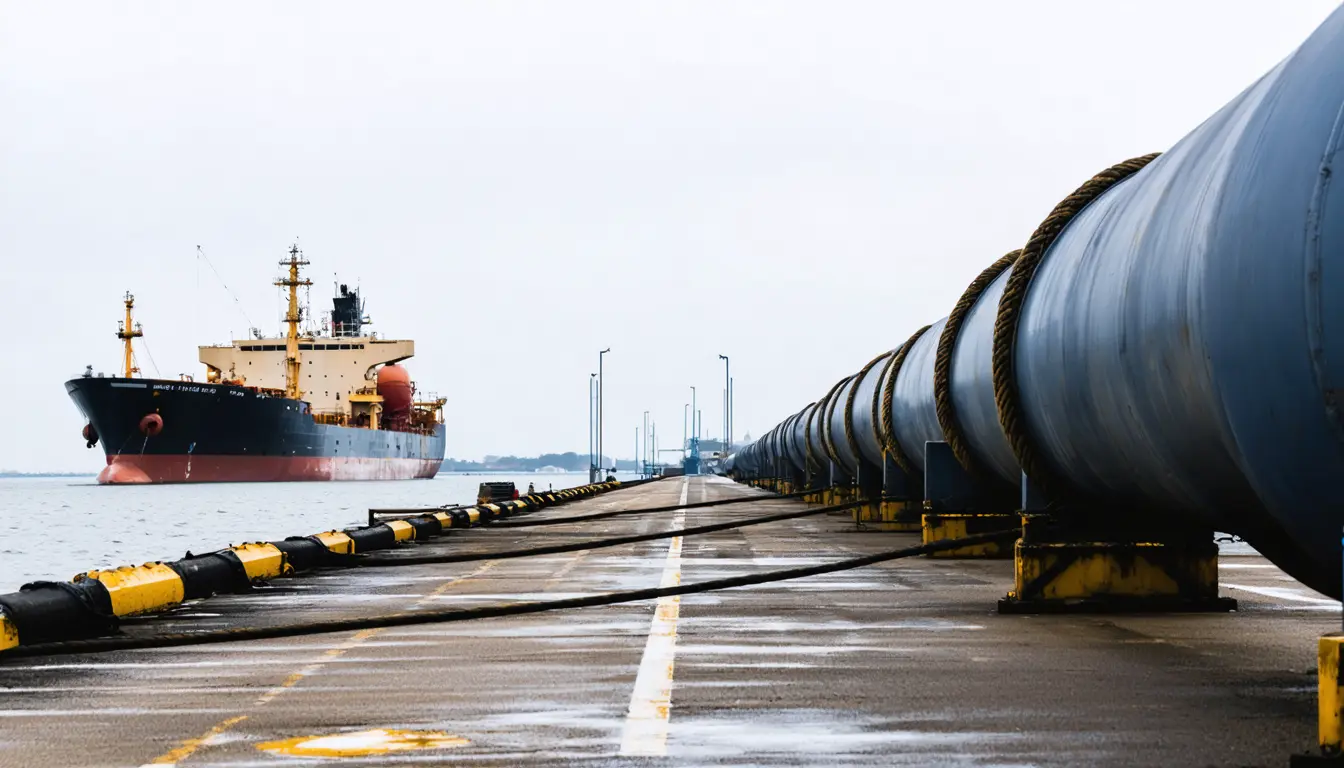
Key figures: rising energy costs are expected to lift US CPI to an annual 3.7%, with core seen cooler at 2.5%; Brent futures sit $6.96, or 6.3%, below their recent top of $109.97; US crude futures are at $90.11 a barrel, down 1.9%.
| Figure | Value | Note | Claim |
|---|---|---|---|
| Forecast annual US CPI | 3.7% | core seen cooler at 2.5% | 11 |
| Brent below its recent top | $6.96 a barrel | 6.3% below the $109.97 top | 18 |
| US crude futures | $90.11 a barrel | down 1.9% | 6 |
What happened
- Stock markets opened erratically on Monday, and oil slipped amid confusion over whether Russia would, or could, increase energy exports.
- US crude futures lost 1.9% to $90.11 a barrel, a slightly larger percentage fall than Brent's.
- South Korean stocks fell 2.2% and Taiwanese shares eased 0.5%, while MSCI's Asia-Pacific index excluding Japan dipped 0.3%.
- Japanese markets were shut and the US was on a partial holiday, with major US banks due to open earnings season on Tuesday.
- S&P 500 third-quarter earnings are expected to jump by more than 30%, according to LSEG IBES, with the bulk of that from tech.
Why it matters
- constraint Senators in both parties called Trump's diesel plan potentially illegal, so a trader cannot yet count extra Russian diesel as supply.
- exposure Markets price an 18% chance of a Fed hike this month and 85% by December, a 67-point climb, so energy-driven CPI surprises this week would test that path.
- contradiction S&P 500 futures edged up 0.3% and Nasdaq futures 0.4% while the investment-grade credit default swap index sat at its highest since the Iran war began, so stocks and credit insurance are pricing different risks.
A 1.6% fall to $103.01 implies a prior price near $104.7, so the session took out roughly $1.70 [17], and Brent had started it higher [5]. It is still $6.96, or 6.3%, below the recent top of $109.97 [18]. A market that believed Russia was about to ship meaningfully more diesel would, in our view, have sold harder than that (or rather, would have sold harder on a day with normal volume, and Monday had thin trade [7]).
Diesel is the interesting puzzle. "Oil prices remain higher than we had assumed as shipping costs have soared and product prices are even higher," said Bruce Kasman, head of global economics at JPMorgan [10]. Diesel is a refined product, so Trump's proposal for Russia to export more of it [4] aims at the category Kasman calls "even higher". The inflation forecasts show the stakes: US CPI is expected to rise 0.6% on the month to 3.7% annual, with core at 0.2% and 2.5% [11], a 1.2-point gap between headline and core [19].
Credit is the other price in play. My Bui, an economist at AMP, said tech had supplied the S&P 500's entire gain since mid-September, and that investors wanted higher yields on the debt being raised to pay for AI [13]. "Overall, wider spreads suggest investors are questioning whether AI revenues can keep pace with rising borrowing costs," Bui said [14].
This can still go several ways. If the ceasefire holds and Russian diesel moves, Brent falls through $103 and stays there; if the Gulf strikes on shipping widen [2], it revisits $109.97 [5]; if neither is verified, it moves between the two. We think the third is likeliest this week, because the report does not include ceasefire terms or a volume for the extra diesel, and Brent is trading the announcements until one of them is verified. We would be wrong if Brent is still below $103 once Japanese markets are open and US trading is back at full volume.
What to watch
- Whether Brent stays below $103 once Japanese markets are open and US trading returns to full volume.
- US consumer and producer price data and retail sales this week, which set the test for December hike odds now at 85%.
- Any published terms of the Ukraine-Russia energy ceasefire, or a Senate move on the diesel export proposal.
Clarity's read
What the record supports and how the coverage leans. The claims behind it follow.
Reality
- Evidence62
- Adoption
- Insufficient
- Hype gap−5
- Incentives
- Insufficient
- Confidence65
Claim ledger
Ranked by verification strength, evidence, and original report placement.
- [1]
Stock markets got off to an erratic start on Monday as earnings season loomed, while oil slipped amid confusion over whether Russia would, or could, increase energy exports.
- [2]
The conflict in the Gulf continued with strikes on shipping and airports.
- [3]
President Donald Trump announced an energy ceasefire between Ukraine and Russia.
- [4]
Trump proposed that Russia increase its exports of diesel; the proposal drew opposition from Republican and Democratic senators as potentially illegal.
- [5]
Brent futures started higher but soon slipped 1.6 per cent to $103.01 a barrel, below a recent top of $109.97.
- [7]
Trade was thin with Japanese markets shut and the US on a partial holiday ahead of earnings season, with major US banks kicking off on Tuesday.
- [8]
South Korean stocks fell 2.2 per cent and Taiwanese shares eased 0.5 per cent; MSCI's broadest index of Asia-Pacific shares excluding Japan dipped 0.3 per cent.
- [9]
S&P 500 earnings are expected to jump by more than 30 per cent in the third quarter, according to LSEG IBES, though the bulk of that comes from the tech sector.
- [10]
"Oil prices remain higher than we had assumed as shipping costs have soared and product prices are even higher," said Bruce Kasman, head of global economics at JPMorgan.
- [11]
Rising energy costs are expected to lift US CPI by 0.6 per cent to an annual 3.7 per cent, though the core is seen cooler at 0.2 per cent and 2.5 per cent.
- [12]
Markets imply only an 18 per cent chance of a rate rise from the Federal Reserve this month, rising to an 85 per cent chance of a hike in December.
- [13]
My Bui, an economist at AMP, said all the gains in the S&P 500 since mid-September had been in tech, while investors were demanding higher yields to fund the massive borrowing for AI.
- [14]
"Overall, wider spreads suggest investors are questioning whether AI revenues can keep pace with rising borrowing costs," Bui said.
- [15]
S&P 500 futures edged up 0.3 per cent and Nasdaq futures firmed 0.4 per cent.
- [16]
The US investment-grade credit default swap index had risen sharply to its highest level since the US-Israeli war on Iran began.
- [17]
Brent's implied prior price was about $104.7, so the fall was roughly $1.70.
- [18]
Brent at $103.01 is $6.96, or 6.3%, below its recent top of $109.97.
- [19]
The forecast annual headline CPI of 3.7% sits 1.2 percentage points above forecast core of 2.5%.
- [20]
Implied Fed hike odds rise 67 percentage points between this month and December.
Sources
1 independent publisher whose own reporting we read for this story.
- channelnewsasia.comShares seesaw in Asia as earnings loom, oil skids
1 article · October 11, 2026
Topics and entities
Follow any of these and your For You feed starts watching them — no settings page required.
Topics
- Global equitiesFollow
- Inflation and interest ratesFollow
- AI FinancingFollow
- Oil MarketsFollow