Boston Dynamics says an Atlas prototype now takes about a day to build
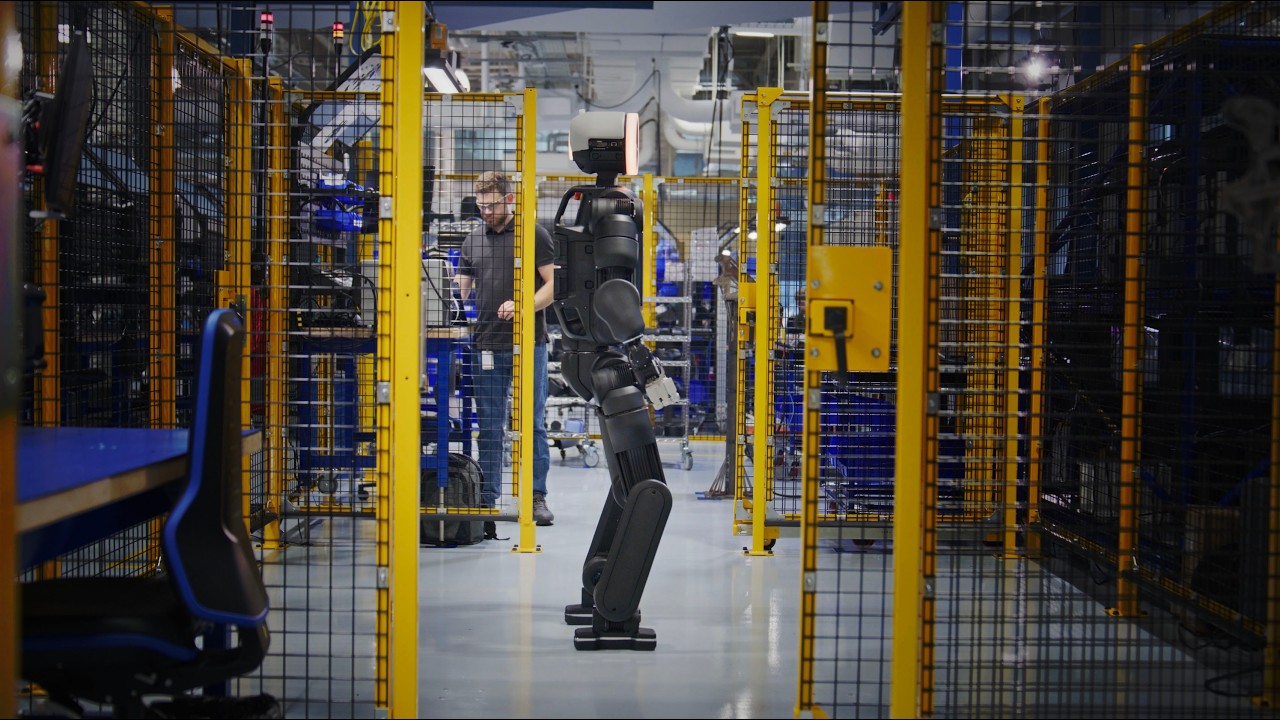
Boston Dynamics says its prototype team can build an Atlas humanoid in about a day and is aiming for about an hour next year. Interesting Engineering says the figures describe the prototype shop and set no production rate or delivery date.
The Product Desk
Map. Boston Dynamics: its build-time targets set no production-line output rate or delivery timeline. Other humanoid makers: their output figures cannot be compared directly. Prototype team: parts reach assembly the same or next day. The video: also a recruitment effort.
- constraint Boston Dynamics Its build-time targets set no production-line output rate or timeline for commercial deliveries, claim 4
- contradiction Other humanoid manufacturers Their hourly, weekly and cumulative output figures describe other stages and cannot be compared directly, claim 10
- capability Atlas prototype team Parts can move from machining to assembly the same or next day, so design changes are tested sooner, claim 7
- exposure Boston Dynamics video The video also serves as a recruitment effort, highlighting the work of building Atlas, claim 11
| Who | How | Kind | Claim |
|---|---|---|---|
| Boston Dynamics | Its build-time targets set no production-line output rate or timeline for commercial deliveries | constraint | 4 |
| Other humanoid manufacturers | Their hourly, weekly and cumulative output figures describe other stages and cannot be compared directly | contradiction | 10 |
| Atlas prototype team | Parts can move from machining to assembly the same or next day, so design changes are tested sooner | capability | 7 |
| Boston Dynamics video | The video also serves as a recruitment effort, highlighting the work of building Atlas | exposure | 11 |
What happened
- The figures come from a nearly six-minute video of the prototype operations team that builds and maintains Atlas.
- The team does its precision machining in-house, including tight-tolerance parts and gear cutting, and does not rely entirely on outside suppliers.
- Boston Dynamics also lists a longer-term ambition of bringing build times down to minutes.
- The same workflow supports repair, helping the team find hardware faults and return robots to testing faster.
Why it matters
- constraint Boston Dynamics' build time cannot go in a table next to other humanoid makers' hourly, weekly or cumulative output claims.
- decision A team planning around Atlas has to ask for a line rate and delivery dates as separate answers, since the build time stands in for neither.
- capability Parts that reach assembly the same day or the next let design changes be tried on physical robots sooner, which helps while Atlas is still being revised.
- exposure Anyone repeating the one-day figure is repeating a company statement from a video that also serves as recruiting material.
Expect the video to circulate with a one-line summary that sounds like a capacity figure: a robot a day.
Interesting Engineering, which described the video, says the targets refer to the robot-building process shown and do not establish a production-line output rate or a timeline for commercial deliveries [4]. Assembling an individual robot is a different measure from the rate at which a production line makes multiple units [9].
Teams tell themselves a build time is a rate. In this video it measures how fast one shop turns a design change into hardware. With machining kept close to engineering, an engineer can talk a part through with a machinist and test the revised version without waiting on a lengthy external manufacturing process [12]. The company recently introduced four-finger hands for Atlas [8]. We think a design that is still being revised is the case this kind of shop is built for, and a day-long build time says more about how quickly the team can iterate than about how many robots it could ship.
The day-long figure is the company's own statement, as relayed by Interesting Engineering [2]. The write-up does not say whether the day includes machining the parts or starts with them on the bench.
Other humanoid makers have reported hourly production targets, weekly output figures and cumulative production milestones [10]. Interesting Engineering says these measure different stages and cannot be compared directly without knowing the assembly procedures, the automation, the testing and the status of the completed robots [10].
For any humanoid number that reaches your desk, place it on two axes. The first is what was timed: one robot, or a line making many. The second is what came out: a prototype that goes back to testing, or a robot that is delivered. The Atlas figure sits in the one-robot, prototype cell [2][4]. A capacity plan should take entries only from the line-rate, delivered cell.
What to watch
- Whether Boston Dynamics reports a measured build time against its one-hour target next year, and says what the hour covers.
- Any Boston Dynamics statement of Atlas production-line output or commercial delivery dates, which would be the first real rate.
- Whether other humanoid makers' hourly and weekly figures come with the assembly, automation, testing and robot-status details needed to compare them.
Clarity's read
What the record supports and how the coverage leans. The claims behind it follow.
Reality
- Evidence35
- Adoption
- Insufficient
- Hype gap+10
- Incentives60
- Confidence50
Claim ledger
Ranked by verification strength, evidence, and original report placement.
- [1]
Boston Dynamics released a nearly six-minute video offering a closer look at the prototype operations team that builds and maintains its Atlas humanoid robot.
- [2]
The company said its team can currently build a robot in about a day, with a target of reducing the process to roughly an hour next year.
- [3]
Boston Dynamics' longer-term ambitions include bringing build times down to minutes.
- [4]
The build-time targets refer to the robot-building process described in the video and do not establish a production-line output rate or a timeline for commercial deliveries.
- [5]
Rather than relying entirely on external suppliers for specialized components, the facility performs precision machining in-house, producing parts with tight dimensional tolerances and carrying out specialized operations such as gear cutting.
- [6]
The integrated workflow also supports maintenance and repair, helping the team identify hardware issues and return robots to testing faster.
- [7]
Components can move from machining to assembly on the same day or the following day, enabling teams to test design changes on physical hardware sooner.
- [8]
The company recently introduced four-finger hands for Atlas.
- [9]
The time required to assemble an individual robot differs from the rate at which a production line can manufacture multiple units.
- [10]
Other manufacturers have reported hourly production targets, weekly output figures and cumulative production milestones. These measurements describe different stages of manufacturing and cannot be compared directly without additional information about assembly procedures, automation, testing, and the status of completed robots.
- [11]
The video also serves as a recruitment effort, highlighting the technical work involved in building and maintaining Atlas.
- [12]
Keeping machining close to engineering shortens the feedback loop between design and testing: engineers can discuss component requirements directly with machinists, make adjustments, and evaluate revised parts without waiting for a lengthy external manufacturing process.
Get this ledger inside ChatGPT. Ask about any of our stories and the answer brings its figure, each claim’s verdict and the sources. Free, no account.
Sources
1 independent publisher whose own reporting we read for this story.
Topics and entities
Follow any of these and your For You feed starts watching them — no settings page required.
Topics
- Humanoid RoboticsFollow
- Robot ManufacturingFollow