120ft will bill consumer-hardware brands per finished unit for assembly by shared robots
Swedish startup 120ft raised 576,000 euros from 22 angels to bill brands per finished product on shared humanoid-robot lines. It has not yet reached commercial production and has shown one product, a lamp, so the offer is still a plan.
The Product Desk
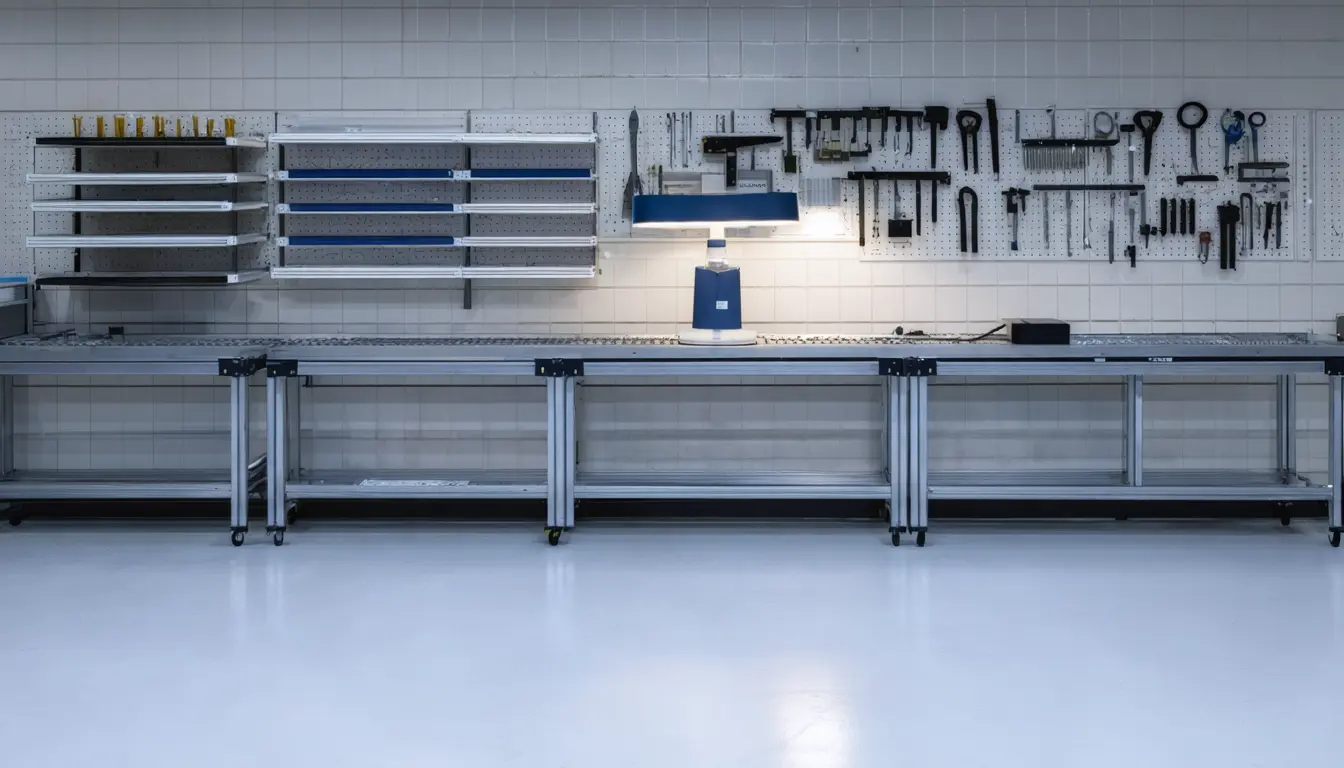
Two figures, according to 120ft: teaching the robots one end-to-end assembly skill takes 420 minutes (seven hours) today, and the company's target for 2027 is seven minutes.
| Measure | Value | As of | Claim |
|---|---|---|---|
| Today, one assembly skill | 420 minutes | 18 | |
| 2027 target, per 120ft | 7 minutes | 10 |
What happened
- Each 120ft site is sized to fit in three 40-foot shipping containers, and the company is named for their combined length.
- Brands keep their existing component suppliers, which send parts to a 120ft site where shared robots handle final assembly, inspection and packing.
- The company's software turns designs, parts lists and quality requirements into digital instructions, and every job runs in simulation before production starts.
Why it matters
- Who has to decide decision A brand evaluating 120ft is comparing assembly sites. Its supplier contracts stay as they are, so the choice is about where final assembly happens.
- What it costs cost Paying per finished unit leaves the cost of equipment and idle robot time with 120ft. The unit price a brand would pay has not been published.
- Who's exposed exposure Until commercial production starts, an early customer depends on throughput and pricing that are still being worked out.
Martin Willers has lived the problem he is selling against. At Transparent AB, the repairable-speaker maker he co-founded, Willers recalled that the company sometimes waited months for thousands of units to land before it learned which colors customers preferred [12][11]. "For a smaller brand, that means tying up cash and making decisions about demand far too early," Willers said [13].
Small brands place production orders months before they know what will sell [5], and their parts travel from around the world to China for assembly before the finished goods ship back to Europe [6]. 120ft frames that reliance on distant factories as a geopolitical risk [7].
Under the offer, the brand pays 120ft per unit, but its own suppliers still send parts to the 120ft site [3]. The per-unit fee covers final assembly, inspection and packing [3]. That leaves the timing of the parts order, the early bet in Willers's story, as a question for 120ft.
What has been shown is narrower than what is pitched. The first targets are design-led makers of small appliances and consumer electronics [4]. The demonstration is a lamp, with robots assembling a cylinder lock, threading the bulb fitting and running a functional test [9]. 120ft says teaching the robots a single end-to-end assembly skill took seven weeks in 2025, that the same work now takes seven hours, and that the 2027 target is seven minutes [10]. Seven hours is 420 minutes, so the 2027 target is a further 60-fold cut [18]. The report does not include per-unit prices, the location of the first site, a date for commercial production, or how parts-order timing changes for brands [17].
One of the 22 angels, Sam Baker of Planet A Ventures, who has more than a decade in manufacturing, put the limit plainly [15]. "A robot on its own does not solve the manufacturing problem," Baker said [15]. In his view brands also need tooling, software and quality control around the machines [16].
For a brand weighing this, we'd sort the decision on two axes. The first is how many months before sales data you must commit orders today. The second is how closely your final assembly resembles what the robots have shown: a mechanical lock, a threaded fitting, a functional test.
- Long lead time, lamp-like assembly: ask for a pilot quote and for the terms on parts timing. - Long lead time, more complex assembly: wait for a published price and for evidence the 2027 target is met. - Short lead time, lamp-like assembly: the pitch addresses a problem you do not have. - Short lead time, more complex assembly: no case yet.
What to watch
- Whether 120ft publishes a per-unit price, names a first customer, or says where its first site will stand.
- Whether 120ft shows a finished product other than the lamp reaching commercial production.
- Whether the seven-minute skill-teaching target for 2027 is met, and whether suppliers will ship smaller parts lots to a 120ft site.
Clarity's read
What the record supports and how the coverage leans. The claims behind it follow.
Reality
- Evidence30
- Adoption5
- Hype gap+25
- Incentives60
- Confidence55
Claim ledger
Ranked by verification strength, evidence, and original report placement.
- [1]
120ft Factory AB launched with 576,000 euros ($644,000) in new funding from 22 angel investors to build autonomous microfactories run by humanoid robots.
- [2]
120ft builds and operates small factories that fit inside three 40-foot shipping containers, and the combined length of those containers gives the company its name.
- [3]
Customers never buy a robot. Brands pay for each finished product and keep their existing component suppliers, which send parts to a 120ft site where robots shared among several customers handle final assembly, inspection and packing.
- [4]
The first customers 120ft is chasing are design-led consumer brands, such as makers of small appliances and consumer electronics.
- [5]
Smaller brands can be forced to place production orders months before they know what will sell.
- [6]
Small brands' parts often come from around the world and go to China for assembly before the finished goods are shipped back to Europe.
- [7]
120ft frames the reliance on distant factories as a geopolitical risk.
- [8]
120ft's software takes product designs, parts lists and quality requirements and converts them into digital instructions, and every job runs in a simulation first so missing information and bottlenecks show up before production starts.
- [9]
120ft has demonstrated the system on a lamp, with robots assembling a cylinder lock and threading the bulb fitting before running a functional test.
- [10]
According to 120ft, it took seven weeks in 2025 to teach the robots one end-to-end assembly skill, the same work now takes seven hours, and the target for 2027 is seven minutes.
- [11]
Martin Willers, 120ft's founder and chief executive, started the Stockholm company in 2025, and previously co-founded Transparent AB, a Swedish maker of repairable, upgradable speakers.
- [12]
At Transparent, the speaker maker could spend months waiting for thousands of products to arrive before it knew which colors customers wanted most, Willers recalled.
- [13]
"For a smaller brand, that means tying up cash and making decisions about demand far too early," Willers said.
- [14]
120ft will put the funding toward reaching commercial production and further development of its software and factory infrastructure.
- [15]
Sam Baker, an investor at Planet A Ventures with more than a decade in manufacturing and one of the 22 angels, said: "A robot on its own does not solve the manufacturing problem."
- [16]
In Baker's view, brands also need tooling, software and quality control around the machines.
- [17]
The SiliconANGLE report does not include per-unit prices, the location of the first site, a date for commercial production, or how parts-order timing changes for brands.
- [18]
Seven hours is 420 minutes, so the 2027 target of seven minutes is a 60-fold reduction from today's seven hours.
Get this ledger inside ChatGPT. Ask about any of our stories and the answer brings its figure, each claim’s verdict and the sources. Free, no account.
Sources
1 independent publisher whose own reporting we read for this story.
- siliconangle.com120ft raises angel funding to build autonomous microfactories run by humanoid robots
1 article · October 15, 2026
Topics and entities
Follow any of these and your For You feed starts watching them — no settings page required.
Topics
- Humanoid RoboticsFollow
- Supply chain reshoringFollow
- Manufacturing as a serviceFollow
- Startup FundingFollow