H5N1 in a northern giant petrel commits New Zealand to open-ended wildlife surveillance
Three infected wild birds and a mammal death on the Australian mainland leave New Zealand's agencies with no eradication option, so the work becomes early detection and vaccinating five intensively managed species.
The Scientist · Science desk
What happened
- Bird flu has now been found in three wild birds in New Zealand, the most recent case a northern giant petrel, and the source states that once the virus is established in wild birds it cannot be eradicated.
- Australia confirmed its first mainland death of a mammal from bird flu in the week before the analysis appeared, without the species being named.
- New Zealand's vaccination program covers five intensively managed native bird species initially, with an ongoing review to add others as risks emerge.
- The Ministry for Primary Industries coordinates the One Health response, the Department of Conservation handles threatened species, and health agencies cover human health.
Why it matters
- constraint With eradication ruled out once the virus is in wild birds, detection and vaccination become a standing line item rather than the cost of a single emergency response, and there is no end date to plan against.
- decision Keeping the vaccination species list open means every new detection reopens a triage question about which threatened populations get doses first, on evidence that arrives after the budget is set.
- exposure Evidence of marine mammal to marine mammal transmission and mammalian adaptation puts seals and sea lions inside a surveillance system originally designed around waterfowl reservoirs.
- capability If satellite imagery, environmental genetic screening and predictive models work as described, the gain is a shorter interval between a detection and a change in where crews sample, which is the part managers can actually act on.
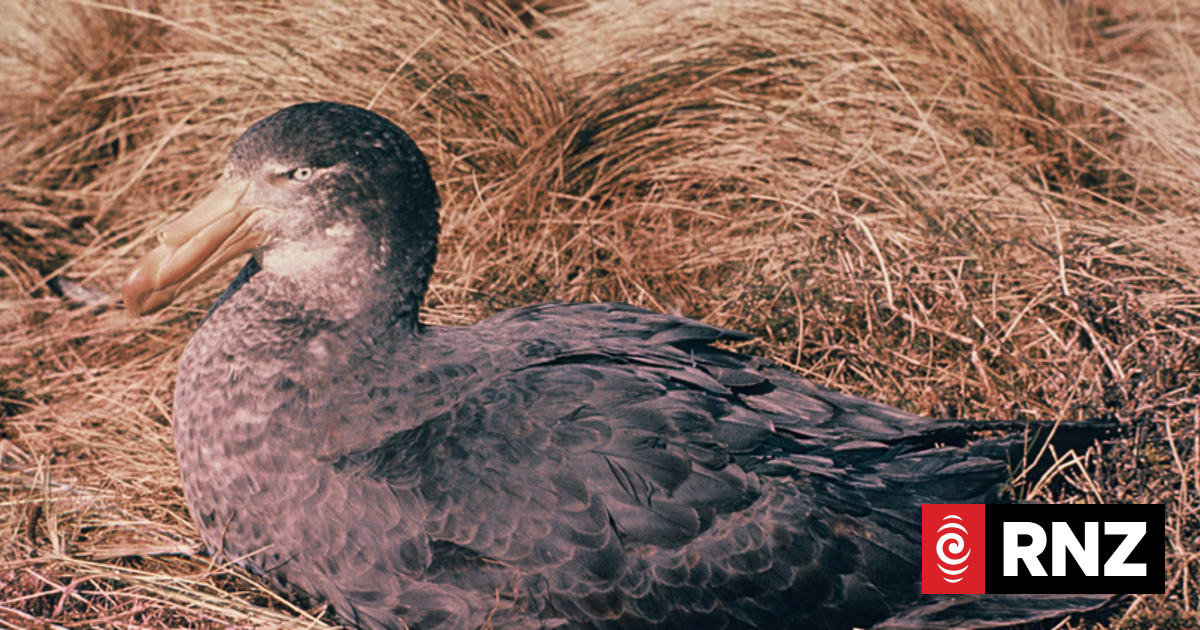
New Zealand has confirmed H5N1 in three wild birds so far, most recently a northern giant petrel [1], and three cases alone are too small a sample to establish a rate. The analysis does not say how many birds were sampled to find them [26]. That gap matters for the decision the surveillance is meant to feed. Without a denominator, a program cannot separate a rising infection rate from rising sampling effort, and the choice of where to send crews and swabs next month turns on exactly that difference.
The number worth carrying around comes from Heard Island. After bird flu was confirmed in marine mammals there in November 2025, surveys found 13,000 of 17,000 southern elephant seal pups dead [16], about 76 per cent of the pups counted [20]. That figure covers only the pups counted at that site; it says nothing about adults, other colonies, or the cause of each individual death, since the source reports the mortality alongside the confirmation rather than attributing animal by animal.
It also fits a trajectory that has already broken the assumptions early surveillance was built on. International monitoring concentrated on waterfowl as the known reservoir [11]. Then came mass seabird mortality among gannets, terns, gulls and skuas [12], more than 30,000 South American sea lion deaths in Peru and Chile in 2022 [13], an estimated 17,000 southern elephant seals in Argentina in 2023 [14], more than 47,000 animals across those two events alone [22]. Genetic work on those outbreaks showed transmission between marine mammals across thousands of kilometres, plus changes associated with adaptation to mammals [15].
The forward-looking part of the piece lays out a proposal rather than a finished inventory: satellite imagery flagging wetlands likely to attract higher-risk species, environmental genetic screening of those sites, and predictive models pointing at next month's surveillance rather than last month's [23][24]. The authors are explicit that the payoff is compressing the interval between collecting information and making a better decision [25]. The already-completed work is duller and travels better. The Department of Conservation had local response plans and high-risk sites identified by July 2024 [8], a vaccination trial finished in 2025 [9], and detection followed in July 2026 [4], roughly two years of preparation ahead of the event [21]. When it arrived, the list of species considered for vaccination was deliberately left open [10].
The vaccination line stops short of telling you how well it works. The program covers five intensively managed native bird species with the list under review [5], and the source gives no efficacy or coverage figures from the 2025 trial, nor the species of the mammal that died on the Australian mainland [3][27]. For marine mammals there is nothing to deploy yet, only overseas trials being watched, including work on the endangered Hawaiian monk seal [6].
My view, conditional on the denominator being published: this is the right posture, and it has a measurable test. If the value of adaptive management is a shorter lag between detection and redeployment [25], then that lag, in weeks, is the number the Ministry for Primary Industries and the Department of Conservation should be reporting [7].
What to watch
- Whether New Zealand publishes a testing denominator alongside detections, which would turn positive counts into an infection rate.
- Whether the overseas marine mammal vaccine trials being monitored, including work on Hawaiian monk seals, yield anything deployable for pinnipeds in the region.
- A sixth species added to the vaccination list, and the specific evidence cited to justify the addition.
Clarity's read
What the record supports and how the coverage leans. The claims behind it follow.
Reality
- Evidence46
- Adoption55
- Hype gap+12
- Incentives55
- Confidence44
Claim ledger
Ranked by verification strength, evidence, and original report placement.
- [1]
Bird flu has now been found in three wild birds in New Zealand, most recently in a northern giant petrel.
- [2]
Once bird flu is established in wild birds, it cannot be contained or eradicated.
- [3]
Australia's first mainland death of a mammal from bird flu was confirmed in the week before this analysis was published; the species is not named.
- [4]
H5N1 was detected in New Zealand in July 2026.
- [5]
A vaccination program for some of New Zealand's most threatened native birds is underway, focused initially on five intensively managed species, with an ongoing review to include other species.
- [6]
New Zealand is monitoring overseas vaccine trials for marine mammals such as the endangered Hawaiian monk seal.
- [7]
New Zealand's response takes a One Health approach: the Ministry for Primary Industries coordinates it, the Department of Conservation focuses on threatened species, and health agencies protect human health.
- [8]
The Department of Conservation was preparing local response plans for a future bird flu outbreak and identifying high-risk sites by July 2024.
- [9]
A vaccination trial was completed in 2025.
- [10]
When H5N1 was detected in July 2026, the Department of Conservation deliberately kept the list of species considered for vaccination flexible so it could respond to emerging risks.
- [11]
Most early surveillance of bird flu internationally focused on waterfowl, the known reservoirs of these viruses.
- [12]
The current H5N1 outbreak has caused very high mortality among seabirds, including gannets, terns, gulls and skuas.
- [13]
In 2022 bird flu was detected in harbor and gray seals in North America and caused mass mortality in South American sea lions, with more than 30,000 dying in Peru and Chile.
- [14]
In 2023 an outbreak killed an estimated 17,000 southern elephant seals in Argentina.
- [15]
Genetic evidence from those outbreaks showed transmission between marine mammals over thousands of kilometres and genetic changes in the virus associated with adaptation to infect mammals.
- [16]
In November 2025 bird flu was confirmed in marine mammals on Australia's remote Heard Island, where surveys found that 13,000 of 17,000 southern elephant seal pups had died.
- [17]
Conservation scientists are applying adaptive management, using the best available evidence to guide decisions and adjusting direction as new information emerges, with the objective of reducing uncertainty so future decisions are better informed.
- [18]
Adaptive management is already widely used in conservation, including North American waterfowl management and Great Barrier Reef protection, and in New Zealand helps prioritise species recovery actions including for the New Zealand fairy tern, tara iti.
- [19]
Bird flu can change in ways that are difficult to predict, so the challenge now is vigilance about early detection in both birds and marine mammals and adapting decisions as new evidence emerges.
- [20]
The Heard Island survey figure corresponds to about 76 per cent of the southern elephant seal pups counted.
- [21]
The Department of Conservation had response plans and high-risk sites in hand roughly two years before H5N1 was detected in New Zealand.
- [22]
The 2022 South American sea lion mortality and the 2023 Argentine elephant seal outbreak together account for more than 47,000 reported marine mammal deaths.
- [23]
The authors describe a surveillance program in which satellite imagery identifies wetlands likely to attract higher-risk bird species, environmental genetic testing screens those wetlands for pathogens, and predictive models identify where surveillance should be concentrated next month rather than where it was needed last month.
- [24]
Environmental DNA and RNA testing could help detect bird flu in environmental samples, while wildlife tracking and remote sensing could reveal where birds are moving and where risk is changing.
- [25]
The authors say the real value of these technologies lies in shortening the time between information collection and better management decisions.
- [26]
The source reports three positive wild birds in New Zealand but gives no number of birds tested, so the detections are a count rather than a prevalence estimate.
- [27]
The source reports that a vaccination trial was completed in 2025 and that five species are covered, but gives no efficacy or coverage figures.
Get this ledger inside ChatGPT. Ask about any of our stories and the answer brings its figure, each claim’s verdict and the sources. Free, no account.
Sources
1 independent publisher whose own reporting we read for this story.
- phys.orgBird flu is here to stay. NZ's response must keep adapting as the virus takes hold
1 article · August 28, 2026
Topics and entities
Follow any of these and your For You feed starts watching them — no settings page required.
Topics
Entities
- H5N1 avian influenza virusFollow
- New Zealand Department of ConservationFollow
- New Zealand Ministry for Primary IndustriesFollow
- One HealthFollow
- Adaptive managementFollow
- Heard IslandFollow
- Northern giant petrelFollow
- Hawaiian monk sealFollow
- New Zealand fairy tern (tara iti)Follow
- The ConversationFollow
- Phys.orgFollow