ScienceNot yet confirmed elsewhere1 publisher2 min readPublished
Superconducting tube and cast iron reshape a simple coil's field into a nearly uniform one
UAB and Chalmers physicists turned the uneven field of a simple coil into a nearly uniform one using a superconducting aluminum tube and cast iron. The authors call the mathematics exact, and the prototype, cooled below 1 kelvin, matched its calculations closely.
The Scientist · Science desk
What happened
- The method converts the field of one source, a coil or a permanent magnet, into a broad class of predetermined fields, with what the authors call exact mathematical precision.
- The current route to a tailored field is a specialized, optimized magnet or a large coil system built for each individual application.
- The team has filed a patent application for the technology, and the work appears in Science Advances.
Why it matters
- capability If the exactness holds beyond the single case built, a lab could choose a field shape by calculation and drive it from an ordinary coil or magnet.
- constraint The only measurement used a superconducting tube cooled below 1 kelvin, so the evidence covers cryogenic work and none of the MRI or accelerator uses the source lists.
- decision Groups that now optimize coil systems would be weighing build cost per target field, since the shaping geometry is calculated for the field wanted.
The authors call the calculation exact. Fabian Resare, a Ph.D. student in quantum technology at Chalmers and a co-author, said: "Using combinations of coils, it is possible to approximate a desired magnetic field to high precision, but with magnetic omniconversion the field generated is mathematically exact." [9] The experiment reports a more ordinary result. Measurements inside the device closely matched the researchers' calculations, which the team describes as a proof of concept [7].
Witlef Wieczorek, professor of quantum technology at Chalmers and another co-author, said: "This is a universal method that removes previous limitations on how accurately an existing magnetic field can be transformed into another one." [12] The demonstration behind that claim is one conversion: a simple coil's nonuniform field into an almost perfectly uniform one [5]. Uniform and quadrupolar fields are the two shapes the source gives as examples of what applications need [11], and the summary describes a built device only for the uniform case.
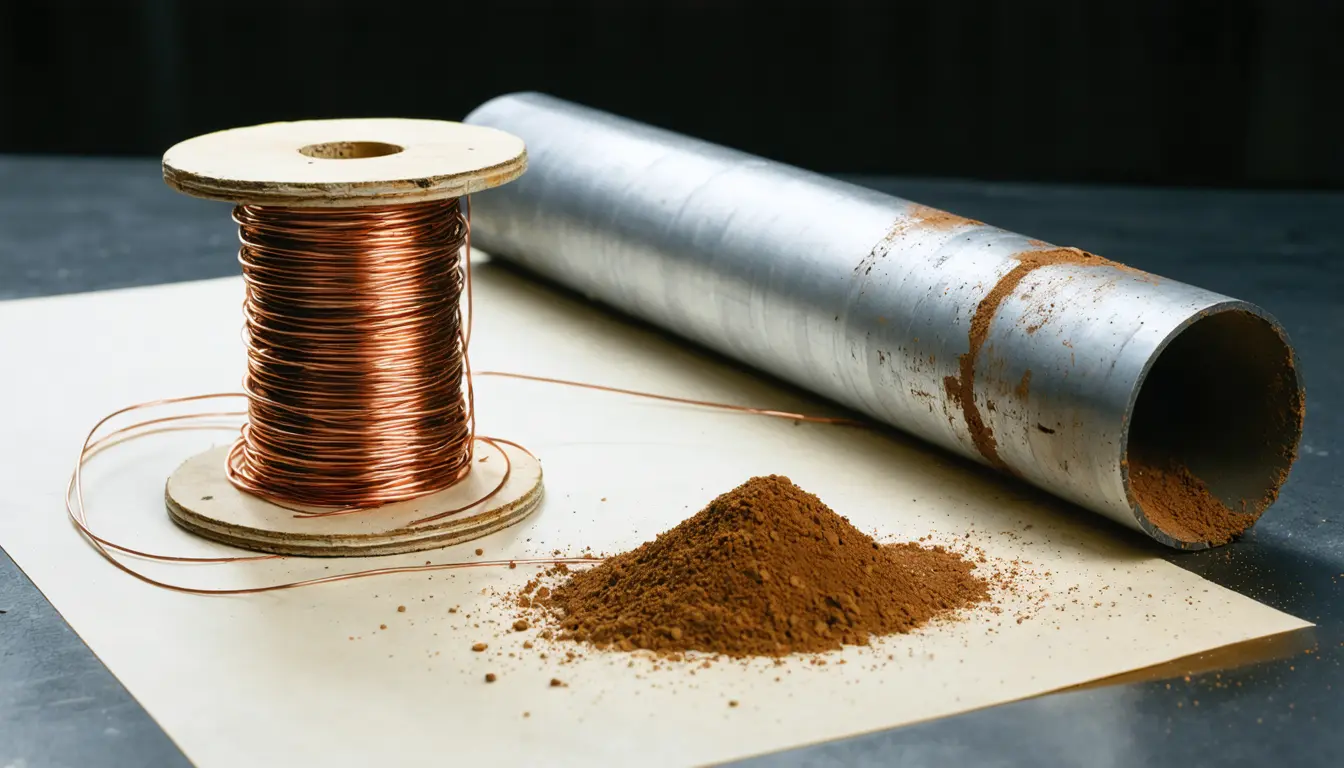
The prototype was a superconducting aluminum tube with cast-iron components, made in a departmental mechanical workshop [6]. The measurement was taken with the device cooled below 1 kelvin [7]. The summary does not give the size of the remaining deviation from the calculation, or say how the method behaves above that temperature.
The assigning idea, that one simple magnet could replace a bespoke design for each application, goes further than the evidence. In our view the custom work moves rather than disappears. The source field can be an ordinary coil or permanent magnet [1], but the ferromagnetic and superconducting pieces have to be arranged in a carefully calculated geometry to fix how the field is distributed [4]. The old route is described as designing optimized magnets or large coil systems for each application [3], and as approximation [9]. The new route is a calculation followed by a build.
That could still be a real saving for groups that need an exact field. The team has filed a patent application [8]. Wieczorek said: "We hope that our magnetic omniconversion approach will contribute to the development of advanced instrumentation for quantum technologies and other areas, where precise spatial control of magnetic fields is essential." [10]
What to watch
- A second target shape, such as a quadrupolar field, built and measured against its calculation.
- A version that works above 1 kelvin or without superconducting parts.
- A reported figure for the deviation between measured and calculated field, and for build cost against an optimized coil system.
Clarity's read
What the record supports and how the coverage leans. The claims behind it follow.
Reality
- Evidence55
- Adoption
- Insufficient
- Hype gap+20
- Incentives40
- Confidence50
Claim ledger
Ranked by verification strength, evidence, and original report placement.
- [1]
A team of physicists from UAB and Chalmers University of Technology developed a method to transform the magnetic field from a single source, such as a coil or a permanent magnet, into a broad class of predetermined magnetic fields with exact mathematical precision.
- [2]
The method is known as magnetic omniconversion, and the research is published in the journal Science Advances.
- [3]
Creating tailored magnetic fields today requires researchers and engineers to design specialized, carefully optimized magnets or large systems of coils for each individual application. Fields such as uniform or quadrupolar fields typically require custom-built magnets or advanced coil systems.
- [4]
The method combines materials that either attract or repel magnetic fields, such as ferromagnetic and superconducting materials; arranged in a carefully calculated geometry, they determine how the magnetic field is distributed in space.
- [5]
To demonstrate the method, the researchers built a prototype that transformed the nonuniform magnetic field from a simple coil into an almost perfectly uniform magnetic field.
- [6]
The prototype device consisted of a superconducting aluminum tube and cast-iron components, manufactured by Lars Jonsson from the mechanical workshop at the Department of Microtechnology and Nanoscience.
- [7]
When the device was cooled to temperatures below 1 kelvin, the measurements showed that the magnetic field inside the device closely matched the researchers' calculations, providing an important experimental proof of concept.
- [9]
"Using combinations of coils, it is possible to approximate a desired magnetic field to high precision, but with magnetic omniconversion the field generated is mathematically exact," said Fabian Resare.
ReportedSupportedSource: Fabian Resare, Ph.D. student in quantum technology at Chalmers and co-author, quoted by phys.orgView cited source - [10]
"We hope that our magnetic omniconversion approach will contribute to the development of advanced instrumentation for quantum technologies and other areas, where precise spatial control of magnetic fields is essential," said Wieczorek.
- [11]
Applications such as MRI scanners, particle accelerators, atomic clocks and future quantum computers each require magnetic fields with specific shapes and properties; uniform and quadrupolar fields are given as examples of such shapes.
- [12]
"This is a universal method that removes previous limitations on how accurately an existing magnetic field can be transformed into another one," said Witlef Wieczorek.
ReportedContestedSource: Witlef Wieczorek, professor of quantum technology at Chalmers and co-author, quoted by phys.org2 sources— create a free account to open themView cited source
Sources
1 independent publisher whose own reporting we read for this story.
- phys.orgMagnetic sculpting transforms single-source fields into predetermined shapes with mathematical precision
1 article · October 12, 2026
Topics and entities
Follow any of these and your For You feed starts watching them — no settings page required.
Entities
- Universitat Autonoma de BarcelonaFollow
- Chalmers University of TechnologyFollow
- Science AdvancesFollow
- Witlef WieczorekFollow
- Fabian ResareFollow
- Magnetic omniconversionFollow