Science1 publisherNot yet confirmed elsewhere3 min readPublished
Baby teeth from autistic children hold higher levels of 19 potentially toxic chemicals in a small pilot
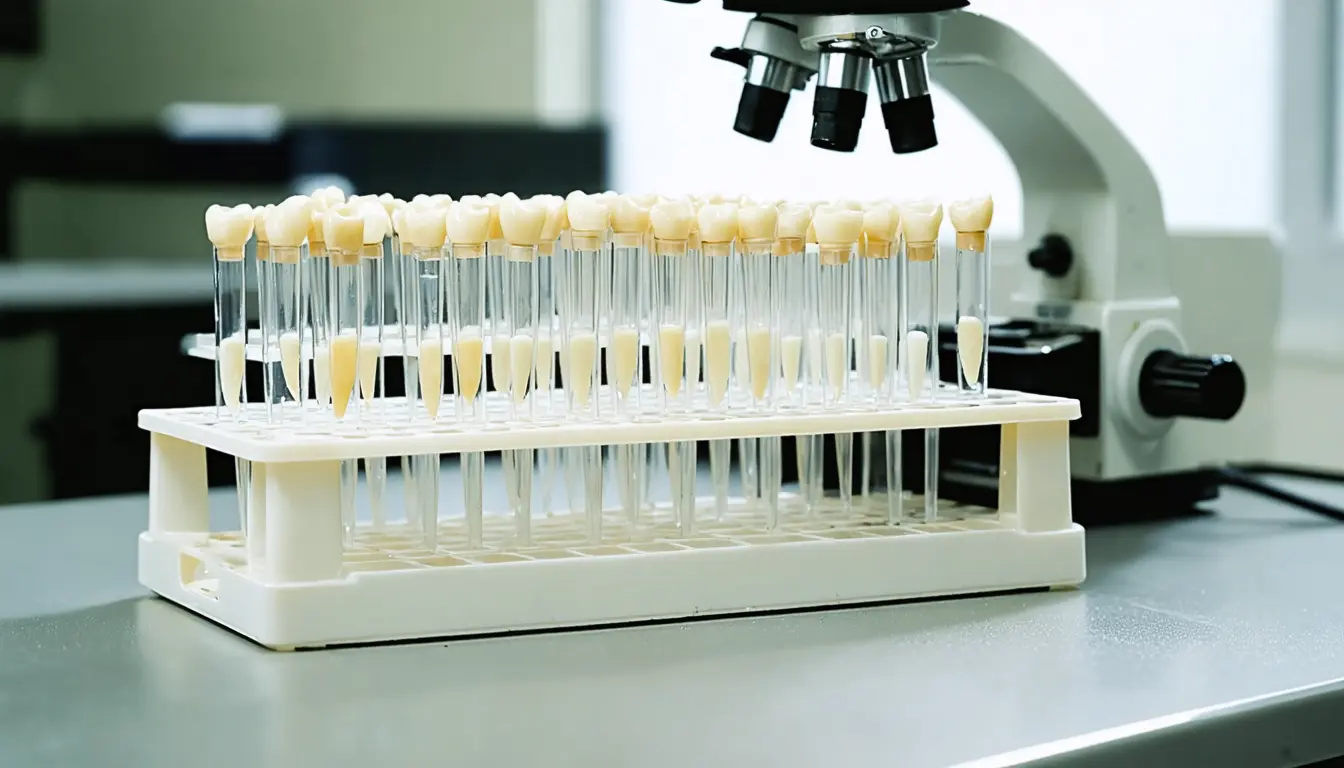
Researchers found significantly higher levels of 19 potentially toxic chemicals in shed baby teeth from 22 children with autism than from 16 controls. With 38 children, the pilot can point a larger study toward candidate chemicals but cannot show that any of them causes autism.
The Scientist · Science desk
What happened
- Two-dimensional gas chromatography with time-of-flight mass spectrometry found more than 300 toxicants in the average tooth, though not every substance appeared in every child.
- The comparison focused on 60 compounds present in at least half the children, 39 of which the EPA classifies as developmental or reproductive toxicants or endocrine disruptors.
- Chemical classes significantly higher in the autism group included phthalates, salicylates, benzoic acids and esters, aromatic ketones and caprolactam.
- Benzyl benzoate showed the largest reported gap, at 722 percent higher concentration in the autism group than in the controls.
Compiled by The ScientistSomething wrong?How this is made
Why it matters
- capability Children shed these teeth between about six and 12, so researchers can reconstruct exposures from pregnancy and infancy years later without having sampled blood or urine at the time.
- decision A follow-up study can start from 19 named compounds, a far narrower target than a screen of every chemical a tooth contains.
- exposure Chemicals known to leach from baby bottles were among the most common in both groups, so whatever risk they carry extends to households of children without autism too.
According to the study as reported by ScienceAlert, 95 percent of the 60 compounds common enough to compare ran higher in the autism group [9]. That comes to 57 compounds [19]. Only 19 of the differences passed statistical significance [9], about a third of the panel [20]. When nearly a whole panel moves in one direction, two readings fit. Particular chemicals could differ between the groups, or the children with autism could have had more exposure overall, with most compounds rising together. With 22 cases and 16 controls [5], the data cannot separate those. The reported account does not describe how the controls were matched, or whether the tests were adjusted for comparing 60 compounds at once [8].
Household habits are one plausible source of a shared difference. Benzyl benzoate, the compound with the largest gap, goes into personal care products, gets added to food and is used to treat lice and scabies [11]. How much of it reaches a child depends partly on what a household buys. A pilot this size cannot rule out that something about the households lies behind both the chemical levels and the diagnosis. ScienceAlert notes that the findings do not show any of these chemicals causes autism, and the researchers call the work a small pilot [17].
I'd expect the method to outlast this list of 19, provided larger studies reproduce the measurements. Blood and urine hold a chemical's signature for a short window, sometimes only hours [2]. "Teeth capture cumulative exposures over long periods of time, whereas blood or urine samples only show a specific window of time," said Lynne Heilbrun, an environmental scientist at the University of Texas at San Antonio and the study's first author [3]. "We need both," she said [3].
The tooth record has limits of its own. It begins around the fourth fetal month, when primary teeth start to form, and ends near age three, when formation completes [1]. That start date falls after the first trimester, the period Heilbrun singles out. "There are several critical windows of exposure during pregnancy, especially in the first trimester, but it doesn't stop there," she said. "The central nervous system continues to develop after birth until around age 25." [4]
The researchers' broadest conclusion rests on the whole sample, cases and controls together. "Our study suggests that children are being chronically and repeatedly exposed to a wider range of developmental toxicants than previously identified in short-term exposure studies," they wrote [13]. They also judge maternal exposure "likely substantial," because pregnant and lactating women increase their food and water intake [14]. The measurements were made on children's teeth, so that maternal estimate is the authors' inference. They note that many of the toxicants identified target the brain, liver and mitochondria [15], and say further studies are warranted [18].
What to watch
- A larger cohort with matched controls testing whether the 19 compounds, benzyl benzoate in particular, still separate cases from controls.
- Whether the full paper reports correction for multiple comparisons across the 60 compounds and explains how the 16 controls were recruited.
- Paired maternal blood or urine measurements alongside the same children's teeth, which would test the authors' claim that maternal exposure is substantial.
Clarity's read
What the record supports and how the coverage leans. The claims behind it follow.
Reality
- Evidence32
- Adoption
- Insufficient
- Hype gap+22
- Incentives
- Insufficient
- Confidence40
Claim ledger
Ranked by verification strength, evidence, and original report placement.
- [1]
Children's primary teeth, shed between about six and 12 years of age, primarily record chemical exposures from the fourth fetal month, when they start forming, until about age three, when tooth formation completes.
- [2]
Many studies measure chemical exposures using blood or urine samples, which provide only a short-term window, sometimes just hours, before the chemical signature vanishes.
- [3]
"Teeth capture cumulative exposures over long periods of time, whereas blood or urine samples only show a specific window of time," said Lynne Heilbrun, environmental scientist and first author, University of Texas at San Antonio. "We need both."
ReportedSupportedSource: Lynne Heilbrun, quoted by ScienceAlert2 sources— create a free account to open themView cited source - [4]
"There are several critical windows of exposure during pregnancy, especially in the first trimester, but it doesn't stop there," Heilbrun said. "The central nervous system continues to develop after birth until around age 25."
ReportedSupportedSource: Lynne Heilbrun, quoted by ScienceAlert2 sources— create a free account to open themView cited source - [5]
In a pilot study published in Neurotoxicology and Teratology, researchers analyzed shed baby teeth donated by the families of 38 children, 22 of whom had autism and 16 of whom served as controls.
- [6]
The teeth were analyzed using two-dimensional gas chromatography and time-of-flight mass spectrometry, looking for compounds used in pesticides, plastics, fragrances, flame retardants and sunscreen products, among others.
- [7]
On average, over 300 toxicants were found in each tooth sample, though not every toxic substance was found in each child.
- [8]
The analysis focused on 60 compounds present in at least half of the children; 39 of them are classified by the EPA as developmental or reproductive toxicants or endocrine-disrupting compounds.
- [9]
Of the 60 compounds, 95 percent were found in higher concentrations in teeth from children with autism, but only 19 of the differences passed statistical significance.
- [10]
Benzyl benzoate appeared in the autism group at 722 percent higher concentration than in controls.
- [11]
Benzyl benzoate is used in personal care products, as a food additive, and in lice and scabies treatments.
- [12]
The researchers detected 11 compounds previously reported to migrate from baby bottle components; these, along with chemicals from baby products, food contact materials, PEX tubing and indoor furnishings, were among the most frequently detected compounds in cases and controls.
- [13]
"Our study suggests that children are being chronically and repeatedly exposed to a wider range of developmental toxicants than previously identified in short-term exposure studies," the researchers wrote.
- [14]
"Given that pregnant and lactating women increase food and water intake, maternal exposure is likely substantial," the researchers wrote.
- [15]
The researchers noted that many of the toxicants they identified target the brain, liver and mitochondria.
- [16]
"Compounds significantly higher in cases included OPEs, benzoic acids and esters, phenylpropanes, phthalates, salicylates, ethers, aromatic ketones, and caprolactam," the researchers wrote.
- [17]
The findings do not demonstrate that any of these chemicals cause autism, and the researchers acknowledge it is only a small pilot study.
- [18]
The authors say future studies are warranted.
- [19]
57 of the 60 compared compounds were higher in the autism group.
- [20]
The 19 significant differences are about a third (roughly 32 percent) of the 60 compared compounds.
Sources
1 independent publisher whose own reporting we read for this story.
- sciencealert.comHigher Levels of 19 Potentially Toxic Chemicals Found in The Teeth of Children With Autism
1 article · October 8, 2026
Topics and entities
Follow any of these and your For You feed starts watching them — no settings page required.