At least three EDNRB2 mutations give chickens the same white-tipped feathers
Texas A&M researchers found at least three independent mutations in the chicken gene EDNRB2 that each produce white-tipped feathers [c1]. The work, published in Animal Genetics, finds that one pattern seen in breeds worldwide has more than one genetic source [c2][c11].
The Scientist · Science desk
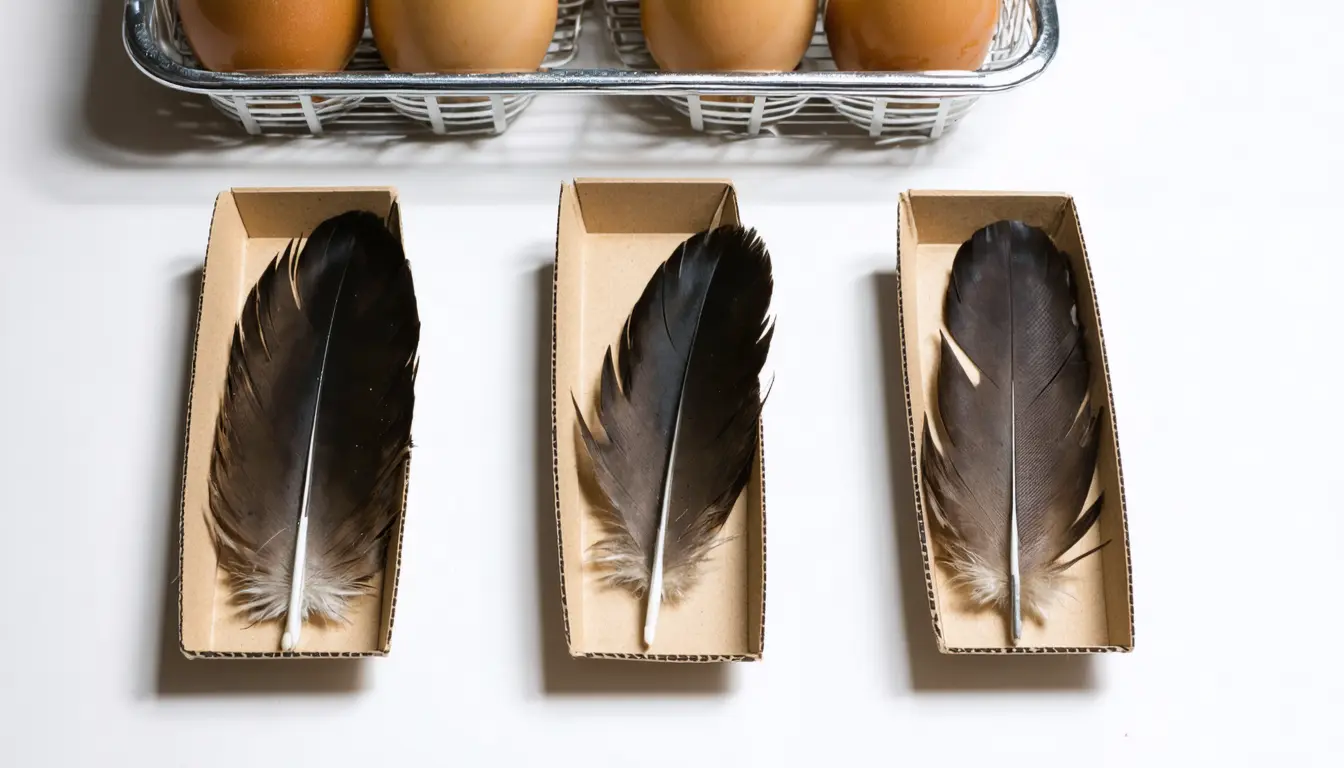
At least three EDNRB2 mutations can produce mottling. Earlier work tied one to several Japanese breeds; the mottled Houdan, from France, lacks it. A different one is strongly associated with mottling in Houdans and other non-Japanese breeds. Evidence ties more nearby mutations to other breeds.
- capability At least three mutations Independently occurring mutations involving the same gene can produce mottling, claim 1
- precedent Earlier Japanese mutation Previous research tied it to mottling in several Japanese breeds, claim 3
- contradiction Mottled Houdan, from France Same white-tipped feathers, but lacks the Japanese mutation, claim 5
- exposure A different EDNRB2 mutation Strongly associated with mottling in Houdans and several other non-Japanese breeds, claim 8
- exposure Additional nearby mutations Evidence they contribute to mottling in other breeds, claim 9
| Who | How | Kind | Claim |
|---|---|---|---|
| At least three mutations | Independently occurring mutations involving the same gene can produce mottling | capability | 1 |
| Earlier Japanese mutation | Previous research tied it to mottling in several Japanese breeds | precedent | 3 |
| Mottled Houdan, from France | Same white-tipped feathers, but lacks the Japanese mutation | contradiction | 5 |
| A different EDNRB2 mutation | Strongly associated with mottling in Houdans and several other non-Japanese breeds | exposure | 8 |
| Additional nearby mutations | Evidence they contribute to mottling in other breeds | exposure | 9 |
What happened
- Earlier work had tied mottling in several Japanese breeds to a particular mutation in EDNRB2.
- The mottled Houdan, a breed from France with the same white-tipped feathers, did not carry that Japanese variant.
- The team crossed mottled Houdans with nonmottled black Langshans and used genetic mapping to narrow the trait to a section of chromosome 4 that contains EDNRB2.
- Whole-genome sequencing then found a different EDNRB2 mutation strongly associated with mottling in Houdans and several other non-Japanese breeds.
- The researchers also reported evidence that still more mutations close to EDNRB2 play a part in mottling in other breeds.
Why it matters
- constraint For this trait, a shared look across breeds does not point to one inherited variant, so plumage is a weak guide to how closely two breeds are related.
- decision A genotyping test built only on the Japanese variant would call a mottled Houdan negative, so any screen for mottling has to cover more than one allele.
- precedent The researchers present the case as parallel evolution in which selective breeding preserves variants that might otherwise stay rare, as long as the animal is not harmed.
In mottled birds, pigment cells do not migrate normally as a feather grows, according to the report, and a feather whose pigment cells fall short of the tip stays white there [10]. EDNRB2 is a gene that helps regulate pigmentation in birds [4]. On otherwise black chickens the result is a spotted look, and it turns up in breeds around the world [11].
A trait shared across breeds usually points to one ancestral mutation. In domestic animals, a shared trait can often be traced to a single mutation that spread as carriers were bred into other populations [12]. Andersson said the dominant white found in commercially important populations, white Leghorns among them, is associated with one specific mutation [13]. Mottling went another way. Similar patterns arose independently in different groups of chickens, people selected those birds for breeding, and the separate mutations became established in multiple breeds [14].
"Mottling is a bit unusual because there are at least three different mutations causing a very similar phenotype," said Dr. Leif Andersson, a professor in the Department of Veterinary Integrative Biosciences at the Texas A&M veterinary college [15]. "These mutations occurred independently," Andersson said. "Humans bred chickens carrying the different mutations because they liked the feather pattern, and the mutations had no negative effect on egg or meat production." [16]
In our view, the convergence is well supported at the gene level, where mapping and sequencing located the variants [7][8]. The breeders' side of the account is Andersson's interpretation. The phys.org account does not say how many birds or breeds were sequenced, how often each allele occurs within a breed, or whether production traits were measured.
What to watch
- Whether the additional mutations near EDNRB2 are sequenced and named. That would fix the count behind 'at least three'.
- Breed counts, sample sizes and allele frequencies in the Animal Genetics paper itself.
- Any direct measurement of egg or meat production in carriers, which would test the claim that the mutations cause no harm.
Clarity's read
What the record supports and how the coverage leans. The claims behind it follow.
Reality
- Evidence58
- Adoption
- Insufficient
- Hype gap+8
- Incentives
- Insufficient
- Confidence55
Claim ledger
Ranked by verification strength, evidence, and original report placement.
- [1]
Researchers from the Texas A&M College of Veterinary Medicine and Biomedical Sciences found that at least three independently occurring mutations involving the same gene can produce mottling, a pigmentation pattern characterized by white feather tips.
- [2]
The findings were published in Animal Genetics.
- [3]
Previous research had connected mottling in several Japanese chicken breeds to a particular mutation in EDNRB2.
- [4]
EDNRB2 is a gene that helps regulate pigmentation in birds.
- [5]
The mottled Houdan, a breed that originated in France, displays the same white-tipped feathers but lacks the previously identified Japanese mutation.
- [6]
Andersson said: "We tested the specific sequence variant reported by the Japanese group and immediately found that the mutation was not present in the mottled Houdan, for instance."
- [7]
The researchers bred mottled Houdan chickens with nonmottled black Langshan chickens and used genetic mapping to narrow the search to a section of chromosome 4 containing EDNRB2.
- [8]
Whole-genome sequencing identified a different mutation in EDNRB2 that was strongly associated with mottling in Houdans and several other non-Japanese breeds.
- [9]
The researchers also found evidence that additional mutations near the same gene contribute to mottling in other breeds.
- [10]
The mottled pattern develops when pigment cells do not migrate normally as feathers grow; if pigment cells do not reach the end of a developing feather, its tip remains white.
- [11]
Mottling is found in chicken breeds around the world; on chickens with otherwise black feathers it typically appears as white tips that create a spotted appearance.
- [12]
Among domestic animals, a physical trait shared across multiple breeds can often be traced to a single mutation that spread as animals carrying it were bred with different populations, so finding several mutations affecting the same gene was unexpected.
- [13]
Andersson said the dominant white coloration found in commercially important chicken populations, including white Leghorns, is associated with one specific mutation.
- [14]
Similar mottled patterns arose independently in different groups of chickens; people selected birds with those patterns for breeding, allowing the separate mutations to become established in multiple breeds.
- [15]
"Mottling is a bit unusual because there are at least three different mutations causing a very similar phenotype," said Dr. Leif Andersson, a professor in the VMBS' Department of Veterinary Integrative Biosciences.
- [16]
"These mutations occurred independently," Andersson said. "Humans bred chickens carrying the different mutations because they liked the feather pattern, and the mutations had no negative effect on egg or meat production."
- [17]
The process is an example of parallel evolution, in which similar traits develop separately in different populations, and it demonstrates how selective breeding can preserve genetic diversity that might otherwise remain rare; Andersson said humans appreciate diversity among domestic animals as long as a mutation does not harm the animal.
Sources
1 independent publisher whose own reporting we read for this story.
- phys.orgResearchers uncover multiple genetic paths that lead to mottled feathers in chickens
1 article · October 13, 2026
Topics and entities
Follow any of these and your For You feed starts watching them — no settings page required.