Science1 publisherNot yet confirmed elsewhere2 min readPublished
Artemis II astronauts' count of farside impact flashes sets NASA's odds for a Moon base strike
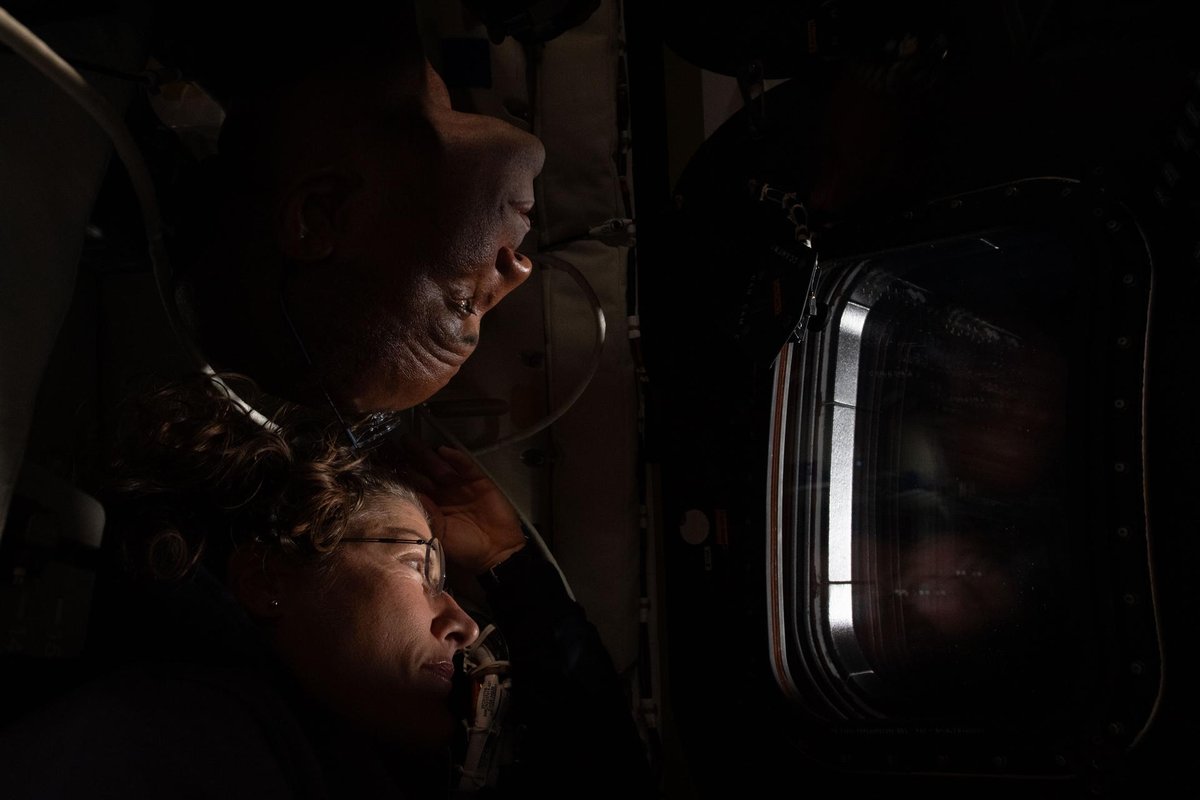
Five impact flashes Artemis II astronauts saw on the farside led NASA to estimate a one-in-10,000-per-decade chance of a similar strike on a Moon base. The crew counted them by eye and with handheld cameras on a flight carrying minimal science payloads, and the count gives planners of the south-pole base a background rate to design against.
The Scientist · Science desk
What happened
- Between April 1 and 10 the crew captured 814 gigabytes of lunar science data with digital cameras and iPhones, aboard a spacecraft carrying minimal science payloads.
- The crew flew outside any major annual meteoroid stream, so NASA treats the impacts seen in just under an hour as the Moon's typical background rate.
- Apollo astronauts occasionally reported hazes of sunlight-lofted dust over the surface, but the Artemis II crew saw none.
- The images show the Moon's seemingly monochrome surface dappled with greens, yellows, grays and browns.
Compiled by The ScientistSomething wrong?How this is made
Why it matters
- constraint NASA's per-decade strike figure is a background estimate, so it leaves out the annual meteoroid streams a permanent base would sit through year after year.
- decision With only five events behind it, the strike estimate is a starting value for shielding and siting, and longer flash counts would have to tighten it before it fixes design margins.
- capability With the images, audio and annotations in an online repository, researchers outside NASA can recount the flashes and test the preliminary findings themselves.
The method is simple. In just under seven hours around the Moon, the crew surveyed a large swath of the farside, some of it in total darkness [4]. Five flashes of light appeared in those dark regions. Each was at a different spot, and each was a meteorite impact [5]. Scientists worked from how bright and how brief the flashes were. They estimate each impactor at about 8.5 grams, roughly the mass of two dice, moving at tens of kilometres per second [6]. A direct strike from something that size could kill an astronaut or wreck a rover [18].
Five is a thin sample for a hazard rate. Counting statistics alone put a one-sigma uncertainty of 1/sqrt(5), about 45 percent, on any rate built from five events [19]. Error in the mass estimates and in the area under watch comes on top of that. Scientific American's account does not give that area, or the base footprint NASA assumed when it reached its one-in-10,000-per-decade figure [8].
Jen Heldmann, project scientist for Artemis IV and V, said understanding what the crew saw "matters for the future of human exploration" [10]. She was measured about the risk number. "We're probably safe going forward," Heldmann said [9].
The estimate covers the common end of the size range. Mostly, the Moon is pelted by meteoroids the size of bullets or footballs [11]. Bigger ones do arrive: in spring 2024 a 15-metre object cut a pit 222 metres long [12].
Artemis II was mainly a technology step toward crewed landings and, eventually, a small base near the south pole [17]. NASA says the imagery helps it judge which landing sites are best and how safe an outpost on the farside would be [16]. "These findings are going to help shape future Artemis's mission architectures," said Marie Henderson, Artemis II deputy lunar science lead [3]. I'd expect the impact count to carry over most directly to the polar site, because NASA treats it as the typical background rate for the lunar surface as a whole [7].
Dust is the slower threat. It is corrosive, abrasive and adhesive, and it chews through wires and spacesuits [14]. The view that the hazes Apollo crews described are transient rests on what one crew did not see during a single pass of under seven hours [13][4].
What to watch
- Whether NASA publishes the observed area and the base footprint behind the one-in-10,000-per-decade figure.
- Independent recounts from the online repository that confirm or revise the five-flash count and the 8.5-gram mass estimate.
- Flash counts taken during a major annual meteoroid stream, which would give the stream-time rate the background estimate leaves out.
Clarity's read
What the record supports and how the coverage leans. The claims behind it follow.
Reality
- Evidence45
- Adoption
- Insufficient
- Hype gap+30
- Incentives50
- Confidence50
Claim ledger
Ranked by verification strength, evidence, and original report placement.
- [1]
Although Artemis II's Orion spacecraft carried minimal science payloads, its astronauts were equipped with digital cameras and iPhones, and between April 1 and 10 they captured 814 gigabytes of lunar science data.
- [2]
NASA presented preliminary findings at a press conference; the release includes more than eight hours of crew audio, videos of the return to Earth, hand-annotated images and more, all available in a vast online repository.
- [3]
"These findings are going to help shape future Artemis's mission architectures," said Marie Henderson, Artemis II deputy lunar science lead, during the press conference.
- [4]
The crew's time around the Moon was just under seven hours, but they surveyed a large swath of the farside, some of which was cloaked in total darkness.
- [5]
The crew saw five flashes of light, each in a different location on the lunar farside; these were meteorite impacts.
- [6]
Based on the brightness and brevity of the five flashes, scientists think each meteoroid was around 8.5 grams in mass, about as much as two dice, moving at tens of kilometers per second.
- [7]
The Artemis II crew flew outside any major annual meteoroid streams, meaning the five impacts they saw in just under an hour likely represent the typical background rate of small meteorite impacts on the lunar surface.
- [8]
NASA gauged the likelihood of a similar meteoroid striking a future Moon base at about a one-in-10,000 chance per decade.
- [9]
"We're probably safe going forward," Heldmann says.
- [10]
Jen Heldmann, project scientist for Artemis IV and V, said understanding what the Artemis II crew saw on the farside "matters for the future of human exploration."
- [11]
Mostly, the Moon is pelted by meteoroids the size of bullets or footballs.
- [12]
In the spring of 2024 a 15-meter object slammed into the Moon, cutting out a 222-meter-long pit.
- [13]
Apollo astronauts occasionally reported hazes of sunlight-lofted dust drifting over parts of the lunar surface, but the Artemis II crew did not see any, suggesting the phenomenon may be transient rather than persistent.
- [14]
Lunar dust is corrosive, abrasive and adhesive, chews through wires, spacesuits and other hardware, and is a major long-term hazard.
- [15]
The Artemis II images showed that the Moon's seemingly monochrome surface is dappled with greens, yellows, grays and browns.
- [16]
The mission's high-resolution imagery helps address which landing sites might be best for upcoming missions and how safe an outpost would be on the lunar farside.
- [17]
Artemis II was chiefly a technological steppingstone for future crewed forays to the lunar surface, which should culminate with a small base near the Moon's south pole.
- [18]
Each small meteoroid could, with a direct strike, kill an astronaut or trash a Moon rover.
- [19]
A rate built from five counted events carries a one-sigma Poisson counting uncertainty of about 45 percent.
Sources
1 independent publisher whose own reporting we read for this story.
- scientificamerican.comArtemis II images boost NASA’s moon-base plans
1 article · October 8, 2026
Topics and entities
Follow any of these and your For You feed starts watching them — no settings page required.
Topics
- Meteoroid impact hazardFollow
- Lunar ExplorationFollow
- Lunar dustFollow
Entities
- NASAFollow
- Artemis IIFollow
- OrionFollow
- Marie HendersonFollow
- Jen HeldmannFollow
- Scientific AmericanFollow