Science1 publisher2 min readPublished
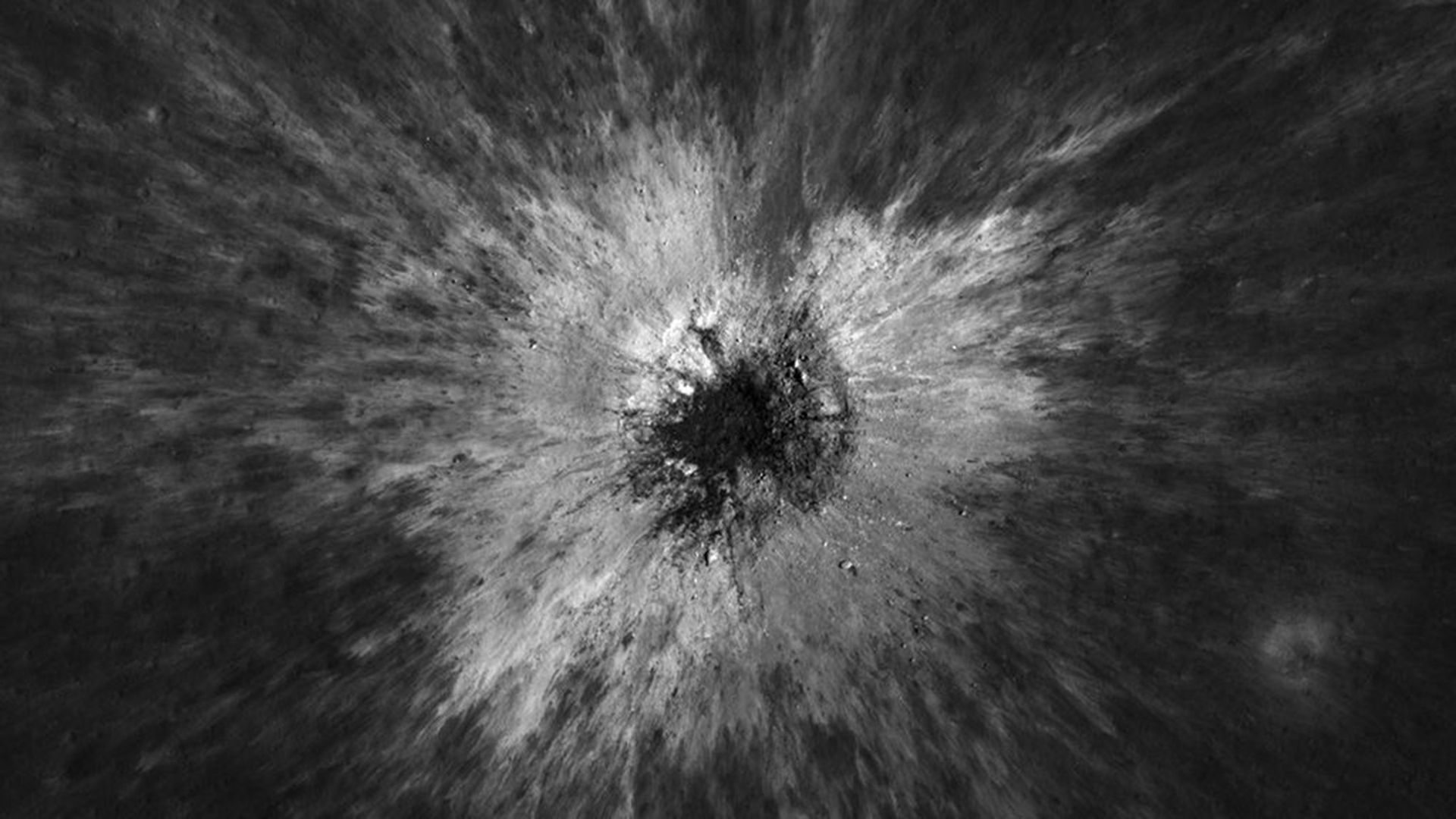
A fresh 222-meter lunar crater gives impact modelers a sample of one
McGetchin is the freshest large crater on the Moon's record. Its value to cratering science is that it is unweathered. The once-per-130-years recurrence figure still comes from a size model.
The Scientist · Science desk
What happened
- Two papers published Sept. 16 in Science Advances describe the freshest large impact crater yet found on the Moon, named McGetchin for the late lunar geologist Tom McGetchin.
- The impact happened in April or May 2024, and a colleague of the camera team found the resulting crater in Lunar Reconnaissance Orbiter data in October 2025.
- The team estimates the impactor was the size of a three-to-six-story building, and it struck where the dark volcanic mare meets the brighter ancient highlands.
- The orbiter circles the Moon about 12 times a day and images only a small strip per pass. Without a flash to aim at, the hunt for new craters is essentially random.
Compiled by The ScientistSomething wrong?How this is made
Why it matters
- capability Excavation and ejecta models can be tested against a crater shape weathering has not touched. No terrestrial impact structure offers that.
- constraint Any craters-per-year figure built from orbiter detections is a floor, because repeat coverage of the same ground takes years and new holes turn up by luck.
- precedent Stopar's appeal for amateur footage puts sky-watching archives in play as dating evidence for the next large impact someone finds late.
On Earth, weathering and degradation strip most of the original detail out of an impact structure; the Moon keeps it [13]. A crater about 2.5 years old keeps all of it, and Julie Stopar said this one is "in really, really good condition" [12]. Divide its 43-meter depth by its 222-meter width [4] and the shape comes out at about 0.19 [1], a ratio that stands as measured, with no erosion or infill correction to apply.
The landing site adds something. The object came down on the boundary between the dark volcanic mare plains and the brighter, hillier highlands, which are ancient crustal material, and the excavated material reflects both units [14]. For scale, the South Pole-Aitken basin is roughly 10,000 times wider [9], about 2,200 kilometers [4]. McGetchin is a small crater by lunar standards; it is the largest new one in the orbiter's 17 years of imaging [10].
The recurrence figure comes from the impactor population. "We know generally that there's more small things in space than there are large things, so that means we tend to get a lot of small craters on the moon and very few large craters," Stopar, deputy principal investigator on the orbiter's camera team, told Live Science [6][8]. Set the 130-year interval against LRO's 17 years of operation and the expected number of craters this size in the mission so far is 0.13 [3]. One detection sits comfortably with that. It does not tighten the estimate, and Live Science did not report an uncertainty on the 130-year figure.
The detection history is worth holding onto for the next one. LRO has taken more than 3 million images since 2009, and the two papers published Sept. 16 in Science Advances draw on a few hundred of them [1][5]. Between the April or May 2024 impact and the October 2025 identification, about 17 months passed [2].
There may also be a recording. Stopar said flashes from smaller impacts have been seen from Earth and that this one may have made one under good conditions [16]. "We don't know if anyone was watching, though," she said, and added that "if somebody out there has videos that they can dig through, they could go back and look for it" [17][18]. Amateur observers have since reported picking out the crater's bright debris ring from Earth [11]. A timestamped flash would replace a two-month formation window [5] with a moment.
What to watch
- Whether any amateur or observatory video from April or May 2024 contains an impact flash that fixes the formation time.
- Whether more new craters turn up as the team works further into the orbiter's archive of more than 3 million images.
- Whether reports of the bright debris ring seen from Earth hold up under larger telescopes.