Science1 publisherNot yet confirmed elsewhere3 min readPublished
ALMA's COMPASS survey detects methanol masers around more than half of 11 infant sun-like stars
ALMA's COMPASS survey found methanol masers around more than half of the 11 infant sun-like stars it studied. The survey puts organic chemistry around stars that are still forming, though its first papers do not trace any of it into a planet.
The Scientist · Science desk
What happened
- A paper led by Arnaud Belloche reports the first detection in space of fully deuterated methanol, CD3OD, around the protostar IRAS 4A2 in the Perseus molecular cloud.
- Methanol, the simplest alcohol, is central to building larger organic molecules and is the focus of several of the first results.
- The first results appear in seven papers in Astronomy & Astrophysics, with analysis of all detected species across all 11 sources still to come.
Compiled by The ScientistSomething wrong?How this is made
Why it matters
- constraint If the masers show up only once observations are sensitive enough, earlier low counts around low-mass protostars were limited by sensitivity and understate how common the emission is.
- capability Choosing stars across birth environments and evolutionary stages lets the team test whether age or birthplace sets a protostar's chemistry, though 11 stars leave few in any one group.
- constraint Claims that this chemistry seeds planets or life remain hypotheses for now, because the data cover molecules around forming stars and track none of them into a planet.
More than half of 11 stars means at least six [12]. The maser result comes from a paper led by Seoul National University graduate student Jae-Hong Jeong. It reports methanol masers, natural radio beacons produced by methanol molecules, as far more widespread around low-mass protostars than previously thought [5]. The release does not give the exact count, or the detection rate in the earlier work it is measured against.
That comparison needs care. The release says the result suggests such emission may be a common feature of early stellar evolution, "apparent when observations are sufficiently sensitive" [16]. On that reading, the stars had masers before any survey could pick them up, and the older, lower rate was partly a limit of the instruments. I think that reading holds, and the result still stands. In this sample, a young sun-like star with a methanol maser is the common case.
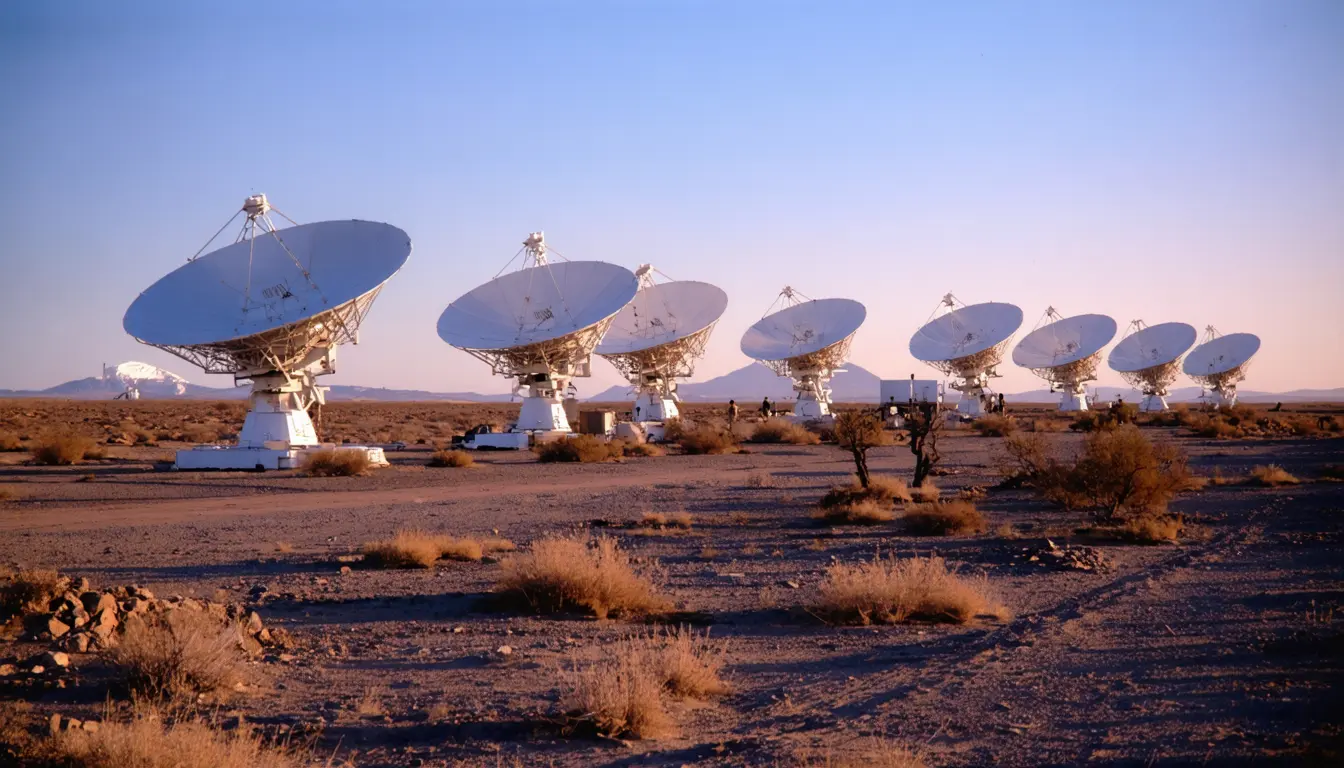
COMPASS points ALMA at 11 nearby, sun-like infant stars for more than 100 hours [2][3]. It combines signals from up to 66 dishes to map where each molecule sits, on scales comparable to our solar system [4]. The targets were picked so they could be compared. "With COMPASS we can for the first time systematically compare protostars from different environments and in different evolutionary stages to begin to understand how chemical complexity develops during star formation," said Adele Plunkett of the NSF NRAO, one of four co-principal investigators [9]. The team wants to know whether chemical differences between protostars come from their birth environments or from evolution during star formation [10]. Split 11 stars by environment and by stage and each group holds only a few, so that answer will rest on small numbers.
The second highlight is a single detection. A paper led by Arnaud Belloche of the Max Planck Institute for Radio Astronomy reports CD3OD around the protostar IRAS 4A2, in the Perseus molecular cloud about 1,000 light-years from Earth [6]. In this form of methanol, every hydrogen atom is replaced by deuterium, a heavier form of hydrogen, and this is its first detection in space [6]. As a first detection it shows the molecule exists in at least one place. Whether it turns up around any of the other ten sources [13] is a question for the full analysis, which will extend to all detected species across all 11 [10].
Methanol is the simplest alcohol and plays a central role in building larger organic molecules [7]. The release calls the inventory around these stars a "chemical starter kit" that may one day enrich planets [15]. The thing these seven papers [1] don't tell you is whether any of it gets there. They map molecules around stars that are still forming [4][15]. Following those molecules into a planet is a later step, and the program's principal investigator, Jes Jørgensen of the Niels Bohr Institute, puts it as the open problem. "We are getting completely new insights into the complex chemistry occurring around the youngest protostars," he said [8]. "The interesting question is how these chemical ingredients may influence the conditions on planets and potentially the origin of life there." [14]
The papers are initial analyses of the data set [1]. "We are just beginning to tap into the richness of this data set," said Jeong-Eun Lee of Seoul National University, another co-principal investigator. "As we expand the analysis, we expect to uncover entirely new aspects of how chemistry evolves on the path to planet formation." [11]
What to watch
- Whether the full analysis across all 11 sources finds chemical differences that line up with birth environment or with evolutionary stage.
- Whether CD3OD turns up around any of the other ten COMPASS protostars, or only around IRAS 4A2.
- The exact number of maser-hosting stars and the sensitivity of the earlier surveys they are compared with.
Clarity's read
What the record supports and how the coverage leans. The claims behind it follow.
Reality
- Evidence55
- Adoption
- Insufficient
- Hype gap+20
- Incentives60
- Confidence60
Claim ledger
Ranked by verification strength, evidence, and original report placement.
- [1]
The COMPASS program's first results appear in seven papers in Astronomy & Astrophysics, offering initial analyses of the data set.
- [2]
COMPASS (Complex Organic Molecules in Protostars with ALMA Spectral Surveys) is an ALMA Large Program studying 11 nearby, sun-like infant stars.
- [3]
COMPASS requires more than 100 hours of ALMA telescope time to systematically catalog the chemical compositions of its target stars.
- [4]
By combining signals from up to 66 of its dishes, ALMA detects faint fingerprints of organic molecules and maps how chemicals are distributed around young stars on scales comparable to our solar system.
- [5]
A paper led by Seoul National University graduate student Jae-Hong Jeong shows methanol maser emission, naturally occurring radio beacons produced by methanol molecules, is far more widespread around low-mass protostars than previously thought; the COMPASS data reveal methanol masers in more than half of the young stars studied.
- [6]
A paper led by Dr. Arnaud Belloche of the Max Planck Institute for Radio Astronomy reports the first detection in space of fully deuterated methanol (CD3OD), in which all of methanol's hydrogen atoms are replaced by deuterium, around the young protostar IRAS 4A2 in the Perseus molecular cloud, about 1,000 light-years from Earth.
- [7]
Methanol, the simplest alcohol, plays a central role in building larger organic molecules.
- [8]
"We are getting completely new insights into the complex chemistry occurring around the youngest protostars,"
ReportedSupportedSource: Jes Jørgensen, professor at the Niels Bohr Institute, University of Copenhagen, principal investigator of COMPASSView cited source - [9]
"With COMPASS we can for the first time systematically compare protostars from different environments and in different evolutionary stages to begin to understand how chemical complexity develops during star formation,"
ReportedSupportedSource: Dr. Adele Plunkett, NSF NRAO, one of four co-principal investigators with Audrey Coutens, Maria Drozdovskaya and Jeong-Eun LeeView cited source - [10]
Analysis of the full COMPASS data set will continue, extending to all detected species across all 11 sources, and aims to determine whether variations in chemical composition among protostars arise from their birth environments or from evolutionary processes during star formation.
- [11]
"We are just beginning to tap into the richness of this data set. As we expand the analysis, we expect to uncover entirely new aspects of how chemistry evolves on the path to planet formation."
ReportedSupportedSource: Professor Jeong-Eun Lee, Seoul National University, COMPASS co-principal investigatorView cited source - [12]
More than half of the 11 COMPASS protostars means at least six stars host methanol masers.
- [13]
Besides IRAS 4A2, the COMPASS sample contains ten other protostars.
- [14]
"The interesting question is how these chemical ingredients may influence the conditions on planets and potentially the origin of life there."
ReportedInsufficientSource: Jes Jørgensen, principal investigator of COMPASS2 sources— create a free account to open themView cited source - [15]
The release says young, still-forming stars are surrounded by a surprisingly sophisticated "chemical starter kit," including organic molecules such as methanol that may one day enrich planets.
ReportedInsufficientSource: phys.org release on the COMPASS results2 sources— create a free account to open themView cited source - [16]
The release says the maser finding suggests such emission may be a common feature of early stellar evolution, apparent when observations are sufficiently sensitive.
Sources
1 independent publisher whose own reporting we read for this story.
- phys.orgAlcohol in space: Exotic methanol discovered in planet-building zones
1 article · October 7, 2026
Topics and entities
Follow any of these and your For You feed starts watching them — no settings page required.