Science1 publisher3 min readPublished Updated
Two large whales, 100 records, 60 years: the southeast Atlantic finally has a baseline
A new compilation of Namibian and South African sightings finds 95% of blue and fin whale observations came after 2012. The counts are tiny, and that is the useful part.
The Scientist · Science desk
Drafted by a language model from the sources cited here and checked against its claim ledger before publication. How we use AISend a correction
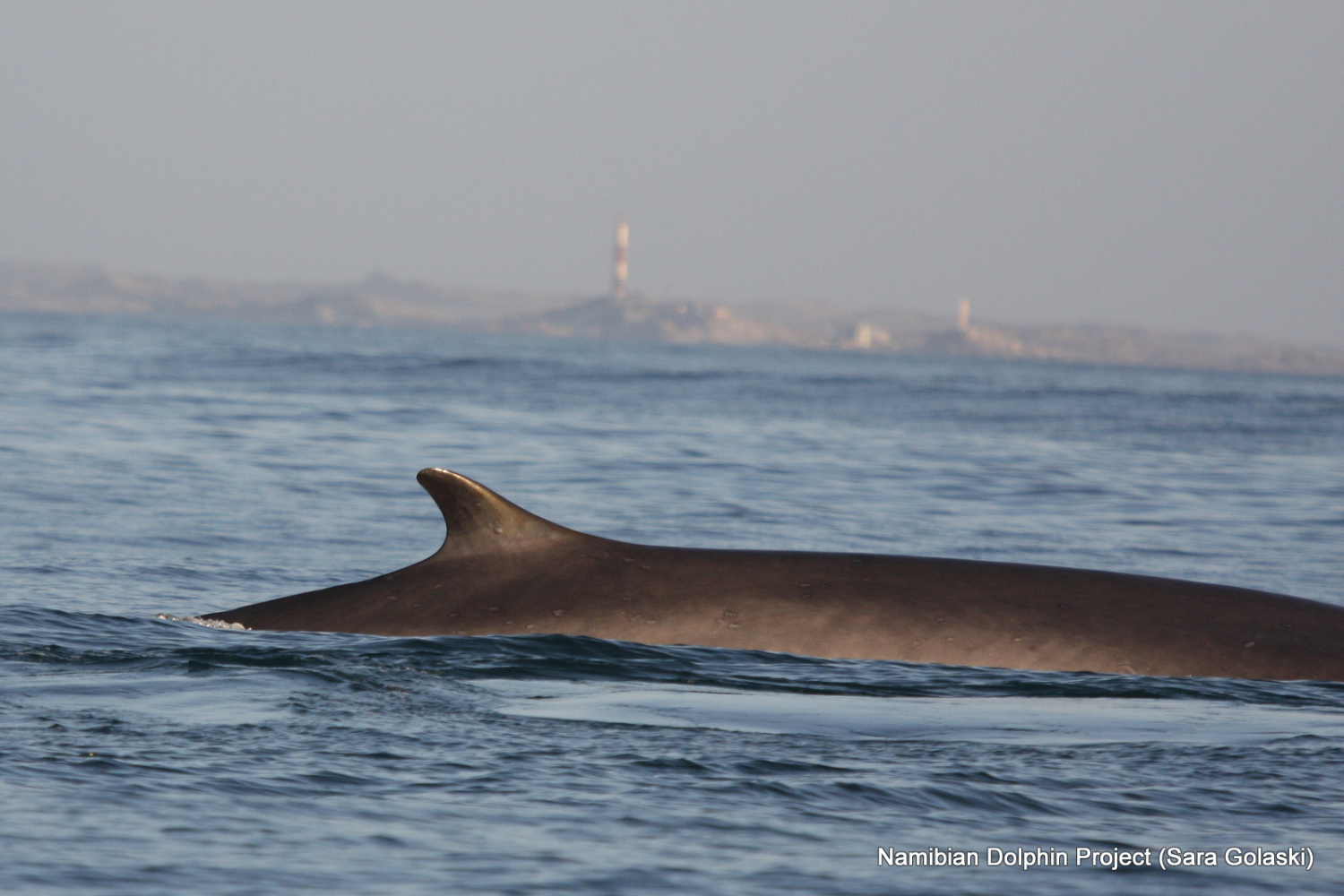
What happened
- New research published in the African Journal of Marine Science compiled more than 60 years of confirmed sightings and strandings of blue and fin whales from Namibia and South Africa's west coast.
- Although overall numbers remain low, sightings of both species have increased markedly in recent years, with 95% of observations recorded since 2012.
- The researchers compiled verified sightings and strandings recorded between 1964 and March 2025, focusing on the Benguela upwelling ecosystem, a nutrient-rich region off Namibia and the west coast of South Africa.
- The study focused on Antarctic blue whales (Balaenoptera musculus intermedia) and fin whales (B. physalus quoyi), both heavily targeted during the industrial whaling era.
- Between 1913 and 1978, an estimated 350,000 blue whales and 725,000 fin whales were killed.
Compiled by The ScientistSomething wrong?How this is made
Why it matters
A study in the African Journal of Marine Science has pulled more than 60 years of confirmed blue and fin whale sightings and strandings off Namibia and the west coast of South Africa into a single dataset, and found that 95% of the observations were recorded from 2012 onward [2][4]. The durable output here is not the recovery story but the baseline: according to lead author Bridget James of the University of Cape Town, there was until now very little consolidated information on the recent presence of either species in a region that historic whaling data suggests was once an important nursery area [8].
The raw counts are small enough to quote in full. For Antarctic blue whales, the researchers logged 12 sightings, one stranding and five additional published records [1], 18 records in total [14], across a window running from 1964 to March 2025 in the Benguela upwelling ecosystem [5]. That is fewer than one blue whale record per year over six decades [19]. Fin whales were more common: 76 sightings and six strandings [17], 82 records [23], about six times as many sightings as blue whales [24]. Blue whale records concentrated between late spring and autumn; fin whales occurred year-round [18].
The 95% figure is the headline and also the weakest link. Roughly the last 22% of the study window holds 95% of the observations [21], and co-author Simon Elwen of Sea Search and the University of Stellenbosch says the increase in sightings and strandings is consistent with gradual recovery but that increased offshore observation effort may also contribute [9]. Both species are hard to survey, ranging widely and spending much of their lives in remote Antarctic waters, which is why migration route and breeding ground data have been so thin [11]. Anyone using this dataset as a trend line rather than a presence record is overreading it.
The population context is grim arithmetic. An estimated 350,000 blue whales and 725,000 fin whales were killed between 1913 and 1978 [13]. Antarctic blue whales remain Critically Endangered on the IUCN Red List at about 3% of pre-whaling numbers, growing at roughly 5-8% per year [15]; fin whales are Vulnerable, thought to be above 30% of historical levels and growing 4-5% annually [16]. At 5-8% compounding, a population at 3% of its original size needs somewhere between about 46 and 72 years to return to pre-whaling abundance [22]. James is explicit that a return to the southeast Atlantic does not signal full recovery [7].
For operators, the consequence is in the threat list the authors attach: ship strikes, entanglement in fishing gear, underwater noise, pollution and climate-driven ecosystem change [20]. Seasonality is the actionable part of the paper. Blue whale presence is bounded to late spring through autumn, while fin whale presence is not bounded at all [18], which is a different problem for routing and gear planning in Benguela waters than a single closed season would be.
Two things to watch. First, whether effort-corrected analyses follow, because the 2012 breakpoint currently cannot be separated from the growth in offshore observation [9]. Second, whether blue whale records climb off a base of 12; Elwen notes that even after more than 50 years of recovery since commercial whaling ended, that is all the team could compile [3], while the study is framed as coming more than 40 years after that end point [10]. A baseline this sparse will move on small numbers, in both directions.