Science1 publisher3 min readPublished
Yellowstone's geysers run on water, and 15,000 years of lake mud says drought can throttle them
A Montana State-led study in PNAS reads pollen, charcoal, arsenic and diatoms from closed lakes in the Lower Geyser Basin. Its framing: dry centuries brought less hydrothermal activity and more fire.
The Scientist · Science desk
Drafted by a language model from the sources cited here and checked against its claim ledger before publication. How we use AISend a correction
What happened
- A study led by a Montana State University research professor reveals how climate and hydrothermal activity have shaped the vegetation, wildfire and aquatic ecosystem histories of the Yellowstone Plateau over the past 15,000 years; results published in the Proceedings of the National Academy of Sciences.
- Publisher's framing of the study: Yellowstone's past droughts may signal less geyser activity and more wildfires.
- Cathy Whitlock is MSU Regents Professor emerita of Earth sciences in the College of Letters and Science and the first scientist elected to the National Academy of Sciences from a Montana university.
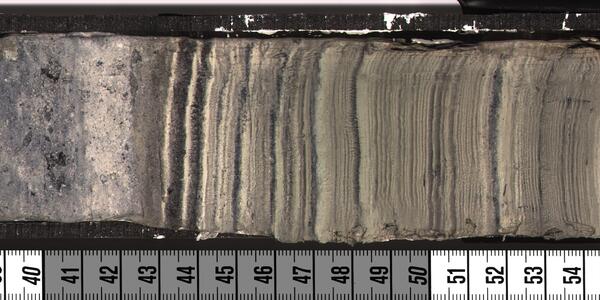
- Whitlock's interest in the Lower Geyser Basin was piqued in 2020 after she and co-author Chris Schiller took sediment cores from the bottom of one of the basin's small lakes and noticed its contents differed from lakebeds in other parts of the park, suggesting distinct geologic factors influenced the lake's evolution.
- At about the same time, Whitlock read a paper speculating that a lack of water in the geyser system caused Old Faithful to stop erupting in the early 13th century for about 100 years.
Compiled by The ScientistSomething wrong?How this is made
Why it matters
A team led by Montana State University has published a 15,000-year environmental history of Yellowstone's Lower Geyser Basin in the Proceedings of the National Academy of Sciences, reconstructing how climate and hydrothermal activity shaped vegetation, wildfire and aquatic ecosystems on the Yellowstone Plateau [1]. The claim that should interest anyone who treats geysers as a permanent fixture is the one in the study's public framing: Yellowstone's past droughts came with less geyser activity and more wildfire [2].
The work started with mud that looked wrong. Cathy Whitlock, MSU Regents Professor emerita of Earth sciences and the first scientist elected to the National Academy of Sciences from a Montana university [3], and co-author Chris Schiller cored a small lake in the basin in 2020 and found its contents unlike lakebeds elsewhere in the park, pointing to local geology as a driver of the lake's history [4]. Around the same time, Whitlock read a paper speculating that a lack of water in the geyser system stopped Old Faithful erupting in the early 13th century for about 100 years [5]. Her stated question was whether the long dry periods already known from Yellowstone's past, some lasting several centuries, had left a signature in ancient geyser activity [6].
The design uses an unusual set of lakes. The team cored small lakes of different ages in the Lower Geyser Basin, Yellowstone's largest geyser system, all closed basins with no inflowing or outflowing streams [7]. Whitlock says they likely sit in depressions left by hydrothermal explosions during wet climate periods, and that two formed shortly after the region's glaciers melted, when the removal of ice released pressure on the system [8]. The lakes are both recorders of hydrothermal behaviour and products of it.
Ages come from radiocarbon dating and from buried layers of known volcanic eruptions [9]. Pollen gives vegetation and charcoal-rich layers mark fires [10], while arsenic and cesium concentrations and diatom composition track hydrothermal activity, lake chemistry and water depth [11]. Collaborators included the U.S. Geological Survey, Oregon State University, Colorado State University and Manchester University alongside MSU faculty, postdocs and students [12].
The vegetation result is dull, and that is the point. Steppe on rhyolite soils gave way to lodgepole pine forest established between 12,800 and 11,000 years ago [13], which is at least 11,000 of the record's 15,000 years, roughly three quarters of it [14]. Composition barely moved through subsequent climate change, leading the authors to expect lodgepole to keep dominating the plateau as warming continues [15]. Whitlock credits infertile, well-drained rhyolite soils and lodgepole's fire adaptation [16]. Fire is the responsive variable: "While the vegetation has been remarkably insensitive to past climate change, fire activity on the plateau has responded dramatically," she said [17].
The account available to us stops before the numbers. The drought linkage emerges from comparing the lake records against high-resolution paleoclimate model results for Yellowstone [18], so the strength of that comparison is the thing to check in the paper itself. Also worth watching: whether the arsenic and cesium series can distinguish a basin-wide drought signal from plumbing changes at individual vents [11], and whether the Old Faithful hiatus, still a hypothesis from a separate paper [5], picks up independent support from basin sediment.