ScienceNot yet confirmed elsewhere1 publisher2 min readPublished
X-ray laser movies show a water molecule holding steady in the cancer-linked enzyme AspH
Oxford-led researchers used SLAC's LCLS X-ray laser to follow AspH and IPNS step by step and made observations calculations had not predicted. In AspH an iron-bound water stayed stable through catalysis, and phys.org's account says such insights could inspire new therapeutics.
The Scientist · Science desk
AspH: levels increased in multiple cancers, especially glioblastoma. AspH reaction: will not proceed if the iron-bound water is disrupted. IPNS: its reaction could guide modified penicillin to overcome resistance. Calculations: did not predict the observations, Schofield said.
- exposure AspH, cancer-linked enzyme Levels are increased in multiple cancers, especially the hard-to-treat brain cancer glioblastoma, claim 15
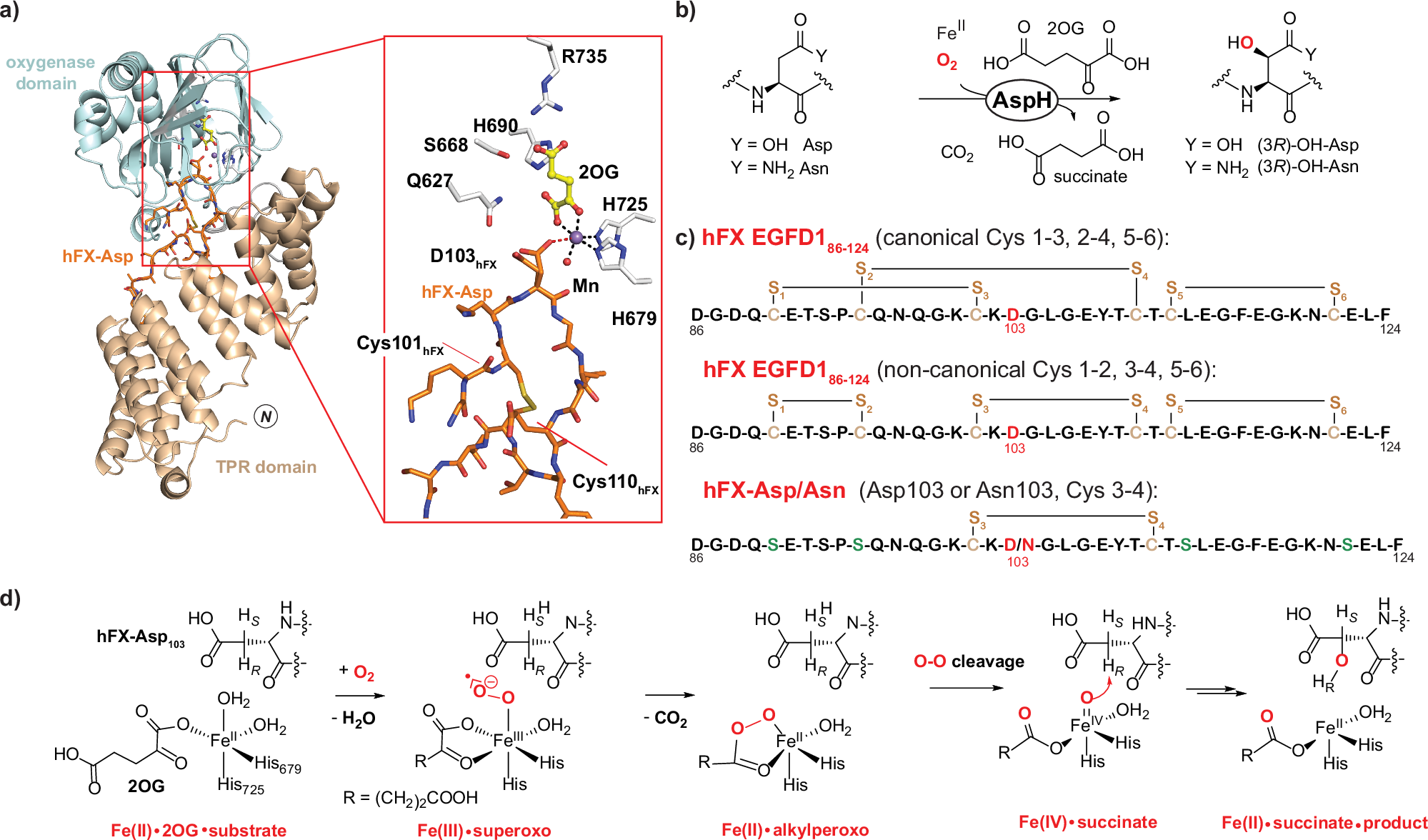
- constraint AspH reaction If the stability of the iron-bound water is disrupted, the reaction will not proceed, claim 7
- capability IPNS, penicillin enzyme Analyzing its reaction could help create modified penicillin that could overcome antibiotic resistance, claim 18
- contradiction Sophisticated calculations Did not predict the observations from these experiments, Schofield said, claim 4
| Who | How | Kind | Claim |
|---|---|---|---|
| AspH, cancer-linked enzyme | Levels are increased in multiple cancers, especially the hard-to-treat brain cancer glioblastoma | exposure | 15 |
| AspH reaction | If the stability of the iron-bound water is disrupted, the reaction will not proceed | constraint | 7 |
| IPNS, penicillin enzyme | Analyzing its reaction could help create modified penicillin that could overcome antibiotic resistance | capability | 18 |
| Sophisticated calculations | Did not predict the observations from these experiments, Schofield said | contradiction | 4 |
What happened
- At LCLS's MFX instrument, microcrystals of each enzyme run through a system that injects oxygen to start the reaction, and the team reads how X-rays scatter off the sample in real time.
- The team already knew that iron-bound water was essential for AspH catalysis, and the new work shows that disrupting its stability stops the reaction.
- AspH levels are increased in multiple cancers, especially glioblastoma, the hard-to-treat brain cancer.
- Penicillin's two reactive rings put it beyond chemical synthesis, so it is made by fermentation in microbial cells, with IPNS catalyzing a vital early-stage reaction.
Why it matters
- constraint Schofield's report that the observations beat sophisticated calculations is a caution for design. A mechanism worked out by calculation alone is a weak basis for a drug when measured steps differ, so the measured intermediates become the reference.
- decision AspH drug work gets a specific question to test: whether a compound can disturb the iron-bound water, since disturbing it halts the reaction. The account reports no such compound.
- capability Starting these reactions on cue and imaging them at room temperature in atomic detail gives researchers a way to check a proposed mechanism against observed intermediates before building a therapeutic on it.
"Our observations from these experiments were not predicted by sophisticated calculations," Schofield said [4]. His co-lead, Patrick Rabe, put the aim this way: "We wanted to understand specifically how enzymes are controlling the intermediates" [12].
Intermediates are the molecules produced and then consumed in the middle of a reaction, and capturing them has been hard [8]. The femtosecond pulses give atomic detail at room temperature and do not damage the biological sample [10]. Jan Kern of Berkeley Lab described the groundwork: "We have been working for many years to develop experimental protocols that allow us to precisely start the reaction in these fascinating enzymes and watch them perform complicated chemistry step by step in real time," Kern said [11].
Roberto Alonso-Mori, a senior scientist at SLAC, said of the move from static structures to time-resolved ones: "It has really given us an understanding of the function of proteins" [13].
Rabe and Christopher Schofield led the work from the University of Oxford, with Kern in close collaboration, and the two papers appeared in Nature Communications and Nature Catalysis [2][3]. On the therapeutic side the account is conditional throughout. It says that studying AspH's structure, function and regulation could let scientists use the enzyme as both a biomarker and a therapeutic target [16]. It says analyzing the IPNS reaction could help scientists create a synthetic modified penicillin that overcomes antibiotic resistance [18].
The thing this doesn't tell you is how close either idea is to a drug. phys.org's headline credits water with unexpected roles in both enzymes [14], but the account's detail on water covers AspH only, and it does not report crystal counts, time points or any compound tested against either enzyme.
What to watch
- Whether the Nature Catalysis paper on IPNS reports a water role comparable to the stable iron-bound water seen in AspH, with the crystal counts and time points behind it.
- Whether any compound designed to displace or destabilize the iron-bound water in AspH is reported to inhibit the enzyme.
- Whether the IPNS reaction data are used to make a modified penicillin that is tested against resistant bacteria.
Clarity's read
What the record supports and how the coverage leans. The claims behind it follow.
Reality
- Evidence62
- Adoption
- Insufficient
- Hype gap+15
- Incentives
- Insufficient
- Confidence55
Claim ledger
Ranked by verification strength, evidence, and original report placement.
- [1]
In two papers, researchers used LCLS at SLAC to study the AspH enzyme, a potential cancer therapeutic target, and the IPNS enzyme, which is essential for creating penicillin.
- [2]
The research was led by Patrick Rabe and Christopher Schofield of the University of Oxford, in close collaboration with Jan Kern of Lawrence Berkeley National Laboratory.
- [3]
The research was published in Nature Communications and Nature Catalysis.
- [4]
"Our observations from these experiments were not predicted by sophisticated calculations," Schofield said.
ReportedSupportedSource: Christopher Schofield, University of Oxford, quoted by phys.orgView cited source - [5]
By examining the reactions step by step on timescales of quadrillionths of a second, the researchers found the enzymes activate reactions in surprising ways, leading to insights that could inspire novel therapeutics and drug development.
- [6]
For AspH, the researchers saw an iron-bound water molecule remain stable throughout the reaction, a factor that appeared to be important for catalysis.
- [7]
The research team knew iron-bound water was essential for catalysis in AspH; the work shows that if its stability is disrupted, the reaction will not proceed.
- [8]
Capturing intermediates, the molecules produced and then consumed in the middle of a reaction, has been challenging.
- [9]
At the MFX instrument, researchers create microcrystal samples of the enzymes, run them through a system that injects oxygen to induce the reaction, and examine in real time how LCLS X-rays scatter off the sample.
- [10]
LCLS femtosecond pulses let researchers observe reactions in atomic detail, at room temperature and without damaging the biological samples.
- [11]
"We have been working for many years to develop experimental protocols that allow us to precisely start the reaction in these fascinating enzymes and watch them perform complicated chemistry step by step in real time," Kern said.
- [12]
"We wanted to understand specifically how enzymes are controlling the intermediates," Rabe said.
- [13]
"It has really given us an understanding of the function of proteins," Alonso-Mori said.
ReportedSupportedSource: Roberto Alonso-Mori, senior scientist at SLAC, quoted by phys.orgView cited source - [14]
phys.org's headline for the account reads: Powerful X-rays reveal unexpected roles for water in enzymes linked to cancer and penicillin.
- [15]
Levels of AspH are increased in multiple cancers, especially the hard-to-treat brain cancer glioblastoma.
- [16]
By examining the structure and function of AspH and how it is regulated, scientists could potentially use the enzyme as both a biomarker and a therapeutic target for cancer treatment.
- [17]
Penicillin has two reactive rings and cannot be made by chemical synthesis; it is made by fermentation in microbial cells, and the IPNS enzyme catalyzes a vital early-stage reaction.
- [18]
Analyzing how the IPNS reaction works could help scientists find a way to create synthetic modified penicillin that could overcome antibiotic resistance.
Sources
1 independent publisher whose own reporting we read for this story.
- phys.orgPowerful X-rays reveal unexpected roles for water in enzymes linked to cancer and penicillin
1 article · October 13, 2026
Topics and entities
Follow any of these and your For You feed starts watching them — no settings page required.
Entities
- SLAC National Accelerator LaboratoryFollow
- Linac Coherent Light SourceFollow
- University of OxfordFollow
- Lawrence Berkeley National LaboratoryFollow
- Christopher SchofieldFollow
- Phys.orgFollow