ProductNot yet confirmed elsewhere1 publisher2 min readPublished
West Java reviews water requirements for BDx's suspended AI campus near Jatiluhur Reservoir
West Java officials are reviewing water needs for BDx's suspended 640MW AI campus, which the IESR projects at about 384 liters per second at full scale. Teams counting on it for regional AI capacity are waiting on a permit decision in Purwakarta before construction can resume.
The Product Desk
Governor Dedi Mulyadi estimated BDx would require about 380 liters per second. An October 5 environmental review discussion cited an operational requirement of 27 liters per second. IESR projects full-scale demand of approximately 384 liters per second, not current consumption.
| Figure | Value | Note | Claim |
|---|---|---|---|
| Governor's estimate of BDx water need, about | 380 liters/second | 12 | |
| Operational requirement cited at review | 27 liters/second | October 5 environmental review discussion | 14 |
| IESR full-scale campus projection, approximately | 384 liters/second | projected demand, not current use | 3 |
What happened
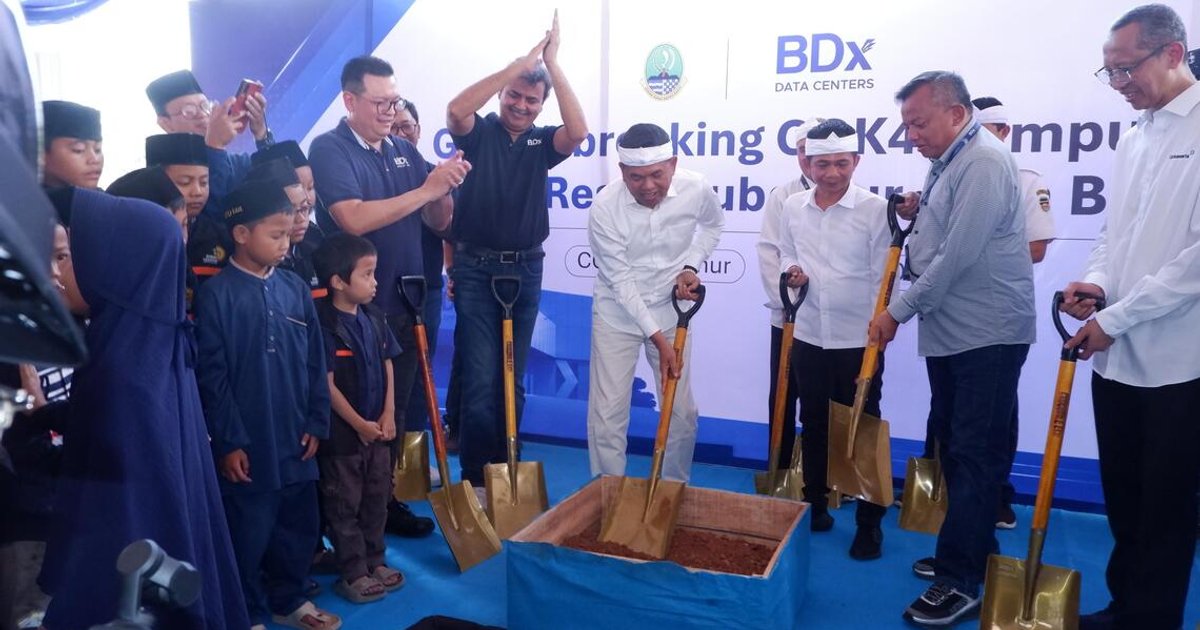
- Construction began in September and stopped after Governor Dedi Mulyadi found that the environmental impact assessment (AMDAL) and building approval (PBG) had not been issued.
- In an October 1 provincial statement, Mulyadi estimated that BDx would need about 380 liters per second of water.
- An October 5 environmental review discussion cited a much smaller operational requirement of 27 liters per second.
- The province has consulted a University of Indonesia professor and researchers from the National Research and Innovation Agency to help evaluate the environmental assessment.
Why it matters
- exposure The withdrawal would be judged against the communities and irrigation farms that draw on Jatiluhur, and the assessment has to cover effects on those users in dry periods.
- cost TechRepublic says permitting delays could move the date enterprises planning regional deployments can use the capacity, so the schedule risk lands on buyers who planned around it.
- precedent If the communications minister's October 7 call for cross-sector location assessments is adopted, water availability becomes a siting check beside electricity for other Indonesian data centers.
Anyone writing a date next to this campus in a deployment plan has water figures to choose from, and they do not agree. The governor's estimate of about 380 liters per second [12] is 12.7% of the 3,000 liters per second he said Purwakarta's water utility holds [17]. IESR's 384 liters per second at full scale [3] is about 14 times the 27 cited in the October 5 review discussion [18].
The nearby supply system gives a third way to size it. Permitted for 120 liters per second with about 70 in use [15], it has 50 liters per second of headroom [19]. That covers 27. The 384 is about 7.7 times that headroom [20]. Treat this as a sizing check and nothing more: TechRepublic reports that the figures appear to concern different supply arrangements or development stages, and that their relationship has not been fully clarified [16].
Water is one item inside a larger permit. The suspension was ordered over missing approvals, and the water question sits inside one of them. Officials believe a draw near 380 liters per second could be accommodated without disrupting existing supplies [13]. The environmental assessment is the document that must establish projected withdrawals [5], and the West Java government confirmed that the AMDAL has not been issued [2].
Teams tend to tell themselves that a secured grid connection and a stated date add up to a schedule. BDx's September 22 announcement covered the first: 845 megavolt-amperes of grid capacity from state utility PLN [7]. For the second, The Straits Times reported that BDx still targets early 2027 for its first contracted phase, subject to approvals [8]. Purwakarta's permitting decisions will determine when construction can resume and whether that timetable is achievable [22].
We think a team with a regional deployment tied to this campus should treat early 2027 as a conditional date and keep a second source of capacity open until the AMDAL and PBG are issued. The tradeoff is the cost of holding a fallback that may go unused. A two-axis sort sizes that cost: whether the approvals are issued, and whether the sources agree on one water figure. If both are yes, plan to the date. Where approvals are issued but the figure is open, plan to the date and ask how the dry-period withdrawal was assessed. When the figure is agreed and approvals are pending, plan to the permit decision. If neither holds, keep the fallback. On the record so far BDx sits in that last cell: the AMDAL and PBG have not been issued [2], and the water figures have not been reconciled [16].
What to watch
- Whether Purwakarta and West Java issue the AMDAL and PBG, since those decisions set when construction can resume.
- Whether the environmental assessment reconciles the 27, 380 and 384 liters per second figures and tests withdrawals in dry periods.
- Whether BDx keeps its early-2027 target for the first contracted phase once the review reports.
Clarity's read
What the record supports and how the coverage leans. The claims behind it follow.
Reality
- Evidence50
- Adoption
- Insufficient
- Hype gap
- Insufficient
- Incentives
- Insufficient
- Confidence60
Claim ledger
Ranked by verification strength, evidence, and original report placement.
- [1]
West Java officials are reviewing water requirements for BDx Data Centers' proposed AI campus near Jatiluhur Reservoir.
- [2]
Construction began in September but was suspended after Governor Dedi Mulyadi identified missing approvals; the West Java government confirmed that the environmental impact assessment (AMDAL) and building approval (PBG) had not been issued.
- [3]
The six-building campus, known as AI Campus 2 or CGK4, could eventually require approximately 384 liters of water per second, or 33,000 cubic meters daily; the figure is projected full-scale demand, not current consumption.
ReportedSupportedSource: Institute for Essential Services Reform (IESR), via TechRepublicView cited source - [4]
Jatiluhur Reservoir supplies water for communities and agricultural irrigation in West Java.
- [5]
The environmental assessment must establish projected withdrawals.
- [6]
The provincial government has consulted a University of Indonesia professor and researchers from Indonesia's National Research and Innovation Agency to help evaluate the environmental assessment.
- [7]
BDx has secured 845 megavolt-amperes of grid capacity from state utility PLN, according to its September 22 announcement.
- [8]
BDx still targets early 2027 for its first contracted phase, subject to approvals.
- [9]
Communications and Digital Minister Meutya Hafid called for cross-sector assessment of data center locations on October 7, including electricity and water availability.
- [10]
The environmental assessment must establish potential effects on existing users, including during dry periods.
- [11]
In an October 1 provincial government statement, Governor Dedi Mulyadi said Purwakarta's municipal water utility has an allocation of 3,000 liters per second.
ReportedContestedSource: Governor Dedi Mulyadi, October 1 provincial government statement, via TechRepublic2 sources— create a free account to open themView cited source - [12]
Governor Dedi Mulyadi estimated BDx would require about 380 liters per second.
ReportedContestedSource: Governor Dedi Mulyadi, October 1 provincial government statement, via TechRepublic2 sources— create a free account to open themView cited source - [13]
Officials believe a draw of about 380 liters per second could be accommodated without disrupting existing supplies.
ReportedContestedSource: TechRepublic, citing officials and the October 1 provincial statement2 sources— create a free account to open themView cited source - [14]
An October 5 environmental review discussion cited a smaller operational requirement of 27 liters per second.
ReportedContestedSource: TechRepublic, describing an October 5 environmental review discussionView cited source - [15]
Officials described a nearby water-supply system with 120 liters per second of permitted capacity, of which approximately 70 liters per second was already being used.
- [16]
The figures appear to concern different supply arrangements or development stages, but their relationship has not been fully clarified.
- [17]
The governor's 380 liters per second estimate is about 12.7% of Purwakarta utility's 3,000 liters per second allocation.
- [18]
IESR's 384 liters per second is about 14 times the 27 liters per second cited on October 5.
- [19]
The nearby supply system has about 50 liters per second of unused permitted capacity.
- [20]
IESR's 384 liters per second is about 7.7 times the nearby system's 50 liters per second of headroom.
- [21]
Permitting delays could affect when the infrastructure becomes available to enterprises planning regional deployments.
- [22]
Purwakarta's permitting decisions will determine when construction can resume and whether the timetable remains achievable.
Sources
1 independent publisher whose own reporting we read for this story.
- techrepublic.comIndonesia’s 640MW AI Campus Faces Water Supply Review After Construction Halt
1 article · October 12, 2026
Topics and entities
Follow any of these and your For You feed starts watching them — no settings page required.
Topics
- Indonesia AI infrastructureFollow
- Data Center PermittingFollow
- Data Center Water UseFollow