ProductNot yet confirmed elsewhere1 publisher2 min readPublished
At a data center conference, panelists lay out strategies for easing community opposition
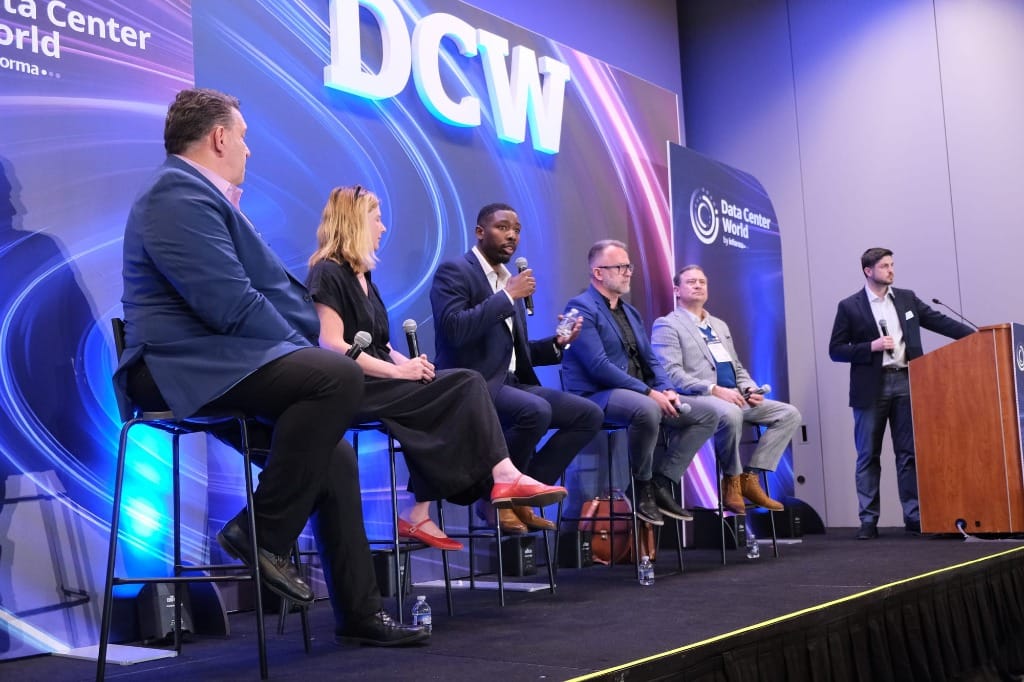
Grow NELA's Rob Cleveland told a Dallas panel that his region's 15-day permit draws data center developers who wait a year or more elsewhere. The session urged early engagement with wary towns, yet credited permit speed over community sentiment as the real draw.
The Product Desk
What happened
- The session on local opposition ran at Data Center World Power, a Dallas spinoff of the Data Center World conference held this month, and was moderated by Calvert Street Group's Matt Bailey.
- Washington has taken up whether AI infrastructure costs get passed to consumers, with policymakers and technology companies debating how to keep them off residential bills.
- The report granted that specific areas have active protest groups, some of them raising concerns that developers need to address properly.
- The report said few developers object to paying their share, and that many would build an entire power plant and give some of that power back to the local community.
Why it matters
- decision Sullivan's account leaves developers a sequencing choice: brief the town before filing for permits, or lock approvals in first and manage the reaction afterward.
- contradiction The speakers urging engagement also call the backlash a distortion, and the reassurance comes from an authority whose mandate is attracting investment and a developer who builds the sites, so weigh it against the incentive.
- constraint Cleveland says much of the local concern traces to older projects that used far more water or coincided with sharp rate rises, so a modern design still has to answer for the last data center nearby.
Hecate Energy's chief development officer, Diane Sullivan, told the Dallas panel how the old way to build in a rural county worked [8]. A developer cultivates the town supervisor, secures the permits, and lets everyone else find out later [8]. She called that going "under the radar." Sullivan had faced wary communities earlier in her career, over planned wind farms, before she moved into data centers [7].
On a conference stage like this one, the pitch is community engagement, the recommended strategy for getting ahead of local opposition [10]. The lever the same speakers point to is more ordinary. Grow NELA's 15-day permit is roughly 24 times faster than the year-plus waits Cleveland says developers hit in other states [3][11]. The report credits that speed and the transparency of the process for the interest the region now draws [9].
Cleveland argues the fear is overstated. "Our local elected officials continue to be supportive because they're seeing every day the real impacts that are coming into our region," he said. "The questions we get locally about water and power are being answered relatively easily" [4]. The report that covered the panel takes the same line in its own voice. It calls the picture of nationwide revolt a distortion and says many areas take the jobs and tax revenue without slowing down [12].
Where opposition does organize, the power bill is the concrete thing it points at. The Energy Information Administration expects US electricity consumption to reach record levels in 2026, with data centers and manufacturing among the drivers [6].
What to watch
- Whether Washington acts to stop AI infrastructure costs from landing on residential power bills.
- Whether other regions copy Northeast Louisiana's 15-day permitting to compete for projects.
- Whether the areas with active protest groups slow the approvals developers are counting on.
Clarity's read
What the record supports and how the coverage leans. The claims behind it follow.
Reality
- Evidence30
- Adoption
- Insufficient
- Hype gap+35
- Incentives75
- Confidence30
Claim ledger
Ranked by verification strength, evidence, and original report placement.
- [1]
A panel on data center community opposition was held at Data Center World Power, a Dallas spinoff of the annual Data Center World conference staged this month, and was moderated by Matt Bailey, chief operating officer of Calvert Street Group.
- [2]
Rob Cleveland is president and CEO of Grow NELA, the Northeast Louisiana Regional Economic Development Authority, which works to drive economic growth through investment and workforce initiatives.
- [3]
Some people we deal with from other states have been waiting more than a year on a permit, whereas the permitting time in Northeast Louisiana is only 15 days.
- [4]
Our local elected officials continue to be supportive because they're seeing every day the real impacts that are coming into our region. The questions we get locally about water and power are being answered relatively easily.
- [5]
Cleveland said data center development is more responsible today than a few years ago, and that some community concerns stem from older projects that consumed very high amounts of water or sat in areas where power rates had risen sharply, sometimes linked to a data center and sometimes not.
- [6]
The US Energy Information Administration expects US electricity consumption to reach record levels in 2026, with data center development and manufacturing activity helping drive the increase.
- [7]
Diane Sullivan is chief development officer of Hecate Energy, a Chicago-based US developer of utility-scale energy parks, and a veteran of community engagement who earlier in her career faced communities concerned about planned wind farms.
- [8]
Sullivan said a mistake made in the past was to enter a rural community with a project that would benefit it greatly but do it 'under the radar,' cultivating the project with the town supervisor and obtaining permits.
ReportedSupportedSource: Diane Sullivan, chief development officer of Hecate EnergyView cited source - [9]
Cleveland's organization attracts development interest and investment through the speed and transparency of its permitting process, and the region is attracting considerable interest in data center development.
- [10]
At the panel, several speakers laid out what developers need to do to engage more effectively with local groups opposing data center expansion.
- [11]
A 15-day permit is roughly 24 times faster than a one-year wait, and because the comparison waits exceed a year, the real gap is larger.
- [12]
The report argued that the picture of nationwide, all-out opposition to data centers is a distortion of reality, and that many areas accept the jobs, tax revenue, and economic benefits, where the pace of AI data center development is not slowing.
- [13]
The report acknowledged that specific areas have local protest groups that have created a stir, and that some of them raise valid concerns that must be addressed properly.
- [14]
The question of whether AI infrastructure costs are passed on to consumers has drawn attention in Washington, where policymakers and technology companies are debating how to prevent it.
- [15]
According to the report, few developers object to paying their share, and many are happy to build an entire power plant and provide some of that power to the local community.
Sources
1 independent publisher whose own reporting we read for this story.
- techrepublic.comData Center Opposition Is Growing: Developers Rethink Their Community Strategy
1 article · October 6, 2026
Topics and entities
Follow any of these and your For You feed starts watching them — no settings page required.
Topics
- Data center power demandFollow
- Electricity rate cost allocationFollow
- Data Center Community OppositionFollow
- Data Center PermittingFollow