ScienceNot yet confirmed elsewhere1 publisher2 min readPublished
Satellite records show urban vegetation recovering better than rural vegetation in 78% of 751 cities
University of Hong Kong researchers found urban vegetation more resilient than surrounding rural vegetation in 78% of 751 cities across 109 countries. The gap widened between 2001 and 2022, though the authors say the study does not establish irrigation as the cause.
The Scientist · Science desk
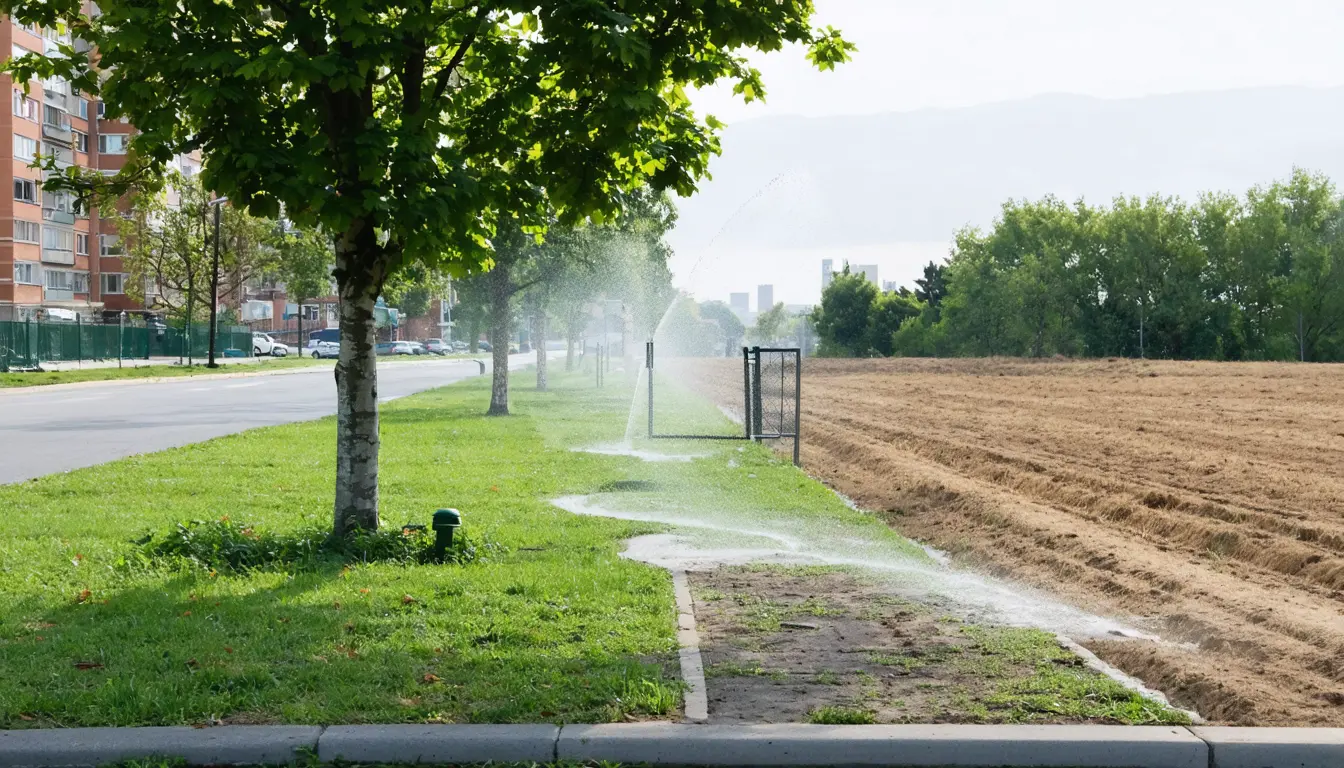
Key figures: in 32% of cities, urban vegetation lost less greenness during disturbances and recovered faster afterward than rural vegetation. In about 22% of cities, about 165 of 751, the urban core was not more resilient. The study covered 109 countries.
| Figure | Value | Note | Claim |
|---|---|---|---|
| Urban vegetation lost less, recovered faster | 32% of cities | 10 | |
| Cities where urban core was not more resilient, about | 22% of cities | about 165 of 751 cities | 15 |
| Countries in the study | 109 countries | 1 |
What happened
- Rural vegetation drove the divergence: its resilience declined, while urban vegetation stayed comparatively stable or improved slightly over the two decades.
- The urban advantage was most pronounced in hot and arid regions, where vegetation is strongly constrained by water availability.
- In 32% of cities, urban vegetation lost less greenness during disturbances and also recovered faster afterward than surrounding rural vegetation, a pattern the authors call a dual advantage.
- Among the factors examined, a management-associated water-subsidy proxy had the strongest statistical association with the urban advantage, followed by canopy structure.
Why it matters
- constraint About 165 cities, roughly 22% of the sample, did not show an urban advantage, so the result is a majority pattern and says little about any single city without local data.
- constraint A gap that widens through rural decline can keep growing in years when city vegetation recovers no better than before, so the gap alone is a poor gauge of urban improvement.
- exposure In hot and arid regions, where the advantage is strongest, the best-associated factor is a water-subsidy proxy. If that link is causal, and the study does not show that it is, urban green space there is only as secure as its water supply.
Resilience here means the capacity of vegetation to recover following disturbance, measured from satellite observations of 751 cities across 109 countries between 2001 and 2022 [3][1]. The 78% figure counts cities. Applied to 751, it is about 586 [14]. Each comparison sets a city's core against its own rural surroundings [4], a sensible control, since both sit under broadly the same regional weather. The phys.org account of the study does not report how large the recovery difference is in any unit.
Jin Wu, who led the study with Yuyu Zhou, said, "Vegetation remaining within cities can show unexpectedly strong recovery capacity under environmental stress." [12] The authors present the result as a challenge to the view that cities are uniformly detrimental to ecosystem stability [18]. They read the water and canopy associations as consistent with the possibility that urban management can help buffer vegetation against increasing climate stress [8]. The thing this doesn't tell you is how much of the advantage would survive in a city that cut its watering, because the evidence is a statistical association across cities.
That 32% dual advantage works out to roughly 240 cities [16]. The paper's title says the divergence is "driven by broken ecological trade-offs" [2]. The summary is more careful: it calls the dual-advantage pattern "consistent with a management-mediated relaxation" of the usual trade-off between resistance and resilience [11]. The authors suggest that, with "sustainable and equitable management, urban green spaces may serve as managed refugia for vegetation resilience under climate change" [17].
What to watch
- Follow-up work that tests the water link with measured water use in place of a proxy, since the study does not establish irrigation as a direct cause.
- An account of what is driving the decline in rural resilience, the part of the trend that produces the widening gap.
- Analysis of the roughly 165 cities with no urban advantage, to see whether they share climate or management traits.
Clarity's read
What the record supports and how the coverage leans. The claims behind it follow.
Reality
- Evidence62
- Adoption
- Insufficient
- Hype gap+15
- Incentives
- Insufficient
- Confidence55
Claim ledger
Ranked by verification strength, evidence, and original report placement.
- [1]
The research team used satellite observations spanning 751 cities across 109 countries from 2001 to 2022 for a global multidecadal assessment of vegetation resilience.
- [2]
The study was published in the Proceedings of the National Academy of Sciences under the title "Global divergence in urban-rural vegetation resilience driven by broken ecological trade-offs".
- [3]
Vegetation resilience is defined in the study as the capacity of vegetation to recover following disturbance.
- [4]
Across 751 cities, vegetation in urban cores was more resilient than surrounding rural vegetation in 78% of cities.
- [5]
The urban resilience advantage was particularly pronounced in hot and arid regions, where vegetation is strongly constrained by water availability.
- [6]
The urban-rural resilience gap widened over the past two decades, driven primarily by declining resilience in rural vegetation, while urban vegetation remained comparatively stable or improved slightly over time.
- [7]
Among the factors examined, a management-associated water-subsidy proxy showed the strongest statistical association with the urban resilience advantage, followed by canopy structure.
- [8]
The relationships are consistent with the possibility that urban management can help buffer vegetation against increasing climate stress.
- [9]
The study does not establish irrigation itself as a direct causal mechanism.
- [10]
In 32% of cities, urban vegetation showed a "dual advantage": it experienced smaller greenness losses during disturbances and recovered faster afterward than surrounding rural vegetation.
- [11]
The dual-advantage pattern is consistent with a management-mediated relaxation of the usual resistance-resilience trade-off.
- [12]
Wu said, "Vegetation remaining within cities can show unexpectedly strong recovery capacity under environmental stress."
- [13]
The study was led by Jin Wu and professor Yuyu Zhou of the University of Hong Kong, with Zhengfei Guo as first author.
- [14]
78% of 751 cities is about 586 cities.
- [15]
About 165 of 751 cities (about 22%) were not found to have a more resilient urban core than their rural surroundings.
- [16]
32% of 751 cities is roughly 240 cities.
- [17]
The authors suggest that, when supported by sustainable and equitable management, urban green spaces may serve as managed refugia for vegetation resilience under climate change.
- [18]
The study found that urban vegetation is more resilient than its surrounding rural counterparts, challenging the view that cities are uniformly detrimental to ecosystem stability.
Sources
1 independent publisher whose own reporting we read for this story.
- phys.orgGlobal satellite data reveal widening recovery gap between urban and rural vegetation
1 article · October 12, 2026
Topics and entities
Follow any of these and your For You feed starts watching them — no settings page required.
Topics
- Urban ecologyFollow
- Vegetation resilienceFollow
- Remote sensingFollow
- Climate AdaptationFollow
Entities
- University of Hong KongFollow
- Proceedings of the National Academy of SciencesFollow
- Jin WuFollow
- Yuyu ZhouFollow
- Zhengfei GuoFollow