ScienceNot yet confirmed elsewhere1 publisher2 min readPublished
Nature Climate Change review urges restoration goals set for ecosystems decades ahead
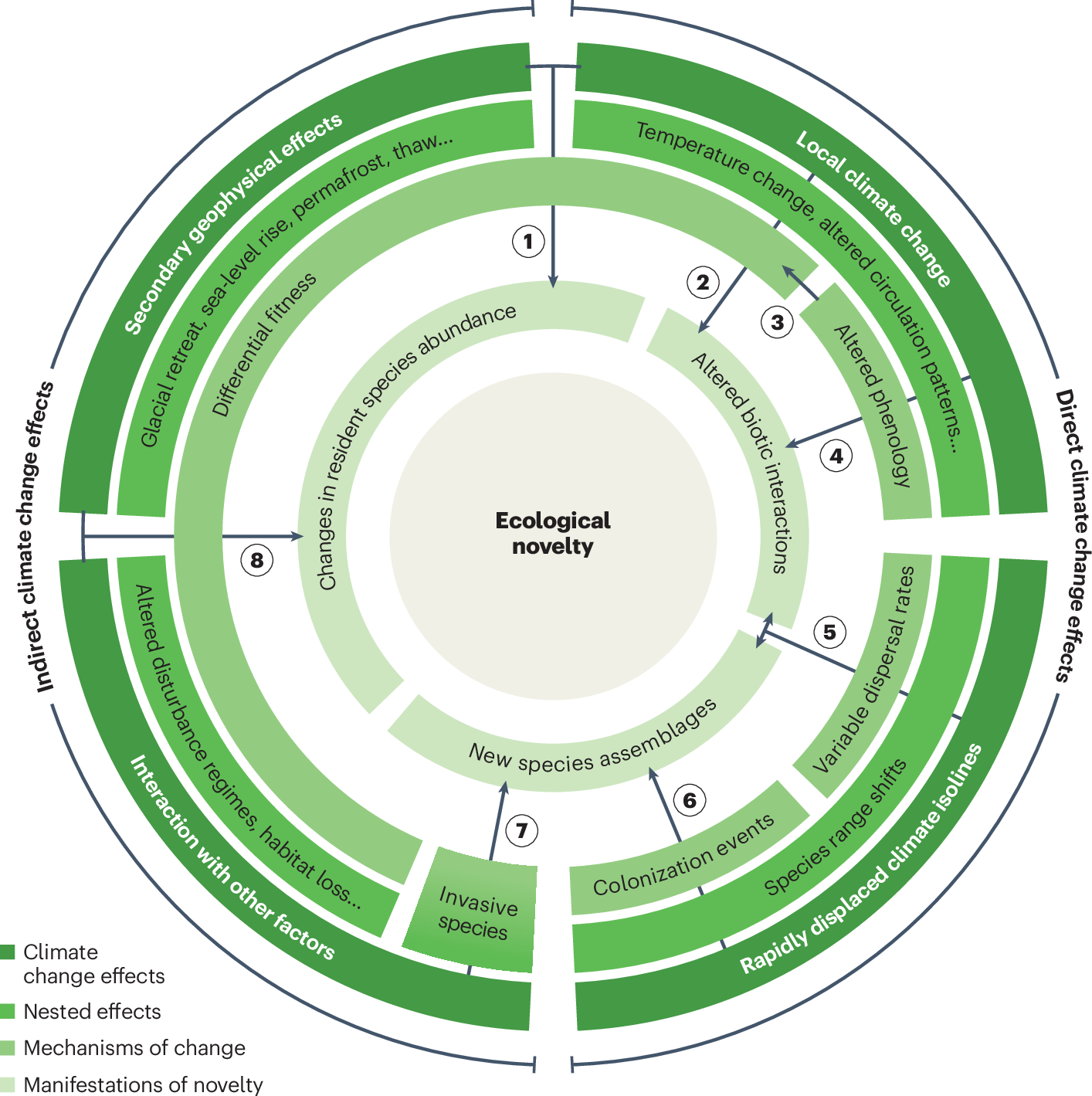
TUM's Tina Heger and colleagues argue in Nature Climate Change that new climate-driven species mixes should reshape conservation goals. Restoration would then aim at how a site will function decades from now.
The Scientist · Science desk
What happened
- The authors say changes in species communities that once unfolded over centuries or millennia are now being observed within a few decades.
- On warming reefs, tropical fish are spreading into cooler waters while hardier corals replace heat-sensitive ones, giving the fish that remain a different habitat.
- Conservation has traditionally tried to restore historical conditions or keep threatened species in their existing habitats, an approach the article says may increasingly become a Sisyphean task.
- Heger said approaches aimed at future ecosystem function already exist and should be standard practice, but are applied too rarely.
- The work appears as two Nature Climate Change papers: a review led by Claire Wright and a paper led by Heger on the social challenges of ecological novelty.
Compiled by The ScientistSomething wrong?How this is made
Why it matters
- decision Programs that score restoration against a site's past species list would need an agreed definition of ecosystem function decades out before they could judge a project against Heger's goal.
- constraint Where native species can no longer find suitable conditions, effort spent holding a historical state in place may slow the new, functioning ecosystem that would otherwise replace it.
- precedent Heger's call to build public loss and uncertainty into adaptation strategies would bring social consultation into how ecological targets get set.
"Even if temperatures were to stabilize in the near future, nature would continue responding to changes that have already occurred for a very long time," said Tina Heger, an expert in ecological theory and invasion biology at TUM [4][5]. That lag is the core of the case. A restoration target copied from a site's past describes conditions the site has already left. On Heger's account, it will keep moving away from them after warming stops.
The reef example shows why the target is hard to pin down. Two lists change there at once, the fish and the corals that house them, and the change in corals alters the habitat the fish depend on [10]. A manager restoring a reef to a reference year would be trying to match both.
Heger goes further than calling historical targets impractical. Many habitats are changing so much that native species no longer find the conditions they need [8], and holding the old state in place can get in the way. "We may actually hinder the development of new, functioning ecosystems," she said [9]. Her replacement is a question about the future. "The key question should no longer be how to maintain a particular ecological state, but how to foster conditions that will support a functioning ecosystem 20, 50 or 100 years from now," she said [12].
The authors' own wording is measured. They describe ecological novelty, meaning species communities with no historical precedent, as becoming a defining feature of a rapidly changing world [2], and Heger's warning about hindering new ecosystems carries a "may" [9]. The control for this argument would be restoration projects aimed at historical states, compared with projects aimed at future function on similar sites. The published summary reports neither.
I think the direction holds for a reef where both fish and corals have turned over. The thing this doesn't tell you is where the line falls for an ordinary site: how far conditions must move before a historical target stops being reachable. A past species list can be checked on a site visit. A target of a functioning ecosystem 50 years out needs an agreed definition of function before anyone can say whether a project met it [12].
Heger also frames the change as a personal one. "Watching the world change brings uncertainty and, for many people, a sense of loss," she said [14]. Her prescription is to plan for that: "These changes will increasingly affect our lives. That is why the social impacts of climate change should be deliberately incorporated into adaptation strategies, so that we can manage this transformation as effectively as possible" [15].
What to watch
- Whether the full Wright et al. review gives managers a measure of how far a site has drifted from historical conditions, the input needed to choose between target types.
- Matched comparisons of restoration projects aimed at historical states and at future function, the evidence that would show whether historical targets are already failing.
- Follow-up reef surveys showing whether fish living among hardier corals keep the ecosystem functions the older reefs provided.
Clarity's read
What the record supports and how the coverage leans. The claims behind it follow.
Reality
- Evidence40
- Adoption
- Insufficient
- Hype gap+10
- Incentives
- Insufficient
- Confidence45
Claim ledger
Ranked by verification strength, evidence, and original report placement.
- [1]
Tina Heger, together with colleagues, published a review article in Nature Climate Change examining how climate change affects biodiversity.
- [2]
According to the authors, ecological novelty (the emergence of new species communities with no historical precedent) is becoming a defining feature of a rapidly changing world.
- [3]
Processes in species communities that once unfolded over centuries or even millennia are now being observed within just a few decades.
- [4]
"Even if temperatures were to stabilize in the near future, nature would continue responding to changes that have already occurred for a very long time,"
- [5]
Tina Heger is an expert in ecological theory and invasion biology at TUM.
- [6]
"We need to redefine our conservation goals. If we continue to focus on historical conditions, we risk missing opportunities to adapt to climate change and support biodiversity."
- [7]
Conservation and restoration efforts have traditionally aimed to restore historical ecosystem conditions or preserve threatened species within their existing habitats; under changing environmental conditions this approach may increasingly become a Sisyphean task.
- [8]
Many habitats are changing so profoundly that native species can no longer find the conditions they need to thrive.
- [9]
"We may actually hinder the development of new, functioning ecosystems,"
- [10]
On coral reefs, as ocean temperatures rise, tropical fish expand into cooler waters where they encounter new species; heat-sensitive coral species decline while more resilient species become more common, and these hardier corals create different habitat conditions for the fish that remain.
- [11]
The researchers expect similar processes to occur in ecosystems around the globe in the coming decades.
- [12]
"The key question should no longer be how to maintain a particular ecological state, but how to foster conditions that will support a functioning ecosystem 20, 50 or 100 years from now,"
- [13]
According to Heger, such future-oriented approaches already exist and should become standard practice, but they are not applied often enough.
- [14]
"Watching the world change brings uncertainty and, for many people, a sense of loss,"
- [15]
"These changes will increasingly affect our lives. That is why the social impacts of climate change should be deliberately incorporated into adaptation strategies, so that we can manage this transformation as effectively as possible."
- [16]
Publication details list two Nature Climate Change (2026) papers: Claire Wright et al, 'Ecological novelty induced by climate change', and Tina Heger et al, 'Climate change drives ecological novelty and new social challenges'.
Sources
1 independent publisher whose own reporting we read for this story.
- phys.orgClimate change drives new species combinations, prompting calls to rethink conservation goals
1 article · October 9, 2026
Topics and entities
Follow any of these and your For You feed starts watching them — no settings page required.
Topics
- Ecological restorationFollow
- Climate AdaptationFollow
- Ecological noveltyFollow
- Climate change and biodiversityFollow
Entities
- Tina HegerFollow
- Technical University of MunichFollow
- Nature Climate ChangeFollow
- Claire WrightFollow
- Phys.orgFollow