A genetic switch for gut Clostridia: TMA and DCA turned on and off inside live mice
A Nature paper reports promoter and CRISPR toolsets that transfer across distantly related gut Clostridia, then uses them to toggle two host-relevant metabolites in mice. The methods stay paywalled.
The Scientist · Science desk
What happened
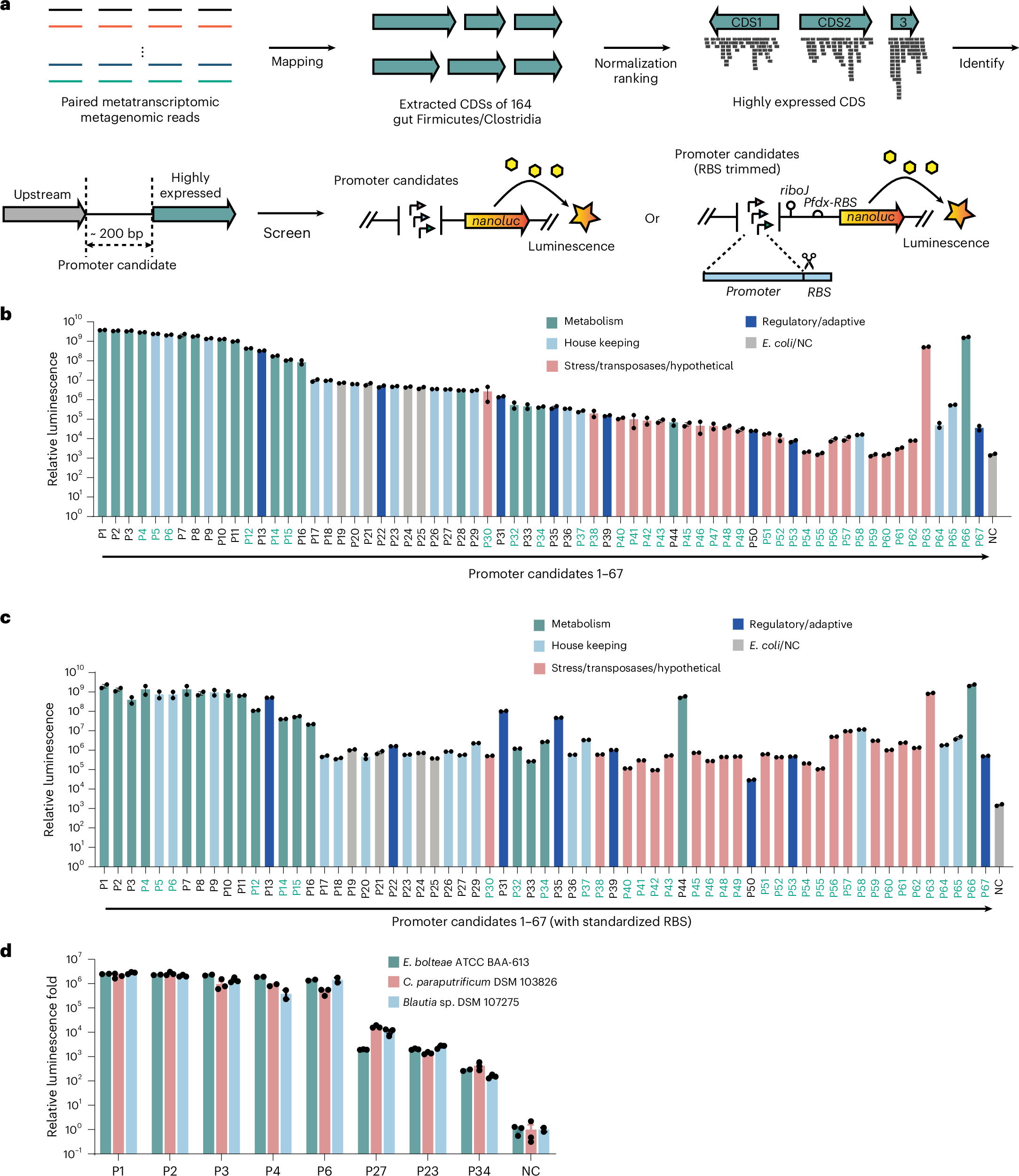
- A Nature paper reports modular genetic toolsets that transfer across phylogenetically diverse gut Clostridia, organisms with no adequate tools until now.
- An inducible promoter layer gives tunable regulation and supports CRISPR-Cas gene deletions in the same strains.
- Both metabolites are microbiota products the paper links to host lipid metabolism and disease.
Why it matters
- capability An on-off-on cycle inside one animal makes each mouse its own control, so a metabolite's contribution can be dated rather than inferred from group differences.
- constraint Because the abstract withholds strains, inducer and effect sizes, nobody outside the paper can yet judge how far 'broadly across diverse Clostridia' extends.
- decision Groups sitting on cohort-scale association hits now have to choose which single candidate gene is worth a colonization experiment, since the tooling no longer excuses the delay.
- precedent Commensals carrying inducible circuits as a research instrument make the same construct the obvious template for a therapeutic proposal, which puts inducer dosing and containment on the table early.
Reversibility is the part that does the work here. A deletion mutant tells you what a mouse looks like when a gene is absent from the start, and the comparison is always between animals. An inducible promoter that drives a metabolic pathway [5] lets the same animal go from producing to not producing and back, so the appearance and clearance of a metabolite can be timed against a host measurement rather than read off a difference between cages. The authors report exactly that kind of control over trimethylamine and deoxycholic acid in mice [6], both of which they tie to host lipid metabolism and disease [7].
Editing in Clostridium is not new. The reference list includes the ClosTron from 2010, CRISPR-Cas9 work in C. difficile in 2017 and 2018, and RiboCas in 2019 [9], plus a 2022 Cell study that manipulated gut microbes for single-gene interrogation inside a complex microbiome [10]. What those efforts mostly bought was a system per organism. The claim in this paper is a chassis: constitutive promoters that fire across diverse clostridial strains [4], with an inducible layer on top that also carries CRISPR-Cas deletions [5]. If that holds, the cost of studying a new commensal drops to getting the plasmid in and validating expression, and the awkward habit of testing hypotheses in whichever relative happens to be tractable becomes unnecessary. The authors frame the toolkit as covering commensal Clostridiaceae and Lachnospiraceae, families the paper credits with maintaining microbiota homeostasis, and they say adequate tools for these abundant nonmodel organisms were missing [2][3].
The asymmetry this addresses is easy to quantify from the same reference list. One cross-cohort analysis of type 2 diabetes signatures drew on 8,117 metagenomes [11]. Another paper named a specific mechanism, branched-chain amino acid production by Clostridium symbiosum acting on host cholesterol metabolism in colorectal tumorigenesis [12]. Candidate generation runs at cohort scale; causal confirmation has been running at one bespoke genetic system at a time. Trimethylamine and deoxycholic acid are sensible first targets precisely because their host links are already asserted, so the switch is being tested where a negative result would be informative.
What the abstract does not give is the strain list, the identity of the inducer, or how large the host effects were [13]. Those live in a paper that costs $39.95 to buy, which is about 21 percent more than 30 days of access to the whole Nature Portfolio at $32.99 [8][14]. For a toolkit whose value is measured in how many other labs adopt it, that is a peculiar toll gate.
What to watch
- Whether the plasmids, promoter panel and strain list are deposited so other labs can attempt transfer into Clostridia outside the original panel.
- Whether the inducer can be dosed in conventional mice with an intact microbiota, and whether the switch stays responsive over weeks of colonization.
- Whether a measured host lipid readout tracks the induction cycles with matching kinetics, or lags in a way that weakens the causal claim.
Clarity's read
What the record supports and how the coverage leans. The claims behind it follow.
Reality
- Evidence60
- Adoption15
- Hype gap+18
- Incentives58
- Confidence62
Claim ledger
Ranked by verification strength, evidence, and original report placement.
- [1]
A Nature paper presents a set of transferable and modular genetic toolsets that function broadly across phylogenetically diverse gut Clostridia.
- [2]
Gut Clostridia species, including commensal members of the Clostridiaceae and Lachnospiraceae families, maintain microbiota homeostasis and influence human health and disease.
- [3]
The authors state that adequate genetic toolsets to study abundant but nonmodel gut Clostridia are lacking.
- [4]
The team first identified a panel of strong constitutive promoters that drive robust gene expression across diverse clostridial strains.
- [5]
They developed an inducible promoter system enabling precise, tunable gene regulation, which facilitated implementation of CRISPR-Cas gene-deletion systems.
- [6]
The system was applied for targeted and reversible control of trimethylamine and deoxycholic acid production in mice.
- [7]
Trimethylamine and deoxycholic acid are described as two microbiota-derived metabolites implicated in host lipid metabolism and diseases.
- [8]
Access options listed with the article: buying the article costs USD 39.95; Nature+ costs $32.99 per 30 days; a journal subscription is $259.00 per year for 12 print issues, listed as $21.58 per issue.
- [9]
The paper's reference list includes earlier clostridial genetic tools: the ClosTron (2010), CRISPR-Cas9 genome editing in C. difficile (2017 and 2018), and RiboCas, described as a universal CRISPR-based editing tool for Clostridium (2019).
- [10]
Jin et al., Cell 2022, reported genetic manipulation of gut microbes enabling single-gene interrogation in a complex microbiome.
- [11]
Mei et al., Nature Medicine 2024, identified strain-specific gut microbial signatures in type 2 diabetes in a cross-cohort analysis of 8,117 metagenomes.
- [12]
Ren et al., Cell Host & Microbe 2024, reported that BCAA-producing Clostridium symbiosum promotes colorectal tumorigenesis through modulation of host cholesterol metabolism.
- [13]
The publicly visible abstract does not name the clostridial strains used, the inducer molecule, or the magnitude of any host physiological effect.
- [14]
Buying the single article costs about 21 percent more than 30 days of Nature+ access.
- [15]
The authors say the toolkit enables functional studies to causally link microbiota genes to host physiology and disease, and paves the way for therapeutic genetic engineering of microbiota.
Sources
2 independent publishers whose own reporting we read for this story.
- nature.comTransferable genetic toolsets for nonmodel gut <i>Clostridia</i> enable in vivo reversible control of metabolite production
1 article · August 24, 2026
- phys.orgDeveloping a genetic toolkit for manipulating abundant intestinal microbes
1 article · August 25, 2026
Topics and entities
Follow any of these and your For You feed starts watching them — no settings page required.
Topics
Entities
- ClosTronFollow
- Ting-Ting LiFollow
- University of GuelphFollow
- Weill Cornell MedicineFollow
- Gut ClostridiaFollow
- CRISPR-CasFollow
- Jill Roberts Institute for Research in Inflammatory Bowel DiseaseFollow
- Nature BiotechnologyFollow
- Deoxycholic AcidFollow
- Xu ChenFollow
- RiboCasFollow
- Phys.orgFollow
- Chun-Jun GuoFollow
- Matthew SorbaraFollow
- TrimethylamineFollow