ProductNot yet confirmed elsewhere1 publisher3 min readPublished
Toshiba ships first nearline drives from a Philippine line it aims to nearly double by fiscal 2027
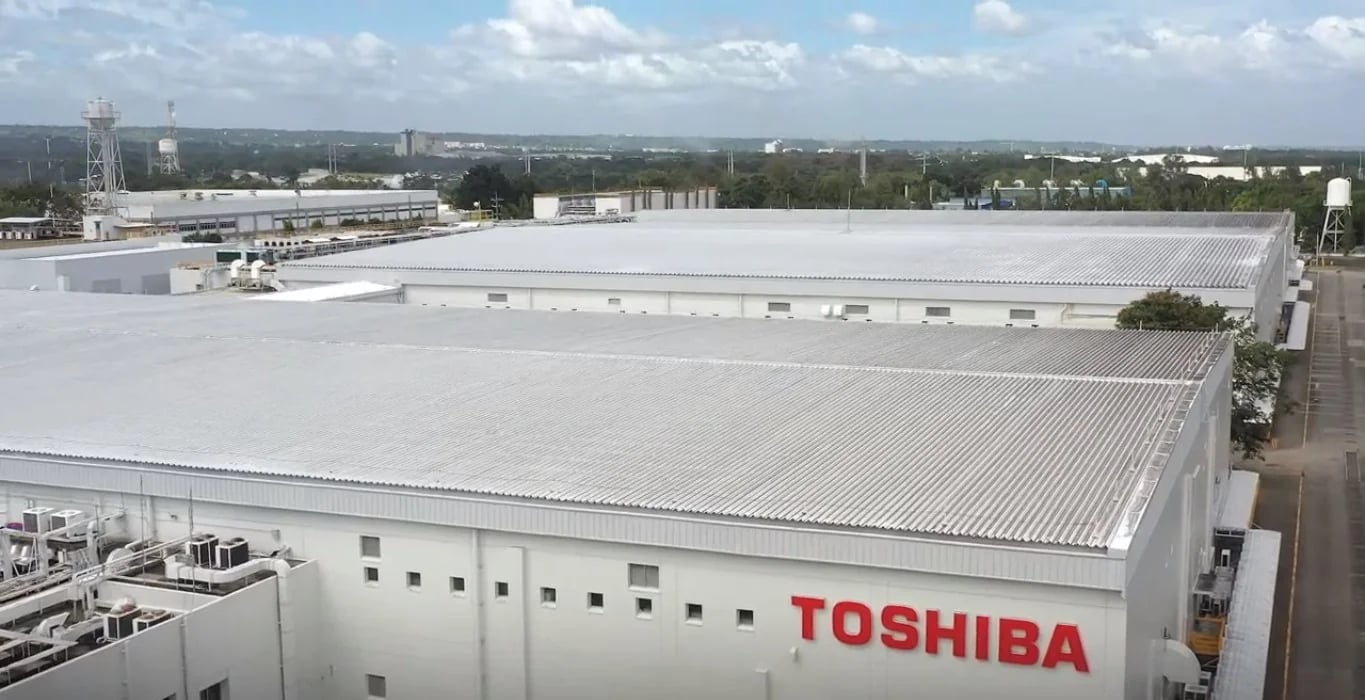
Toshiba has shipped the first nearline hard drives from its expanded Laguna plant in the Philippines and aims to nearly double its capacity by fiscal 2027. Storage buyers planning for that year gain a new source to weigh, but orders due sooner still depend on existing supply.
The Product Desk
What happened
- The Laguna Technopark plant mostly built PC hard drives before this expansion, and its nearline output now adds to Toshiba's existing operations in Calamba.
- Three days after Toshiba's announcement, the Philippine government unveiled a three-year, multibillion-peso investment that its Department of Finance expects to create about 3,000 jobs.
- Industry reports citing Nikkei, not Toshiba's own announcement, put the investment at about 60 billion yen.
- Toshiba has not disclosed how many drives the expanded line will ship or when customers will receive them.
Compiled by The Product DeskSomething wrong?How this is made
Why it matters
- constraint Buyers who plan by drive slot cannot treat 'nearly double' as twice as many drives, because larger models alone can deliver the whole increase.
- decision Teams that want Toshiba as a second nearline source have to start with customer qualification, and no qualification timeline has been published yet.
- exposure A buyer who diversifies away from Seagate and Western Digital by leaning on Toshiba takes on the schedule risk of a single plant's ramp to fiscal 2027.
Toshiba's Oct. 2 announcement gives storage buyers a plant and a target [1][4]. The person at a cloud or enterprise shop filling in next year's nearline drive order needs more than that. Every row needs a model number and a delivery week. Toshiba has not identified which models came off the new line [13].
The target is to nearly double Laguna's annual production capacity by fiscal 2027, measured against fiscal 2025 [4]. Toshiba counts it in total storage capacity, not drives shipped, and higher-capacity models can supply the increase without any rise in unit output [5]. Capacity is drive count times average terabytes per drive. A plant that shifts its mix to drives twice as large doubles its output with the same number of units [15]. The 30TB to 34TB M12-series SMR drives Toshiba began sampling to hyperscale and cloud customers in March 2026 are the kind of product that would move a terabyte target fastest [12].
The announcement serves Toshiba and Manila more than it serves any buyer. Seagate and Western Digital hold larger shares of the global HDD market, and TechRepublic reports that the added Philippine production could improve Toshiba's supply position [10]. The Philippines is also pursuing a $34.4 billion AI infrastructure plan aimed at 1.5 gigawatts of data center capacity by 2033 [8]. The Laguna drives are built for global markets. The expansion does not include a new Philippine data center [8].
Buyers still have reasons to care. Nearline drives cost less per terabyte than SSDs for data that does not need the fastest access, and AI training datasets, generated content and backups all need a lot of capacity [9]. Toshiba has also been building storage in the Philippines since 1996 [7]. TechRepublic names three things procurement teams still need: production volumes, customer qualifications and delivery timelines. Until Toshiba supplies them, the report calls the expansion potential future supply [14].
Start with how you buy: by drive slot or by terabyte. Then ask when the drives have to arrive: before Toshiba's fiscal 2027 target or after it [4].
Terabyte buyers who need drives after fiscal 2027 are buying in the same unit as Toshiba's target. For them, the first shipments are enough reason to open qualification talks with Toshiba now [14].
Slot buyers on the same timeline face a different question. Since the doubling can come entirely from larger drives, they need Toshiba's unit output for the specific model they specify [15].
Buyers in either column who need drives before fiscal 2027 have first shipments and nothing more to go on. They are best served planning on their current quotes [14].
The slot buyer who needs drives this year gets the least from the announcement. A terabyte target met with bigger drives does not add units of the model already in their spec [15].
What to watch
- Toshiba naming the models built on the Laguna nearline line, especially whether its 30TB to 34TB M12 drives are among them.
- Any figure from Toshiba on Laguna shipment volumes or customer delivery schedules.
- Whether Toshiba confirms the 60 billion yen investment figure that Nikkei-cited reports attached to the expansion.
Clarity's read
What the record supports and how the coverage leans. The claims behind it follow.
Reality
- Evidence45
- Adoption25
- Hype gap+10
- Incentives
- Insufficient
- Confidence50
Claim ledger
Ranked by verification strength, evidence, and original report placement.
- [1]
Toshiba confirmed the first shipments of hard disk drives from its expanded production line at the Laguna Technopark facility in the Philippines on Oct. 2.
- [2]
Toshiba Information Equipment (Philippines), Inc. (TIP) began manufacturing nearline HDDs at Laguna Technopark and shipped its first products from the expanded line.
- [3]
The Laguna Technopark facility previously focused primarily on HDDs for personal computers; nearline production now extends beyond Toshiba's existing operations at Carmelray Industrial Park in Calamba.
- [4]
Toshiba aims to nearly double annual production capacity at its Laguna Technopark facility by fiscal 2027 compared with fiscal 2025.
- [5]
The capacity target is measured by total storage capacity rather than drive shipments, so higher-capacity models could contribute to the increase without a corresponding rise in unit output.
- [6]
Three days after Toshiba's Oct. 2 announcement, the Philippine government announced a multibillion-peso investment planned over three years; the Philippine Department of Finance said the expansion is expected to generate around 3,000 jobs.
- [7]
Toshiba has manufactured storage products in the Philippines since 1996.
- [8]
The Philippines is pursuing a $34.4 billion AI infrastructure plan targeting 1.5 gigawatts of data center capacity by 2033; Toshiba's expansion concerns manufacturing for global markets, not a new domestic data center.
- [9]
AI training datasets, generated content and backups require substantial storage capacity, and nearline HDDs offer lower costs per terabyte than solid-state drives for data that does not require the fastest access speeds.
- [10]
Seagate and Western Digital control larger shares of the global HDD market than Toshiba; expanded Philippine production could improve Toshiba's supply position.
- [11]
Toshiba has not disclosed additional shipment volumes or customer delivery schedules for the expanded Philippine production.
- [12]
In March 2026, Toshiba began sampling 30TB to 34TB M12-series drives using shingled magnetic recording (SMR) for hyperscale and cloud customers.
- [13]
Toshiba has not identified which models were shipped from the expanded Philippine line.
- [14]
For enterprise procurement teams, the key remaining details are production volumes, customer qualifications and delivery timelines; until Toshiba provides those figures, the expansion represents potential future supply rather than a confirmed change in HDD availability.
- [15]
Because total capacity equals drive count times average terabytes per drive, Laguna's capacity can nearly double with flat unit output if the average drive it builds roughly doubles in size.
- [16]
Industry reporting citing Nikkei valued the investment at approximately 60 billion yen; Toshiba has not disclosed that amount in its official announcement.
ReportedInsufficientSource: TechRepublic, citing industry reporting that cites NikkeiView cited source
Sources
1 independent publisher whose own reporting we read for this story.
- techrepublic.comToshiba Begins Philippine HDD Shipments as AI Demand Drives Expansion
1 article · October 9, 2026
Topics and entities
Follow any of these and your For You feed starts watching them — no settings page required.