Kioxia and Sandisk lift Japanese flash spending to 2.6 times their 25-year pace
The $31 billion is contingent on Tokyo funding about a third of it, and the Kitakami fab that absorbs 36% of the package does not run until the fiscal year beginning April 2029, so the firm portion is smaller than the headline.
The Investor · Invest desk
What happened
- Kioxia and Sandisk said on August 27 that they anticipate investing more than $31 billion, about 5 trillion yen, in Japanese flash memory production, contingent on Japanese government support.
- The spending covers six years and equals roughly 60% of everything the two companies have put into Japan across a 25-year partnership, according to Crypto Briefing's reading of the figures.
- The centrepiece is Fab3, a new plant at the Kitakami site in Iwate Prefecture, estimated at 1.8 trillion yen or about $11.3 billion, which is more than a third of the package.
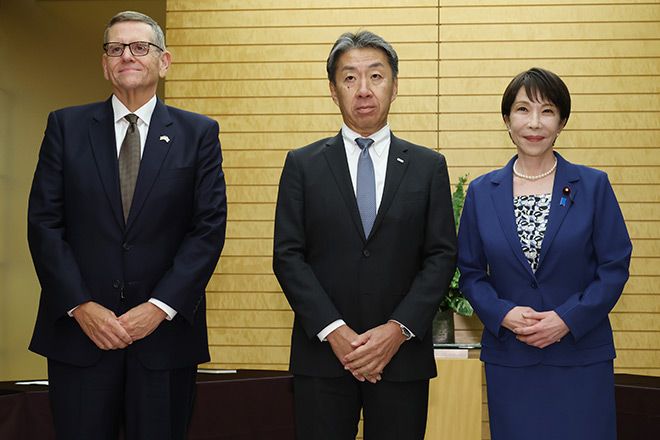
- Both chief executives met Prime Minister Sanae Takaichi the same day, and the companies are reportedly seeking public money for roughly one-third of the total.
Why it matters
- constraint Anyone negotiating 2027 and 2028 flash supply is bidding against an installed base this capital cannot change, because the new bits land in the back half of the spending window.
- decision Tokyo now sets the size of the plan rather than reacting to it: the subsidy answer decides whether $31 billion is the number or the opening bid.
- exposure Sandisk shareholders carry half of a six-year commitment whose single largest item produces no revenue inside the six years, against a guidance statement that says the spend already fits.
- contradiction The companies present multi-year bit growth as settled demand, while the same-day reporting frames AI infrastructure spending as a worry that needed Nvidia's guidance to calm, and the two readings imply different 2029 supply curves.
Count that 60 percent in dollars and it comes to 62, $31bn against the $50bn the joint venture has put into Japan over 25 years [4][2][12]; count it in yen and it comes to 56, 5 trillion against 9 trillion [13]. The gap is the exchange rate: the new package implies roughly 161 yen to the dollar, the quarter-century total roughly 180 [23]. A yen capex plan quoted in dollars has a moving part in it.
The comparison I would rather use is the run rate. Fifty billion dollars over 25 years is about $2bn a year [19]; $31bn over six years is about $5.2bn a year [20], or 2.6 times the pace the partnership has sustained across its life [21]. That multiple, not the press release's language about meaningful multi-year bit growth [11], is the actual claim being made about AI storage demand.
What has been committed is smaller than $31bn in two specific ways, neither of them hidden. Fab3 is 1.8 trillion yen, 36 percent of the package [25][28], and Kioxia said the construction schedule and equipment spending for the new facility will be determined by market trends [7]; the whole thing is contingent on government support [4], with roughly a third of the total, call it $10.3bn, sought from Tokyo after both chief executives met the prime minister [26][27]. So a third of the money is timing-optional and a third of the funding is somebody else's appropriation. The joint venture itself was extended in January 2026 to run through December 2034 [14], which at least gives the spend a contractual home well past Fab3's start.
Note where the money is not going. Both plants already exist [3], so this deepens Mie and Iwate rather than diversifying geography, and all of it sits on the long-term storage side of memory rather than DRAM [18], while SK Hynix committed about $38bn to Korean semiconductor capacity earlier in the same month [15]. That is $69bn of announced memory capacity inside four weeks [24], from a pair who have historically been the second-largest NAND producer behind Samsung [17].
Where this goes turns on who blinks first. Tokyo funds its third, agentic demand holds up the way Kioxia says it will [8], and by 2030 the $31bn reads as conservative. Or the subsidy negotiation drags, Fab3 slips past the fiscal year starting April 2029 [6], and flash stays tighter for longer than the announcement implies, which is the version that suits the two announcers best. Or demand cools around 2028, the market-trends clause gets used, and 5 trillion yen becomes three-point-something. This is probably wrong, but I would weight the third highest, on the grounds that the clause was written for a reason. What would change my mind is dull and checkable: a named line in a Japanese budget, firm tool orders at Kitakami, and a Sandisk capex disclosure consistent with half of a $5.2bn-a-year pace rather than merely with the financial guidance it says this already fits [9].
What to watch
- A named line in a Japanese budget covering the roughly one-third the two companies are asking Tokyo to fund.
- Firm equipment orders and a fixed construction schedule at Kitakami, both of which Kioxia has tied to market trends.
- Whether Sandisk's next capex disclosure shows a number reconcilable with its half of a $5.2bn-a-year pace.
Clarity's read
What the record supports and how the coverage leans. The claims behind it follow.
Reality
- Evidence58
- Adoption25
- Hype gap+34
- Incentives78
- Confidence63
Perspective Coverage
3 publishers- Builder
- Builder 25%
- Operator
- Operator 30%
- Investor
- Investor 45%
Claim ledger
Ranked by verification strength, evidence, and original report placement.
- [1]
The spending is described as covering the next six years and amounts to roughly 60% of what the two companies have spent in Japan across their entire 25-year partnership.
- [2]
The Kioxia-Sandisk partnership has invested over $50 billion (approximately 9 trillion yen) in Japan over the past 25 years.
- [3]
The investment funds infrastructure upgrades and technology at two existing facilities, the Yokkaichi Plant in Mie Prefecture and the Kitakami Plant in Iwate Prefecture, with a brand-new fabrication plant, Fab3, at the Kitakami site as the centerpiece.
- [4]
Kioxia and Sandisk announced on August 27, 2026 anticipated investments in Japan totaling over $31 billion (approximately 5 trillion yen), contingent upon government support.
- [5]
The announced investments run through 2032 and will support the continuing buildout of production infrastructure in Japan along with related technology.
- [6]
Kioxia targets operations at the new Kitakami facility to begin in the fiscal year starting April 2029.
- [7]
Kioxia said the construction schedule and equipment investments for the new facility will be determined based on market trends.
- [8]
Kioxia said the flash memory market is expected to continue to expand significantly in the medium to long term, driven by agentic and other AI applications.
- [9]
Sandisk chairman and CEO David Goeckeler said the planned investments are in line with the company's business strategy and financial guidance.
- [10]
Kioxia CEO Hiroo Ota said the company recognizes the importance of the Japanese government's continued strategic support in maintaining and further strengthening its global competitiveness.
- [11]
Kioxia and Sandisk each committed to drive meaningful, multi-year bit growth and to ensure stable supply to address strong demand.
- [12]
The new $31bn package equals 62% of the $50bn invested in Japan over 25 years.
- [13]
In yen, the new 5 trillion yen package equals 56% of the 9 trillion yen invested over 25 years.
- [14]
The Kioxia-Sandisk joint venture was extended through December 2034 in January 2026.
- [15]
Earlier in the month, SK Hynix said it planned to invest about $38 billion to expand semiconductor production capacity in South Korea.
- [16]
The announcement came as worries had grown over spending on AI infrastructure, though Nvidia's strong quarterly earnings and revenue guidance the previous day helped soothe such concerns.
- [17]
Kioxia and Western Digital, Sandisk's parent company until its recent separation, have historically been the second-largest NAND producers globally behind Samsung.
- [18]
Kioxia and Sandisk specialize in NAND flash memory, used for long-term data storage; DRAM, which provides temporary storage for faster data processing, is the other major type of memory chip.
- [19]
The historical pace of Japanese investment is about $2bn a year.
- [20]
The announced plan implies about $5.2bn a year.
- [21]
The planned pace is about 2.6 times the partnership's 25-year average annual pace.
- [22]
First output at the new Kitakami facility falls about three years into the six-year spending window.
- [23]
The new package implies about 161 yen per dollar, while the 25-year cumulative figures imply about 180 yen per dollar.
- [24]
The Kioxia-Sandisk and SK Hynix announcements together total about $69bn of announced memory-related capacity investment within roughly a month.
- [25]
Fab3 carries an estimated price tag of 1.8 trillion yen, roughly $11.3 billion, accounting for more than a third of the total investment package.
- [26]
CEOs from Kioxia and Sandisk met Japanese Prime Minister Sanae Takaichi on the day of the announcement to discuss potential government financing, and the companies are reportedly seeking public backing for roughly one-third of the overall investment.
- [27]
One-third of $31bn is about $10.3bn of public backing sought.
- [28]
Fab3's 1.8 trillion yen is 36% of the 5 trillion yen package.
Get this ledger inside ChatGPT. Ask about any of our stories and the answer brings its figure, each claim’s verdict and the sources. Free, no account.
Sources
3 independent publishers whose own reporting we read for this story.
- cryptobriefing.comSanDisk and Kioxia plan $31B investment in Japanese memory plants
1 article · August 29, 2026
- finance.yahoo.comKioxia and Sandisk to Invest Over $31 Billion in Japan, Extending Leadership in Memory Industry
1 article · August 28, 2026
- morningstar.comKioxia, Sandisk to Invest More Than $31 Billion in Memory Chips — Update | Morningstar
1 article · August 27, 2026
Topics and entities
Follow any of these and your For You feed starts watching them — no settings page required.
Topics
- Memory Market CompetitionFollow
- NAND Flash MemoryFollow
- AI infrastructure demandFollow
- Semiconductor Capital ExpenditureFollow
- Japan Industrial PolicyFollow