InvestIndependently confirmed2 publishers3 min readPublished
SPUR's 80-plus publishers can count AI use of their news only where AI firms agree to report it
SPUR added more than 40 publishers on Oct. 12, including The New York Times, The Economist and AFP, taking the coalition past 80 members. Its tracking standard for AI use of news is final, though no AI company has been identified as agreeing to report under it.
The Investor · Invest desk
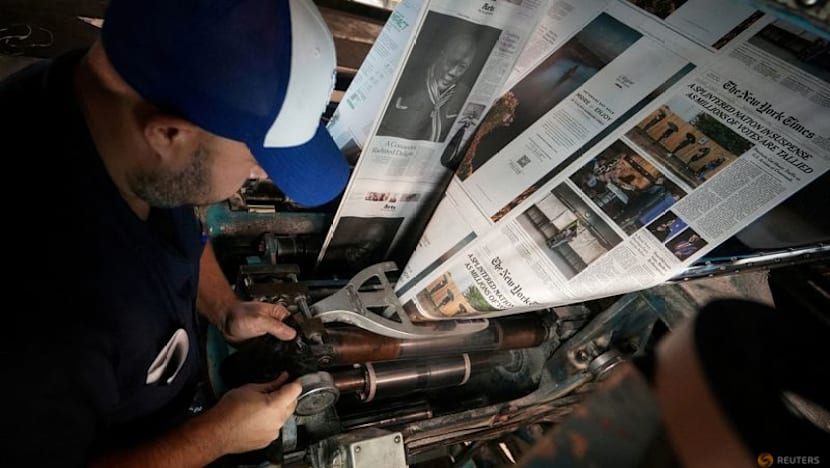
SPUR has members across over 20 countries. The New York Times, AFP and The Economist joined SPUR on Oct. 12 alongside more than 40 other new members. Separately, Google organic-search referrals to more than 2,500 websites fell 33 per cent, Nov 2024 to Nov 2025, per the Reuters Institute.
| Figure | Value | Note | Claim |
|---|---|---|---|
| Countries SPUR's members span, over | 20 countries | 2 | |
| Members joining SPUR with NYT, AFP, Economist, more than | 40 members | on Monday, Oct. 12 | 1 |
| Fall in Google referrals to 2,500+ sites, Reuters Institute | 33% fall | Nov 2024 to Nov 2025, globally | 6 |
What happened
- SPUR finalized its Content Telemetry Standard around October 2, 2026, after releasing a draft version in June 2026.
- New members include The Atlantic and Brazil's National Association of Newspapers, joining founding members such as the Financial Times, BBC and Associated Press.
- Earlier this month USA Today and several newspapers it owns sued OpenAI, alleging copyright infringement.
Why it matters
- constraint Publishers can finalize the rulebook but cannot compel a developer to follow it, so the telemetry covers only the AI systems that agree to report.
- capability Smaller outlets get a tracking framework a regional newsroom could not build alone. That lowers the cost for a small outlet of showing how its articles are retrieved and cited.
- decision SPUR is funded entirely by its members, so each publisher now pays for a standards track alongside any court action it has under way.
A coalition that adds more than 40 members to reach more than 80 [1][2] was sitting at roughly 40 before the announcement [11], and it got there in about eight months from its February launch [12]. (Even the founder list is elastic: Crypto Briefing says the Associated Press came aboard as a founding member in July [15], five months after launch [16].) Crypto Briefing argues that a single publisher negotiating with an AI developer has limited bargaining power, and that more than 80 organizations in more than 20 countries agreeing on shared standards is a different conversation [18].
Crypto Briefing's case is about bargaining position; the sources describe a measurement project. According to its website, SPUR is developing industry-wide standards and technical systems to help publishers track and control how AI companies use their content, and to facilitate licensing agreements [7]. Neither report says SPUR negotiates on behalf of its members, gives a licence price, or identifies an AI company that has agreed to report under the standard.
Crypto Briefing says transparency in tracking is supposed to make licensing fairer because both sides can point to the same data instead of arguing over estimates [20]. We think that is right as far as it goes, and that it makes "force" too strong a word for what has been shown. A standard narrows disputes about volume once two parties are negotiating.
Publishers are losing search traffic. Google organic-search referrals to more than 2,500 websites fell 33% globally between November 2024 and November 2025, according to a Reuters Institute report citing Chartbeat data [6]. A site that received 100 Google visits in November 2024 received 67 a year later [13]. The standard covers retrieval, the moment an AI system fetches an article, and citation, the moment it credits the source in an answer [4].
Rebecca Grossman-Cohen, the New York Times' head of strategic partnerships and chief of staff, said in a statement: "Intellectual property protection and technological advancement can and must co-exist." [10] She spoke for a company that, according to CNA, is among the news organizations with copyright claims against OpenAI and Microsoft [9].
The standard was finalized around October 2, after a June draft [3], about ten days before the announcement [14]. Crypto Briefing reads the timing as SPUR wanting something concrete in hand when recruiting [21].
Three outcomes are plausible. A large developer adopts the standard, and the membership count becomes bargaining weight. Developers ignore it, and SPUR stays a trade body with a specification. Or court rulings set the price first, and telemetry arrives after the terms. We think the leverage is unproven today. We would be wrong, and quickly, if SPUR's next announcement names an AI developer reporting retrieval and citation under the standard.
What to watch
- Whether SPUR's next announcement names an AI developer that reports retrieval and citation under the Content Telemetry Standard.
- Rulings in the USA Today and New York Times copyright cases against OpenAI, which would show whether courts or licences set the price first.
- Whether any SPUR member announces a licensing deal that cites the coalition's telemetry data.
Clarity's read
What the record supports and how the coverage leans. The claims behind it follow.
Reality
- Evidence58
- Adoption30
- Hype gap+25
- Incentives
- Insufficient
- Confidence62
Claim ledger
Ranked by verification strength, evidence, and original report placement.
- [1]
The New York Times, Agence France-Presse and The Economist joined more than 40 publishers in the SPUR coalition on Monday, Oct. 12, a group aimed at preventing AI firms from using or profiting from their content without permission.
- [2]
SPUR, launched in February, now has more than 80 members across over 20 countries.
- [3]
SPUR finalized its Content Telemetry Standard around October 2, 2026; a draft version had been released in June 2026.
- [4]
The Content Telemetry Standard covers key stages of how AI systems handle news content, including retrieval (when an AI system fetches an article) and citation (when it credits the source in its answer).
- [5]
New members include The Atlantic and Brazil's National Association of Newspapers, joining founding members such as the Financial Times, BBC and Associated Press.
- [6]
Google organic-search referrals to more than 2,500 websites fell 33 per cent globally between November 2024 and November 2025, according to a Reuters Institute report citing data from Chartbeat.
- [7]
SPUR is funded entirely by its members and, according to its website, is developing industry-wide standards and technical systems to help publishers track and control how AI companies use their content and facilitate licensing agreements.
- [8]
Earlier this month, USA Today and several newspapers it owns sued OpenAI, alleging copyright infringement.
- [9]
OpenAI and its backer Microsoft also face similar copyright claims from prominent authors and news organizations, including the New York Times.
- [10]
"Intellectual property protection and technological advancement can and must co-exist," Rebecca Grossman-Cohen, the New York Times' head of strategic partnerships and chief of staff, said in a statement.
ReportedSupportedSource: Rebecca Grossman-Cohen, New York Times, statement quoted by CNAView cited source - [11]
SPUR had roughly 40 members before the Oct. 12 announcement.
- [12]
SPUR reached its current size in about eight months from its February launch.
- [13]
At a 33% fall, a site with 100 Google organic referral visits in November 2024 would have 67 in November 2025.
- [14]
The standard was finalized about ten days before the Oct. 12 announcement.
- [15]
The Associated Press came aboard as a founding member in July 2026.
ReportedContestedSource: Crypto Briefing2 sources— create a free account to open themView cited source - [16]
The AP's July 2026 arrival came five months after SPUR's February launch.
- [17]
A telemetry standard only works if the systems retrieving content actually report what they do; publishers can finalize the rulebook but cannot force every AI developer to follow it.
ReportedInsufficientSource: Crypto Briefing2 sources— create a free account to open themView cited source - [18]
A single publisher negotiating with an AI developer has limited bargaining power; more than 80 organizations across more than 20 countries agreeing on shared standards is a different conversation.
- [19]
Collective standards lower the cost of entry for smaller outlets: a regional newsroom is unlikely to build its own tracking infrastructure, and a common framework gives it a tool it could not easily create alone.
- [20]
Transparency in tracking is supposed to make licensing deals fairer, because both sides can point to the same data instead of arguing over estimates.
- [21]
The standard was finalized only days before the expansion announcement, which suggests SPUR wanted something concrete in hand when recruiting new members.
Sources
2 independent publishers whose own reporting we read for this story.
- channelnewsasia.comNYT, Economist among publishers joining coalition to curb unpaid AI use
1 article · October 12, 2026
- cryptobriefing.comSPUR coalition adds NYT, Economist and AFP in push for paid AI content use
1 article · October 12, 2026
Topics and entities
Follow any of these and your For You feed starts watching them — no settings page required.
Topics
Entities
- OpenAIFollow
- Content Telemetry StandardFollow
- ChartbeatFollow
- MicrosoftFollow
- Reuters Institute for the Study of JournalismFollow
- The New York TimesFollow
- Agence France-PresseFollow
- The EconomistFollow
- SPUR (Standards for Publisher Usage Rights)Follow