ProductNot yet confirmed elsewhere1 publisher3 min readPublished
ARIA makes human authorship a chart eligibility test, and names the three roles that count
From this week, Australian chart entries must be substantially human made: written, sung and played by people. Declarations are made at submission, and positions can be taken back afterwards.
The Product Desk
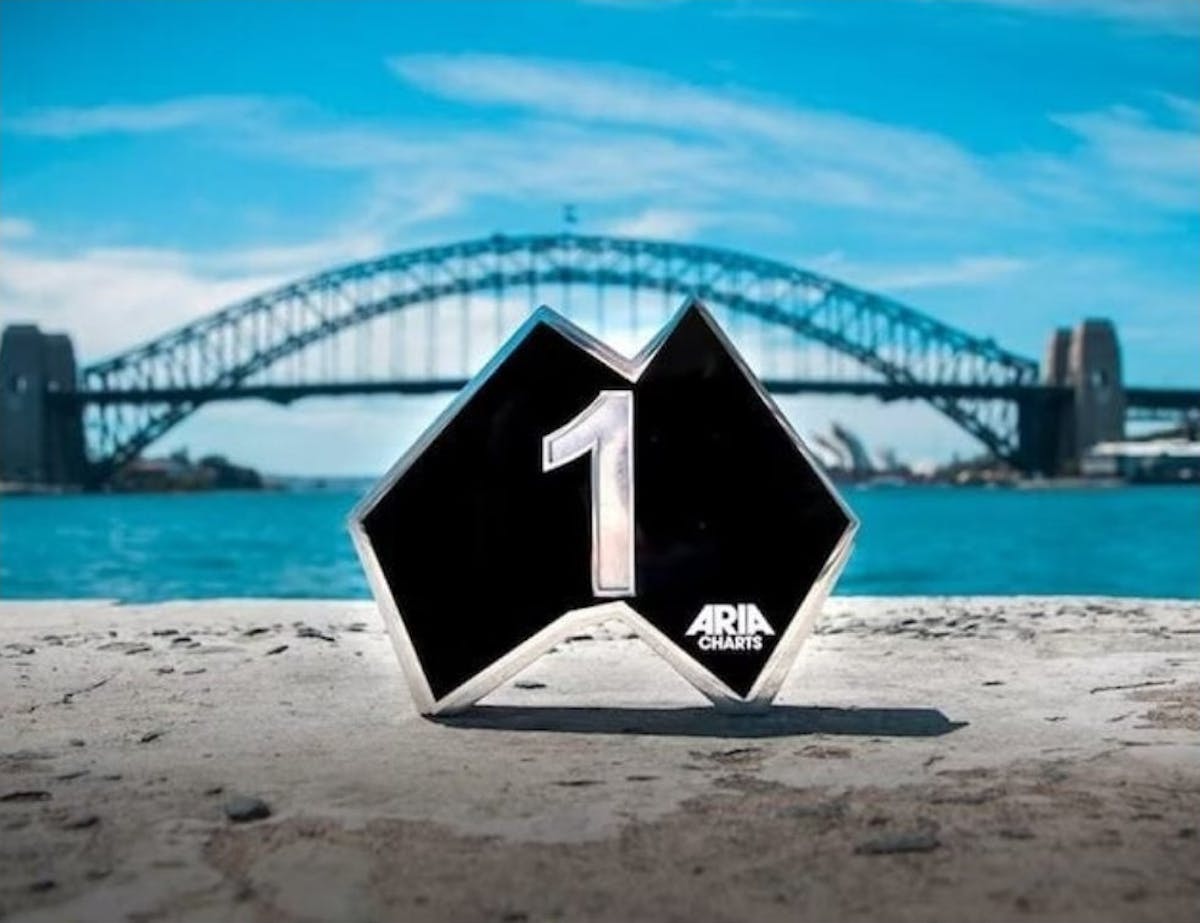
What happened
- ARIA now requires every release to be "substantially human made" to be eligible for Australia's charts, effective this week.
- ARIA says it can retrospectively adjust chart positions and may ask for Number One awards to be handed back.
- The change follows Josh Fawaz's Like A Prayer cover, which topped the dance singles chart and reached number two overall.
Why it matters
- exposure A charted release now carries an open-ended liability: the position and the trophy stay revocable for as long as someone can show the record was mostly machine made.
- constraint Anyone building tracks entirely from generated parts has to put a nameable human in the writing, lead vocal and primary instrument credits, or accept that chart access is closed.
- precedent Because ARIA drafted from the IFPI directive being rolled out across four regions, its role test becomes the text other chart bodies edit rather than draft.
- decision Acts using AI to re-record their own catalogue for airplay now have to price chart eligibility into that choice separately from radio reach.
The phrase carrying the weight is not "substantially human made", which on its own is unfalsifiable [1]. It is the three roles ARIA names underneath it: a human must have written the song and performed the lead vocal and the primary instruments [5]. Those are credits. Credits have names on them, contracts behind them, and someone who can be asked. Against them sit the uses the code explicitly waves through, including mastering, drum machines and auto tune [6]. Three positions reserved for people, three tools left alone [19]. The line is not how much machine is in the file; it is whether a person occupied the authorship and performance seats.
Enforcement is self-report with a clawback. Artists declare AI use when they submit for chart consideration [7], and if it later emerges that the music was largely AI-generated, ARIA says it can retrospectively adjust chart positions and may ask for a Number One award to be returned [8]. Excluded artists and their representatives can contest the call [9].
The case that shaped this shows what the clawback can and cannot reach. Josh Fawaz's cover of Madonna's Like A Prayer topped the ARIA dance singles chart, peaked at number two overall, and added generative AI credits only after a backlash [3][4]. By then it had passed 48 million Spotify streams and become a commercial radio staple [4]. A chart position is recoverable. Streams and airplay are not.
There is a gap between the stated target and the test. Chief executive Annabelle Herd frames the problem as music generated wholesale by services built on artists' recordings, and warns that a chart rewarding unlicensed AI output would undercut the recorded music ARIA represents [13][14]. But the eligibility test measures human labour, not licence provenance. A lawfully cleared synthetic lead vocal fails it; a mastering pass from a model of unknown pedigree does not [5][6]. The code is a labour test making a licensing argument, which is the compromise you get when the licensing rules do not exist yet. Prime Minister Anthony Albanese promised the strongest possible protection for Australian creatives in July last year, including a choice over training use he called theft to remove [17]. The chart got there first.
That matters because the wording travels. ARIA's update is based on the IFPI directive [10], and IFPI said in July that AI guidelines would be rolled out for official charts in Latin America, the Middle East, Africa and Southeast Asia [11]; Sweden already pulled an AI-made song from its charts earlier this year [12]. The same code also excludes releases raising stream or chart manipulation concerns [10], which tells you ARIA is treating synthetic supply and fake demand as one integrity file rather than two. Support is not uniformly comfortable: Peking Duk back the move, and band member Adam Hyde told Channel Nine that AI-generated music was removing the human experience from life, a month after the act posted an AI-assisted version of their own 2014 hit High captioned as a way to get Australian radio to play it [15][16].
What to watch
- Whether ARIA actually uses the retrospective power on a release that has already charted, which is the only proof the clawback is more than wording.
- The first appeal over what counts as a "primary instrument" on a track built from programmed sound, since that is where the role test gets its boundary.
- Which IFPI markets copy ARIA's three-role wording and which settle for a disclosure-only version.
Clarity's read
What the record supports and how the coverage leans. The claims behind it follow.
Reality
- Evidence58
- Adoption52
- Hype gap+18
- Incentives72
- Confidence55
Claim ledger
Ranked by verification strength, evidence, and original report placement.
- [1]
Songs largely or wholly created by AI have been banned from Australia's music charts; from this week all releases must be "substantially human made" to be eligible.
- [2]
ARIA said the new code would help "promote the human nature of artistry".
- [3]
The rules follow a controversy over Australian DJ Josh Fawaz's cover of Madonna's Like A Prayer, which topped the ARIA dance singles chart and peaked at number two on the overall Australian chart.
- [4]
The Fawaz track has been streamed more than 48 million times on Spotify alone and became a staple of commercial radio playlists; Fawaz later added generative AI credits to the song after a backlash.
- [5]
Under the new rules AI assistance can still be used, but humans must have written the song and have performed the lead vocal and primary instruments.
- [6]
AI can still be used for mastering songs and, for example, using drum machines and auto tune.
- [7]
Artists will be required to declare AI use when they submit a song for chart consideration.
- [8]
ARIA said that if it later emerged music was largely AI-generated it could retrospectively adjust chart positions, and if the piece topped the charts it may request that awards given for reaching Number One were returned.
- [9]
Artists and their representatives will be able to challenge their exclusion.
- [10]
The updated code is based on the IFPI directive and also excludes music that raises "stream or chart manipulation concerns".
- [11]
In July the International Federation of the Phonographic Industry said AI guidelines would be rolled out in Latin America, the Middle East, Africa and Southeast Asia for use in their official charts.
- [12]
Earlier this year a song was banned from Sweden's music charts because it was created by AI.
- [13]
ARIA chief executive Annabelle Herd said artists already use AI tools in their work and the charts should keep room for that, but that "music generated wholesale by services built on artists' recordings is a different matter".
- [14]
Herd said: "A chart that rewards unlicensed AI output would undercut the very basis of the recorded music we exist to represent."
- [15]
Australian electronic act Peking Duk are among the artists supporting the move; last month they shared an AI-assisted version of their 2014 hit High on Instagram, captioned "When you re-record your own song with AI so Australian radio will play it."
- [16]
Peking Duk member Adam Hyde told Channel Nine's Today show that AI-generated music was "removing the human experience from life".
- [17]
In July last year Australian Prime Minister Anthony Albanese promised "the strongest possible protection" from AI for Australian creatives, pledging that writers and musicians could choose if and how their work was used in AI training and saying it would be "theft" if they lost that control and were not paid.
- [18]
ARIA said Australian artists were competing for attention "in the most crowded market in history" and that it was "not interested in promoting or celebrating the success of AI-generated music that does not contain human artistry".
- [19]
The code reserves three creative roles for humans and names three production uses where AI remains acceptable.
Sources
1 independent publisher whose own reporting we read for this story.
- bbc.co.ukSongs created by AI banned from Australia's music charts
1 article · August 24, 2026
Topics and entities
Follow any of these and your For You feed starts watching them — no settings page required.