Seoul to provide 7.2 billion won for AI quality control in cosmetics manufacturing under new K-beauty plan
South Korea plans to let one licensed manager oversee several AI-using cosmetics stores and pilot medical-tourism visas in the first half of next year. The one published funding figure, 7.2 billion won, goes to factory quality control.
The Investor · Invest desk
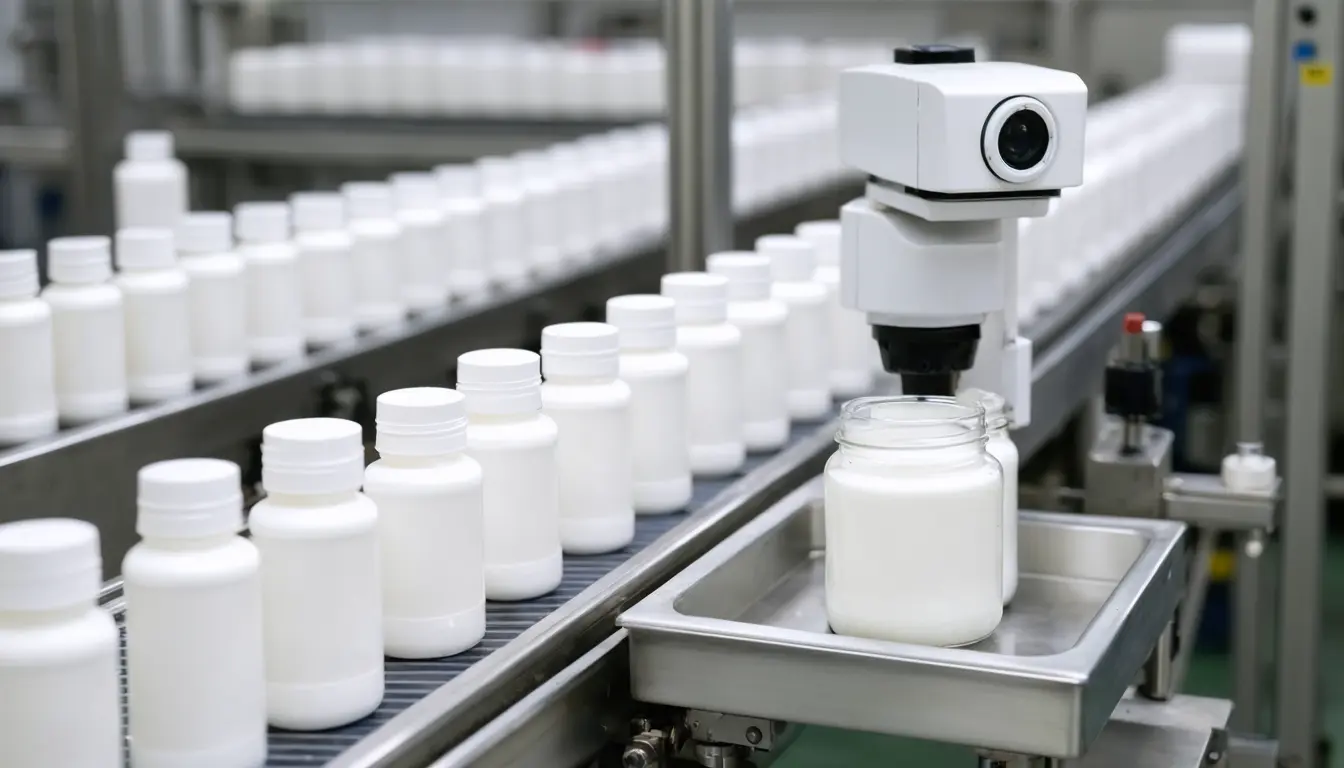
Spending by foreign visitors to Korea on convergence services such as beauty and medical tourism rose about 56%, from 1.6479 trillion won in 2024 to 2.5662 trillion won last year, per Korea Tourism Organization figures.
| Measure | Value | As of | Claim |
|---|---|---|---|
| Foreign visitor spending | 1.6479 trillion won | 2024 | 8 |
| Foreign visitor spending | 2.5662 trillion won | Last year | 8 |
What happened
- Medical tourism visas currently require applicants to intend treatment or recuperative care at a domestic medical institution, and the government will review easing that requirement.
- The government will reorganize a data bank of skin data from more than 17,000 people across 18 countries so it can be used to train AI.
- Seoul will also speed up a framework act on service industry development, because it judges that regulation under the Public Health Control Act limits the nurturing of beauty and lodging.
- The plan was announced at a meeting of economy-related ministers that doubled as a service industry task force, with beauty services named as a new export engine.
Why it matters
- decision Operators weighing AI and automated equipment have no one-manager staffing saving to book until the relevant laws are revised next year.
- contradiction The ministry cites more than 30% annual growth in global customized cosmetics, yet the domestic market's exact size has not been tallied, so the plan has no domestic baseline to be scored against.
- constraint Oversight of cosmetics, beauty, tourism and medical care is split across agencies including Health and Welfare and Food and Drug Safety, so each service rule has to be coordinated among them.
Set the 7.2 billion won against the demand the plan is meant to capture and it comes to 0.28% [12]. Foreign visitors spent 2.5662 trillion won on convergence services such as beauty and medical tourism last year, according to figures the Korea Tourism Organization compiled [8]. The comparison is rough: the 7.2 billion won runs across this year and next [3], and the visitor figure covers more than cosmetics.
The money also goes to the product side. It pays for AI quality control in cosmetics manufacturing processes [3]. The report on the plan did not include budgets for the visa pilot, the data bank restructuring or the staffing change.
The design may be deliberate. Visitor spending rose about 56%, or 918.3 billion won, from 2024 to last year [8][13], before any of the new measures took effect, so the government can fairly conclude that demand is already there and the constraint is regulation. Joo Hwan-wook, policy coordination officer at the Ministry of Finance and Economy, said: "Compared with manufacturing, the K-beauty service industry has received insufficient support relative to its growth potential." [10] Rule changes are cheap for the treasury. They do need legislators, and Joo said as much: "We will work actively with the National Assembly so that the framework act on service industry development can be enacted." [11]
We think the plan is, for now, a services intention carrying a product budget, and we'd put the risk in the calendar. If the Assembly passes the framework act and the laws are revised next year [1], the shift is real and cheap to fund. If the act stalls, the one funded item is factory quality control. A visa pilot that opens in the first half of next year [2] and draws few applicants would suggest the 56% rise came from visitors who needed no new visa category.
Our view is wrong if a budget line for the visa pilot or the data bank appears, or if both legal changes pass on schedule.
What to watch
- Whether a budget line for the medical tourism visa pilot or the data bank restructuring is published before the pilot opens in the first half of next year.
- Whether the laws allowing one licensed compounding manager to oversee multiple AI-using stores are revised next year as planned.
- Whether the National Assembly takes up the framework act on service industry development.
Clarity's read
What the record supports and how the coverage leans. The claims behind it follow.
Reality
- Evidence50
- Adoption
- Insufficient
- Hype gap+25
- Incentives60
- Confidence55
Claim ledger
Ranked by verification strength, evidence, and original report placement.
- [1]
The government plans to revise relevant laws next year so that a single licensed compounding manager can oversee multiple stores using AI and automated equipment.
- [2]
A pilot program for medical tourism visas will be launched in the first half of next year.
- [3]
The government will provide 7.2 billion won ($5 million) from this year through next year for the development of AI technology for quality control in cosmetics manufacturing processes.
- [4]
Under current rules, applicants must intend to receive treatment or recuperative care at a domestic medical institution to obtain a medical tourism visa; the government will review easing visa requirements for medical and wellness tourism.
- [5]
A data bank that has accumulated skin information on more than 17,000 people in 18 countries will be restructured into a format suitable for AI training, to help companies develop products that analyze skin conditions and blend suitable ingredients.
- [6]
The government plans to accelerate work on enacting a framework act on service industry development, judging that industries such as beauty and lodging are managed mainly through regulation under the Public Health Control Act, which limits efforts to nurture them.
- [7]
The plan, titled 'Support Measures for AI and Convergence K-Beauty Services', was announced at a meeting of economy-related ministers that doubled as a session of the service industry development task force; the aim is to turn beauty-related services, not just cosmetics sales, into a new export engine.
- [8]
Spending by foreign visitors to Korea on convergence services such as beauty and medical tourism, as compiled by the Korea Tourism Organization, surged about 56% to 2.5662 trillion won last year from 1.6479 trillion won in 2024.
- [9]
Oversight of cosmetics, beauty services, tourism and medical care is scattered across multiple agencies, including the Ministry of Health and Welfare and the Ministry of Food and Drug Safety.
- [10]
"Compared with manufacturing, the K-beauty service industry has received insufficient support relative to its growth potential," said Joo Hwan-wook, policy coordination officer at the Ministry of Finance and Economy.
- [11]
"We will work actively with the National Assembly so that the framework act on service industry development can be enacted," Joo Hwan-wook said.
- [12]
The 7.2 billion won for AI quality control equals about 0.28% of the 2.5662 trillion won foreign visitors spent on beauty and medical convergence services last year.
- [13]
Foreign visitor spending on convergence services rose by about 918.3 billion won between 2024 and last year.
- [14]
According to the Ministry of Finance and Economy, the global market for customized cosmetics is growing more than 30% a year.
- [15]
In the domestic customized cosmetics market, even the exact size has not been tallied.
Sources
1 independent publisher whose own reporting we read for this story.
- en.sedaily.comKorea to Expand K-Beauty Beyond Cosmetics Into AI Skin Analysis, Medical Tourism
1 article · October 13, 2026
Topics and entities
Follow any of these and your For You feed starts watching them — no settings page required.