InvestNot yet confirmed elsewhere1 publisher2 min readPublished
Sejong agency move ends two years before the Assembly chamber is due
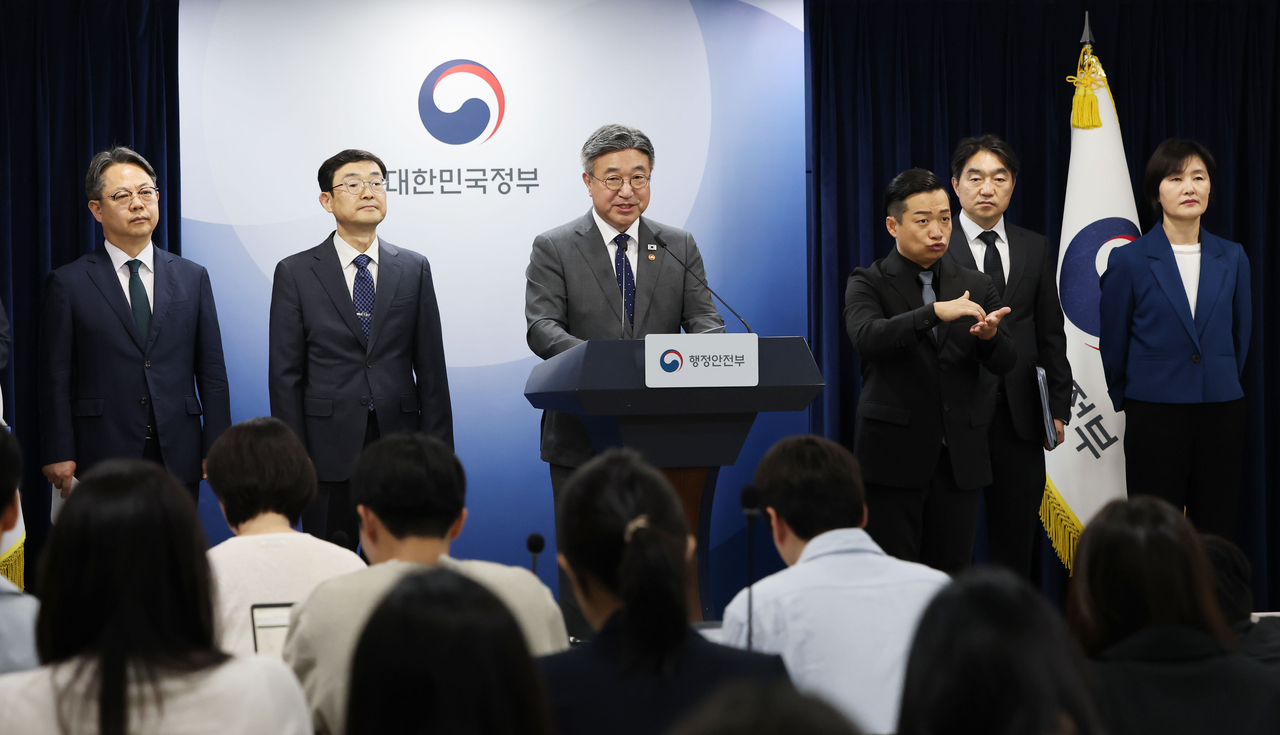
Korea's interior ministry plans to move 44 agencies and 9,929 officials to Sejong between 2027 and 2031 at a cost of about 3.2 trillion won. The Assembly's Sejong chamber is targeted for 2033, so ministries may keep shuttling to Seoul.
The Investor · Invest desk
6,934 officials need stand-alone buildings and move in stages through 2031. 2,995 officials move next year into leased private office space. Temporary offices run for three to four years until new buildings are done. Building construction costs roughly 3.1 trillion won.
| Figure | Value | Note | Claim |
|---|---|---|---|
| Officials needing stand-alone buildings, to 2031 | 6,934 officials | 4 | |
| Leased offices, next year | 2,995 officials | 3 | |
| Years in temporary offices, at least | 3 years | up to 4 years | 8 |
| Construction cost, roughly | 3.1 trillion won | 6 |
What happened
- Sejong already holds 43 agencies and 14,731 officials, so the plan takes the city to 87 agencies and 24,660 people.
- Next year 27 agencies and 2,995 officials move first, into leased private office space.
- The other 17 agencies and 6,934 officials need stand-alone buildings and specialized facilities, and move in stages through 2031.
- Next year's budget bill sets aside 118.3 billion won, with 89.7 billion won for leased offices and relocation support and 28.6 billion won for basic design of new buildings.
Why it matters
- cost Temporary offices must be run for three to four years until permanent buildings are finished, so rent and operating costs recur in each of those budgets.
- decision The Justice and Gender Equality ministries have no moving date until the Multifunctional Administrative City law is revised, so their timing depends on that revision.
- constraint Moving capital-area special administrative bodies into the Seoul and Gwacheon complexes the agencies leave, now under review, would offset part of the stated aim of easing concentration in the capital region.
Divide 3.2 trillion won [6] by 9,929 officials [1] and the plan costs about 322 million won a head [15]. The average hides a skew. About 70% of the officials, or rather 69.8% to be exact, sit in the 17 agencies that need their own buildings [16]: five police, audit and investigative agencies with 4,171 officials, three ministries with 2,106, and nine affiliates with 657 [5]. Construction is nearly all of the money, roughly 3.1 trillion won of the 3.2 trillion [6].
The rounding leaves a puzzle. Take 3.1 trillion won of construction out of 3.2 trillion and about 100 billion won remains for everything else [17], yet next year's leased offices and relocation support alone are budgeted at 89.7 billion won [7], about 90% of that remainder [18]. If that line recurs for a second year, the two years together come to 179.4 billion won [21]. Temporary offices are meant to run three to four years [8]. We think the total will be revised up; the counter-reading is that 2027 carries one-time setup costs and later years cost far less. The report does not break out lease costs by year, so the two readings cannot yet be separated.
The split between cities is the longer-running cost. The last agencies arrive in 2031 [1] and the Assembly's Sejong chamber is targeted for 2033 [9], a gap of two years [19]. No decision has been made on the Presidential Secretariat, the National Security Office or the Presidential Security Service [9]. Until those settle, ministries may keep shuttling between the cities to report to or consult with the Presidential Office and the Assembly [10]. In our view the split lasts to 2033 at the earliest. We would be wrong if those three presidential bodies move with the Sejong presidential office, targeted for 2029 [9], which would leave the Assembly as the only reason to travel.
The Foreign Ministry's 1,024 officials [5] pull a second group after them. If the ministry relocates, embassies will eventually be forced to follow it to Sejong, a senior official from a major country's embassy in Seoul said, according to the report [22]. "The lifeblood of diplomacy is routine face-to-face networking, and being physically separated from the host country's foreign ministry could disrupt coordination on urgent diplomatic and security issues," the official said [23].
The government says the aims are better policy coordination and less concentration of population and functions in greater Seoul [14]. It has not yet clearly shown that past relocations to Sejong reduced concentration in the Seoul area [12]. Those earlier moves involved 14,731 officials [2]; this plan adds 9,929, or 67.4% more [20].
What to watch
- Whether the 2027 budget bill keeps the 89.7 billion won leased-office and relocation line, and whether later budgets repeat it.
- Any embassy in Seoul that announces staff or functions moving to Sejong ahead of the Foreign Ministry's 2031 window.
- A government study showing whether the 43 agencies already in Sejong reduced concentration in the capital region.
Clarity's read
What the record supports and how the coverage leans. The claims behind it follow.
Reality
- Evidence55
- Adoption
- Insufficient
- Hype gap+20
- Incentives
- Insufficient
- Confidence45
Claim ledger
Ranked by verification strength, evidence, and original report placement.
- [1]
Under the Ministry of the Interior and Safety's second central administrative agency relocation plan, released on the 13th, 44 agencies and 9,929 public officials will move to Sejong between 2027 and 2031.
ReportedSupportedSource: Ministry of the Interior and Safety plan, as reported by en.sedaily.comView cited source - [2]
43 agencies and 14,731 officials are already in Sejong; with the plan the total will reach 87 agencies and 24,660 people.
- [3]
Next year, 27 agencies and 2,995 officials will move first into leased private office space.
- [4]
The remaining 17 agencies and 6,934 officials, which require stand-alone buildings and specialized facilities, will move in stages through 2031.
- [5]
The 17 agencies include 4,171 officials from five agencies (Korean National Police Agency 2,160, Board of Audit and Inspection 1,059, Public Prosecution Agency 471, Serious Crimes Investigation Agency 396, Corruption Investigation Office for High-ranking Officials 85), 2,106 officials from three ministries (Foreign Affairs 1,024, National Defense 746, Unification 336), and 657 officials from nine affiliated organizations.
- [6]
Total project costs come to about 3.2 trillion won ($2.2 billion), with roughly 3.1 trillion won going to construction of government buildings alone.
- [7]
Next year's budget bill allocates 118.3 billion won, including 89.7 billion won for setting up and operating leased offices and supporting relocation, and 28.6 billion won for basic design work on new buildings.
- [8]
Temporary offices will have to be run for three to four years until the new buildings are completed, so rent and operating costs will continue to accrue.
- [9]
The presidential office in Sejong is targeted for completion in 2029 and the National Assembly's Sejong chamber in 2033; no decision has been made on whether to move the Presidential Secretariat, the National Security Office and the Presidential Security Service.
- [10]
Ministries may continue shuttling between Seoul and Sejong to report to or consult with the Presidential Office and the National Assembly.
- [11]
Schedules for the Ministry of Justice and the Ministry of Gender Equality and Family will be fixed in line with the revision of the Multifunctional Administrative City law.
- [12]
The government has yet to clearly demonstrate that earlier moves to Sejong eased concentration in the capital region.
- [13]
The government is reviewing plans to move special regional administrative bodies serving the capital area into the Seoul and Gwacheon complexes that will be vacated.
- [14]
The government aims to concentrate key ministries in one place to improve policy coordination and ease the concentration of population and functions in the greater Seoul area.
- [15]
3.2 trillion won spread over 9,929 officials is about 322 million won per official.
- [16]
6,934 of the 9,929 officials, about 69.8%, are in the 17 agencies needing stand-alone buildings.
- [17]
3.2 trillion won in total costs minus roughly 3.1 trillion won of construction leaves about 100 billion won for everything else (both figures are rounded).
- [18]
89.7 billion won of leased-office and relocation spending next year is about 90% of the roughly 100 billion won non-construction remainder.
- [19]
The Assembly's Sejong chamber target (2033) is two years after the plan's last relocation year (2031).
- [20]
9,929 additional officials is about 67.4% of the 14,731 already in Sejong.
- [21]
If the 89.7 billion won leased-office and relocation line recurred for a second year, two years would total 179.4 billion won, above the roughly 100 billion won remainder.
- [22]
A senior official at one major country's embassy in Seoul said that if the Foreign Ministry goes down to Sejong, embassies, which are clustered in Seoul, will ultimately have no choice but to follow.
ReportedContestedSource: Unnamed senior official at one major country's embassy in Seoul, quoted by en.sedaily.comView cited source - [23]
"The lifeblood of diplomacy is routine face-to-face networking, and being physically separated from the host country's foreign ministry could disrupt coordination on urgent diplomatic and security issues."
ReportedContestedSource: Unnamed senior official at one major country's embassy in Seoul, quoted by en.sedaily.comView cited source
Sources
1 independent publisher whose own reporting we read for this story.
- en.sedaily.comKorea to Spend 3.2 Trillion Won Moving 44 Agencies to Sejong by 2031
1 article · October 13, 2026
Topics and entities
Follow any of these and your For You feed starts watching them — no settings page required.