BuildIndependently confirmed2 publishers3 min readPublished Updated
OpenAI's AGI date is really a definition, and buyers should price that instead
Altman says an internal system he would call AGI arrives by the end of 2026. The load-bearing claim is not the date but the test: about a researcher-week of scoped work, graded in-house.
The Engineer · Build desk
What happened
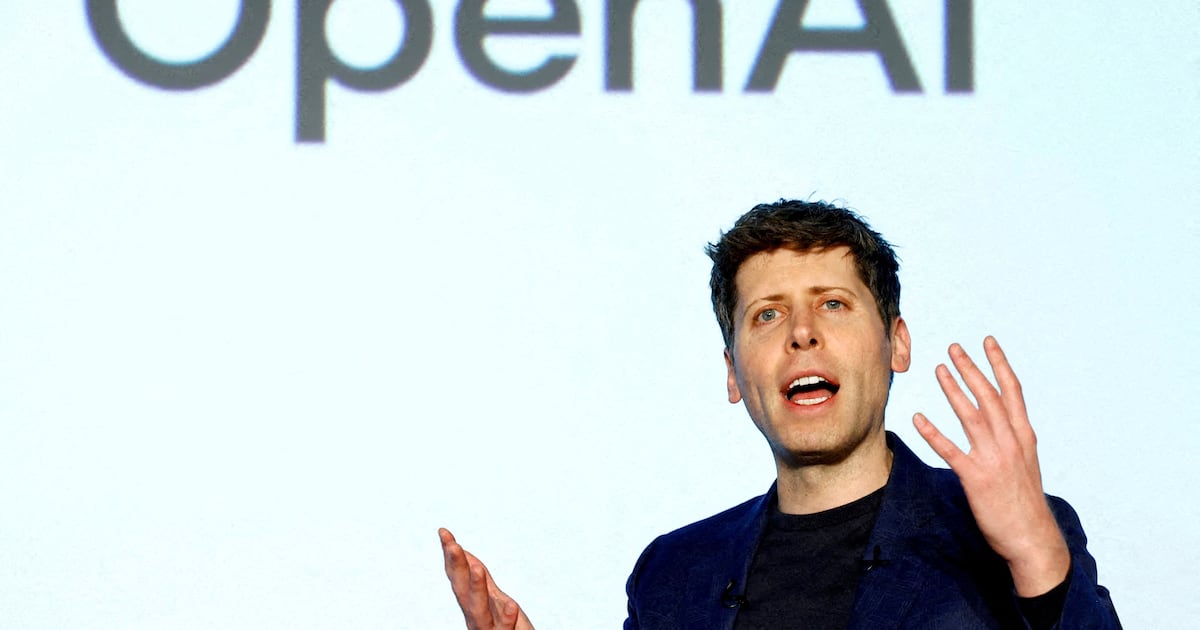
- Sam Altman says OpenAI will have an internal system he would call AGI by the end of 2026, while admitting the company is "not quite yet" there.
- Chief scientist Jakub Pachocki says the Astra model family already meets OpenAI's internal bar: write code in the company codebase, run the experiment, report results.
- Chief Research Officer Mark Chen puts the company at "80% of the way" to that target.
Why it matters
- constraint The milestone being claimed is internal, so no delivery obligation, SLA or eval score changes on the day it is declared. There is nothing for a buyer to inspect.
- exposure Every load-bearing capability claim traces to OpenAI staff through a single reported account, which leaves the verification bill with whoever buys against it.
- cost With most consumer usage unpaid and ad volume rising, the research programme is being financed partly by what gets inserted into free users' answers.
The definition is doing the work here, not the date. OpenAI's own formulation of AGI is "highly autonomous systems that outperform humans at most economically valuable work" [6], which the Decoder describes as a heavily economics-driven reading [7], and the term has no precise agreed meaning to begin with [8]. The year-end claim is therefore not a claim about minds. It is a claim that one system clears an economic bar the vendor drew and grades.
What clears it, according to chief scientist Jakub Pachocki, is Astra: hand it an experimental idea and it writes the code in OpenAI's codebase, runs the experiment, and reports back with results [4]. Hand it a research paper and it covers what would have taken a human researcher about a week [5]. That is the most useful figure in the whole account, because it is the only one carrying a unit. One researcher-week, measured inside the codebase of the company doing the measuring.
Mark Chen's "80% of the way" [2] has no denominator that anyone can inspect, given that the target term is undefined [8]. Paired with Altman's end-of-2026 timing [1], it also implies the last fifth of the journey closing inside a single calendar year [10], which is a strong claim about the shape of a curve nobody outside the building can plot.
Note also that the milestone is internal. Altman's stated conviction is about a system he would call AGI, and he concedes they are "not quite yet" there [1]. Nothing in a customer contract changes on the day of declaration. The part a buyer can actually touch is the persistence work: Codex folded into ChatGPT in a project called "The Merge," which produced ChatGPT Work [12], with product lead Thibault Sottiaux saying the company is close to shipping something with "persistence and always-on execution" [13]. That is testable. Does the agent hold state across a multi-day task, and what does it do at hour thirty when a dependency moves.
The funding section constrains everything above it. CFO Sarah Friar puts 92 percent of ChatGPT consumer users outside any paid subscription [14], ads have tested well enough that leadership is ramping the volume [15], and Sponsored Agents would drop a user who clicks an ad into a brand-hosted AI experience [16]. The research-intern story and the ad-load story are running on the same balance sheet.
One more thing worth saying plainly: both writeups supplied to this desk are the same Decoder article [11], itself reporting Alex Heath's TIME piece built from more than two weeks of work and over 20 interviews with executives, employees, investors and rivals [3]. The capability claims that matter come from people who work there. The Decoder itself flags Altman's "invents new things in a way that matters" line as heavily debated [18], and reports researchers split on whether recursive self-improvement is near or already visible [19].
So the translation for anyone holding a vendor roadmap with AGI on it: what is being promised, under the seller's own definition, is a persistent agent that finishes about a researcher-week of scoped work in a codebase it knows. That is a real product and worth paying for if it lands. It is not the same purchase as a system that outperforms humans at most economically valuable work, and the gap between those two things is where the contract language should sit.
What to watch
- Whether the research-intern claim is ever backed by a benchmark someone outside OpenAI can run and reproduce.
- Whether ChatGPT Work actually ships persistence and always-on execution, and what failure and recovery behaviour is contractually specified.
- Whether the puck-shaped device holds its early 2027 window, which would place the hardware after the declared AGI date.
Clarity's read
What the record supports and how the coverage leans. The claims behind it follow.
Reality
- Evidence30
- Adoption15
- Hype gap+55
- Incentives70
- Confidence40
Claim ledger
Ranked by verification strength, evidence, and original report placement.
- [1]
OpenAI CEO Sam Altman says he is convinced the company will have an internal system he would call AGI by the end of 2026, while conceding OpenAI is "not quite yet" there.
ReportedSupportedSource: Sam Altman, via TIME as reported by the-decoder.com3 sources— create a free account to open themView cited source - [2]
Chief Research Officer Mark Chen estimates OpenAI is "80% of the way" to AGI.
ReportedSupportedSource: Mark Chen, via TIME as reported by the-decoder.com3 sources— create a free account to open themView cited source - [3]
The account comes from a TIME report by Alex Heath, who spent more than two weeks interviewing over 20 executives, employees, investors and rivals.
- [4]
Chief Scientist Jakub Pachocki told TIME that Astra already hits OpenAI's internal automated research intern benchmark: given an experimental idea it can write the code in OpenAI's codebase, run the experiment, and report back with results.
ReportedSupportedSource: Jakub Pachocki, via TIME as reported by the-decoder.com2 sources— create a free account to open themView cited source - [5]
Given a research paper, Astra can handle work that would have taken a human researcher about a week.
ReportedSupportedSource: TIME, as reported by the-decoder.com2 sources— create a free account to open themView cited source - [6]
OpenAI defines AGI as "highly autonomous systems that outperform humans at most economically valuable work."
- [7]
The Decoder characterises OpenAI's AGI definition as a heavily economics-driven reading, with others arguing more is needed, such as a robust understanding of the world.
- [8]
The term AGI has no precise definition, so its application is partly a matter of interpretation.
- [9]
Astra is OpenAI's upcoming model family, announced last year as an automated AI research intern, and it also enables "persistent agents" that work on tasks on their own over longer periods.
- [10]
Chen's "80% of the way" estimate combined with Altman's end-of-2026 target implies the remaining 20 percent is expected to close within the same calendar year.
- [11]
The two source blocks supplied for this story are the same the-decoder.com article, so the reporting chain rests on one secondary writeup of one TIME report.
- [12]
OpenAI is combining its Codex coding agent with ChatGPT in an internal project called "The Merge," which produced ChatGPT Work.
- [13]
Product lead Thibault Sottiaux told TIME that OpenAI is "close" to shipping something with "persistence and always-on execution."
ReportedSupportedSource: Thibault Sottiaux, via TIME as reported by the-decoder.comView cited source - [14]
CFO Sarah Friar says 92 percent of ChatGPT consumer users do not pay for a subscription, and ad revenue could help cover their costs.
- [15]
Ads inside ChatGPT have performed well enough in early tests that OpenAI leadership is ramping up the volume.
- [16]
OpenAI is testing "Sponsored Agents," a format where clicking an ad drops users into a brand-hosted AI experience.
- [17]
OpenAI's first device is expected to be a small puck-shaped unit that senses its surroundings and talks to its owner via voice mode, expected early in 2027 according to TIME.
- [18]
Altman said at a customer preview that he expects Astra to be "the first model where the model actually invents new things in a way that matters," a claim the Decoder describes as heavily debated.
- [19]
The wager behind Astra is that such a system could start recursive self-improvement; some researchers think that capability is still far off while others see early signs it is already happening.
Sources
2 independent publishers whose own reporting we read for this story.
- latent.space[AINews] OpenAI to reach AGI bar by end-2026
1 article · August 28, 2026
- the-decoder.comSam Altman says OpenAI will have AGI by the end of 2026 if you accept his definition
2 articles · August 26, 2026
Topics and entities
Follow any of these and your For You feed starts watching them — no settings page required.