Invest1 publisher2 min readPublished
Kalshi's record $15.8 billion week counts each contract at its full $1 payout
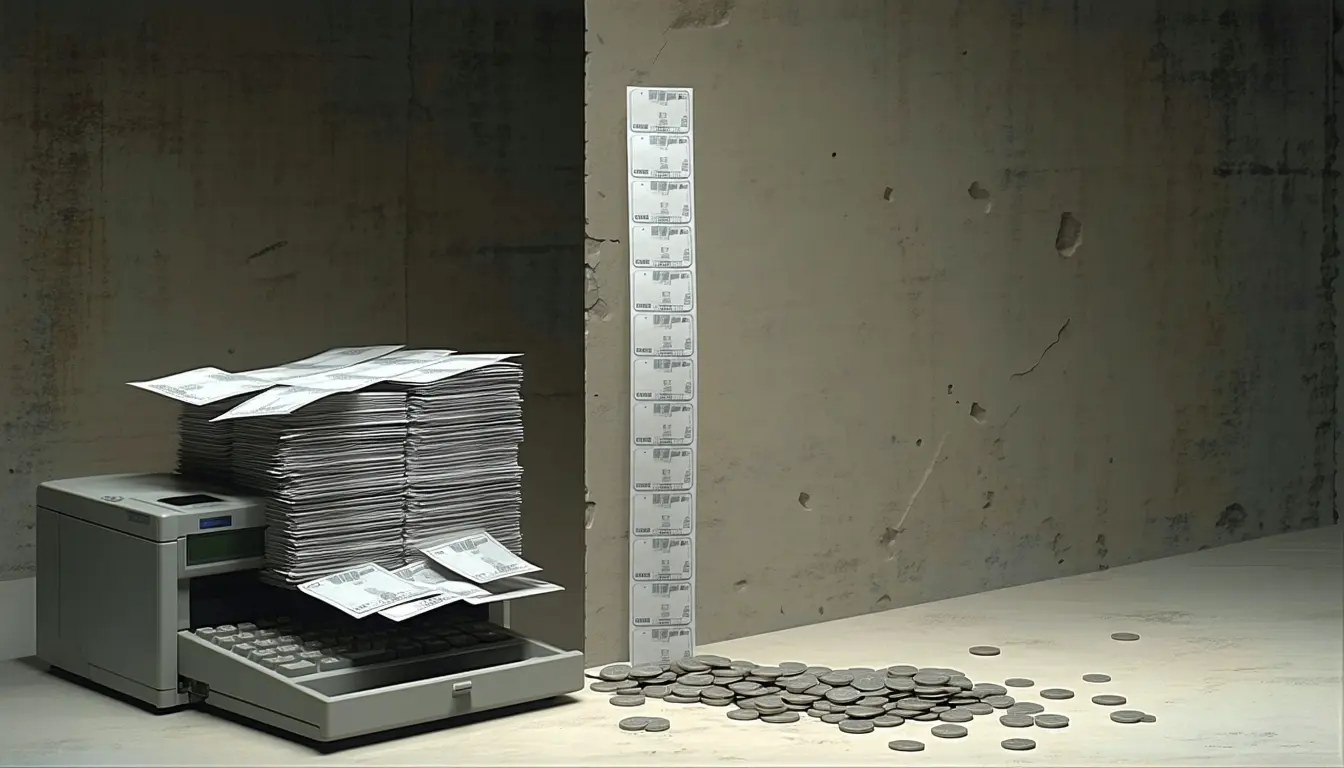
Kalshi took $15.8 billion of the $20.4 billion prediction markets traded last week, per Artemis, the first week above $20 billion. It books each contract at its $1 payout, so the record counts payouts written, well above the cash traders put at risk.
The Investor · Invest desk
What happened
- Polymarket finished a distant second with $3.6 billion, and the gap between it and Kalshi is now the widest it has been all year.
- Daily records followed, with about $4 billion traded across the sector on each of Saturday and Sunday and around $3 billion of it on Kalshi each day.
- The week before came in at $19.8 billion, and both weeks beat the highs set during the World Cup in June and July.
- A large share of the flow runs through football parlays, which pay only if every leg hits and often cost a few cents a contract.
- The Fed's September rate decision drew steady positioning on Kalshi and Polymarket, and short-dated Bitcoin and Ether contracts turned over repeatedly.
Compiled by The InvestorSomething wrong?How this is made
Why it matters
- constraint At a 5-cent average price Kalshi's $15.8 billion is about $790 million of stakes, and at 50 cents about $7.9 billion, so the total cannot size the macro or event risk on the venue.
- exposure Six named venues make up nearly all of the $20.4 billion and one holds about 77%, so a regulatory or operational problem at Kalshi would reach most of the sector's tracked flow.
- decision A desk hedging Fed or election outcomes here has to size orders from open interest and depth on the specific contract, because payout-value volume overstates what it could trade.
- precedent If Kalshi holds near three-quarters of volume as election contracts grow before Nov. 3, its share will have outlasted the football-weekend explanation.
In the source's own example, a $20 bet on a 5-cent parlay buys 400 contracts and enters Kalshi's volume as $400 [8]. That is twenty times the money staked [4]. Apply it to the whole week. If Kalshi's contracts averaged 50 cents, traders put up about $7.9 billion for its $15.8 billion of volume, and at 5 cents they put up about $790 million [5]. The report splits the week by platform and by day, with no breakdown by contract price or category, so it shows neither the cash at risk nor the share tied to the Fed or the midterms.
The weekend figures undercut the easiest explanation for Kalshi's lead. The sector's two weekend days came to about $8 billion together, 39% of the week [2]. They fell as the NFL and college football seasons got underway, with most games played on Saturdays and Sundays [9]. Kalshi's roughly $6 billion over those two days was 38% of its week [7]. Polymarket did $770.4 million on Saturday and $662.4 million on Sunday [12], about $1.43 billion, or 40% of its own week [8].
Two readings fit those numbers. In the first, Kalshi's 77% [3] is a fair measure of where event contracts trade, and the $20.4 billion total is the inflated figure. In the second, the share is inflated as well. The report describes Kalshi's payout-value convention [8], and if Polymarket books trades at the price paid, the 4.4-to-1 gap between them on the week [1] compares two different units.
I think the first is closer, though not by much. The two platforms leaned on the weekend to almost the same degree [7] [8], so Kalshi's lead does not come from football weekends alone. Nadex, Rothera, Predict.fun and Opinion add only about $1 billion between them [9], and the six named venues make up essentially the whole $20.4 billion [6]. No third pool is large enough to change the share. The counter-case turns on the unit question, and restating both platforms on a common basis could move the share a long way.
A desk that wants to lay off Fed or election risk on these venues gets little from the weekly total. It would size an order against open interest and resting depth on one contract. The midterms are five weeks away, and election contracts drove the last big volume cycle in 2024 [11]. If Kalshi's share falls well below three-quarters as election contracts take a larger part of volume, the concentration belonged to football season. The NFL regular season runs into early January [11], so parlays will stay in the weekly totals past Nov. 3.
What to watch
- Kalshi's weekly share in the five weeks to the Nov. 3 midterms, when election contracts take a larger part of volume than football parlays.
- A statement of how Polymarket counts volume; if it books the price paid, the 4.4-to-1 gap with Kalshi compares different units.
- Open interest or premium-paid figures from Artemis or the platforms, the numbers that would size the cash actually at risk.