InvestNot yet confirmed elsewhere1 publisher3 min readPublished
Navy Federal sets AI bots on scammers to keep instant payments moving for 14 million members
Navy Federal Credit Union is using AI bots that pose as scam victims to block payments to fraud accounts before any of its 14 million members send money. Payments that settle in seconds leave no day-long window to catch a scam, so the credit union is moving its screening ahead of the transfer for members whose deployments make sudden large payments less unusual.
The Investor · Invest desk
What happened
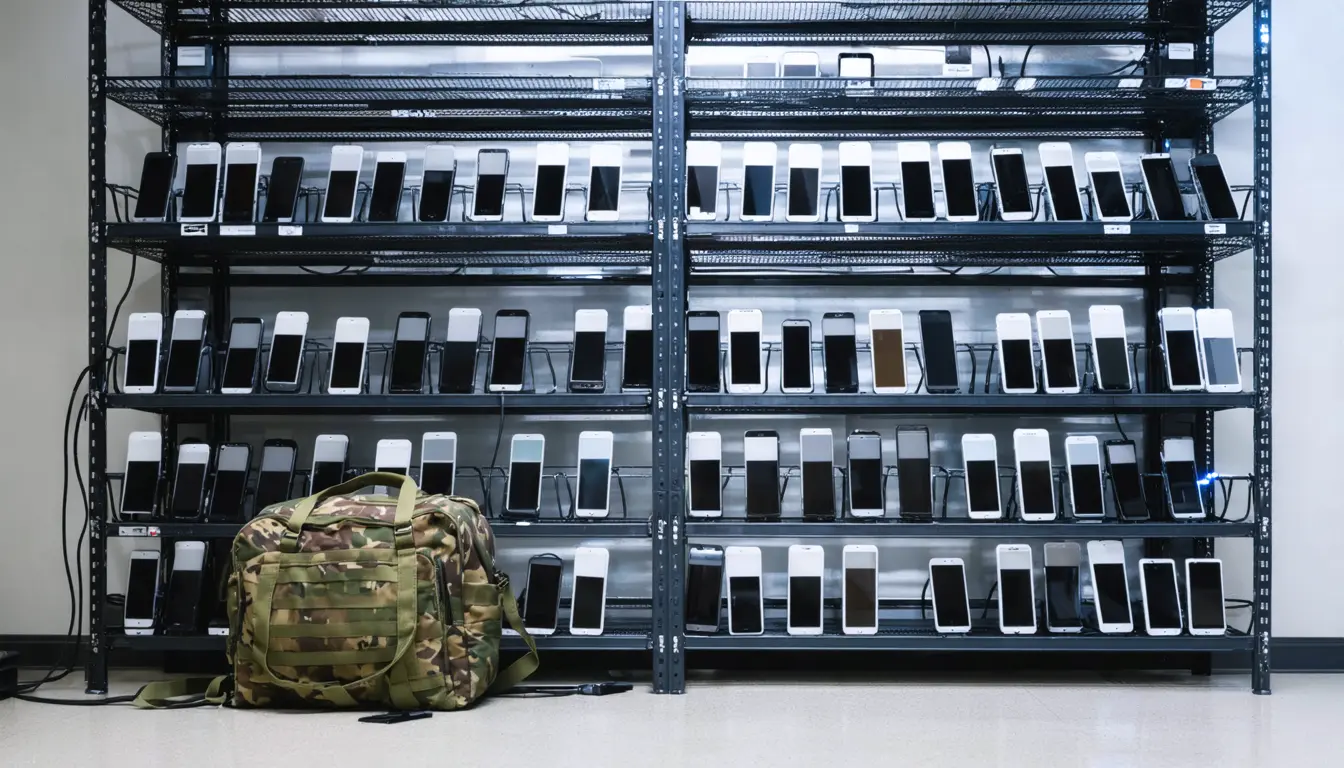
- Scammers who think the bots are victims tell them where to send money, and Navy Federal treats those accounts as confirmed scam accounts, security chief Kimberly Middleton said.
- The bot platform comes from Cube, a business analytics firm, and also looks for context tying a payment to a legitimate change in a member's life.
- Trace Fooshee of Datos Insights said many institutions' fraud controls rest on batch-era technology that often cannot evaluate risk automatically in real time.
Why it matters
- constraint A blocklist built from bot conversations only covers accounts scammers have already handed to a bot, so new scam accounts still fall to the checks that get a few seconds per payment.
- decision By screening unusual payments for life-event context, Navy Federal takes on the harder call of letting large, sudden transfers through when they fit a deployment or a move abroad.
- exposure Institutions still running fraud frameworks designed for batch payments, which Fooshee says is the bulk of controls at many of them, are clearing seconds-long payments with tools that struggle to score them in time.
- contradiction Credit union executives rate AI model risk 44 points lower than national bank peers yet report nearly the same unpreparedness, so their low alarm comes with no matching readiness.
Under batch settlement a payment took a day or more to clear, and fraud controls were built around that delay [7][13]. Middleton said a real-time payment settles in a few seconds, so spotting potential crime has to happen faster [7]. Navy Federal, which supports both FedNow and the RTP Network [3], has moved part of the check ahead of the payment. Its IT team flags likely scam accounts, the bots engage them, and payments to a confirmed account are cut off before a legitimate member can send funds [4]. "It's all just AI bots who are pretending to fall for scams," Middleton said [5].
A list built this way has a limit. It covers the accounts scammers have already handed to a bot, and a new scam account gets through until a bot finds it.
The second half of the deployment is the part specific to this membership. For most consumers a sudden, large cross-border payment would be out of character; for a military household it is not as unusual, and Middleton said the risk system is designed to manage security risk while allowing a broader range of typical behavior [7]. "A spouse may need a down payment for a rental, for example, that may be in another country without a lot of notice," she said. "Or they may need funds sent to them quickly due to a deployment." [8] The Cube bots look for context that links a payment to a legitimate change in a member's life [6]. On Middleton's account, Navy Federal is not taking the cheap route of treating every out-of-character payment as suspect. That rule would block the payments she just described.
Scale shapes how the screening gets done. Navy Federal has more than $151 billion in deposits, 350 branches and 14 million members [2], or about 40,000 members per branch [14]. At that ratio I'd expect most of the knowing Middleton talks about to happen in monitoring systems. "It all starts with 'knowing' our members, and using real-time monitoring to help transactions move quickly while still watching for things that don't look right," she said [10].
Trace Fooshee, a strategic advisor at Datos Insights, said the gap runs across financial services. "The challenge for many financial institutions is that the bulk of their fraud control frameworks are based on legacy technologies that were designed around batch-based payments systems which are often incompatible with providing an automated evaluation of fraud risks in real-time," he told American Banker [13]. American Banker's own research shows a split. Only 18% of credit union executives call AI model risk a critical or high threat, against 62% at national banks [11], yet 71% of credit unions say they are not prepared, against 73% of national banks [12]. The gap in alarm is 44 points and the gap in readiness is 2 [15]. The survey asks about AI model risk, not payment scams, so it is a loose proxy for how fast credit unions will rebuild fraud controls.
On this evidence the direction of the thesis holds. Navy Federal's security operations manager said the credit union has "been trying to keep pace with our fraud tools" as real-time payments arrive [9], and an outside advisor says batch-era controls do not fit. It could still turn out differently if scammers rotate accounts faster than bots find them, if scammers learn what a deployment payment looks like and copy it, or if Navy Federal's instant-payment volume is still small enough that this is preparation for demand that has not yet arrived. American Banker did not report Navy Federal's real-time volumes, its scam losses or what it pays Cube. If losses on FedNow and RTP turn out no higher than on slower rails, the claim that instant settlement is forcing a rebuild is wrong, and this is a vendor deployment made ahead of need.
What to watch
- Whether Navy Federal or Cube publishes block rates, false-positive rates or scam-loss figures for payments sent over FedNow and RTP.
- Whether other credit unions, whose executives rated AI model risk far below bank peers, start buying pre-transaction scam-account screening of the kind Navy Federal deployed.
Clarity's read
What the record supports and how the coverage leans. The claims behind it follow.
Reality
- Evidence38
- Adoption25
- Hype gap+15
- Incentives40
- Confidence40
Claim ledger
Ranked by verification strength, evidence, and original report placement.
- [1]
Navy Federal Credit Union has added AI tools to battle payment fraud and scams linked to real-time processing.
- [2]
Navy Federal is the largest U.S. credit union, with more than $151 billion in deposits, 350 branches and 14 million members across the armed services, Department of Defense personnel and their families.
- [3]
Navy Federal supports both FedNow and the RTP Network.
- [4]
Navy Federal recently deployed a platform that uses fake bots as proactive scam detectors to stop a scam before the transaction; the bots engage with accounts its IT team has flagged as potential scam accounts, payments to those accounts are proactively cut off, and the accounts are flagged before a legitimate consumer can transfer funds.
- [5]
"So we get a list of essentially bad accounts, we know they're being used by scammers," she said. "It's all just AI bots who are pretending to fall for scams. They were getting told where to send the money, so we're very confident in that account" being a scammer's.
ReportedSupportedSource: Kimberly Middleton, manager of the security operations center, Navy Federal Credit Union, to American BankerView cited source - [6]
The underlying technology is from Cube, a business analytics firm; at Navy Federal the AI bots seek deeper context around transactions that can link payments to legitimate changes in members' lives.
- [7]
A sudden, large cross-border payment would be out of character for many consumers but is not as unusual for a military person; the credit union's real-time payment risk system is designed to manage security risk while enabling a broader set of typical behavior; since a real-time payment settles in a few seconds instead of a day or more, spotting potential crime has to happen faster.
- [8]
"A spouse may need a down payment for a rental, for example, that may be in another country without a lot of notice," Middleton said. "Or they may need funds sent to them quickly due to a deployment."
- [9]
"As real-time payments come on board, we have been trying to keep pace with our fraud tools," Middleton, manager of the security operations center at Navy Federal Credit Union, told American Banker.
- [10]
"It all starts with 'knowing' our members, and using real-time monitoring to help transactions move quickly while still watching for things that don't look right," she said.
- [11]
Only 18% of surveyed credit union executives say AI model risk is a critical or high threat, compared to 62% at national banks, 54% at midsize banks and 50% at community banks.
- [12]
Seventy-one percent of credit unions say they aren't prepared for the threat, compared to 73% of national banks, 62% of midsize banks and 61% of community banks.
- [13]
"The challenge for many financial institutions is that the bulk of their fraud control frameworks are based on legacy technologies that were designed around batch-based payments systems which are often incompatible with providing an automated evaluation of fraud risks in real-time," Fooshee told American Banker.
- [14]
Navy Federal has about 40,000 members per branch.
- [15]
Credit union executives trail national banks by 44 percentage points in rating AI model risk critical or high, but by only 2 points in saying they are not prepared.
Sources
1 independent publisher whose own reporting we read for this story.
- americanbanker.comInside Navy Federal's fight against military payment scammers
1 article · October 9, 2026
Topics and entities
Follow any of these and your For You feed starts watching them — no settings page required.
Topics
- Credit unionsFollow
- AI in fraud detectionFollow
- Real-time payments fraudFollow
Entities
- Navy Federal Credit UnionFollow
- CubeFollow
- FedNowFollow
- RTP NetworkFollow
- Datos InsightsFollow
- American BankerFollow
- Kimberly MiddletonFollow
- Trace FoosheeFollow