Product5 distinct publishers3 min readPublished
Two of three reaction wheels failed on Katalyst's LINK spacecraft, so NASA cancelled the capture-and-boost. What is left, rendezvous and proximity data, is what this industry can actually do.
The Product Desk · Product desk

Compiled by The Product DeskSomething wrong?How this is made
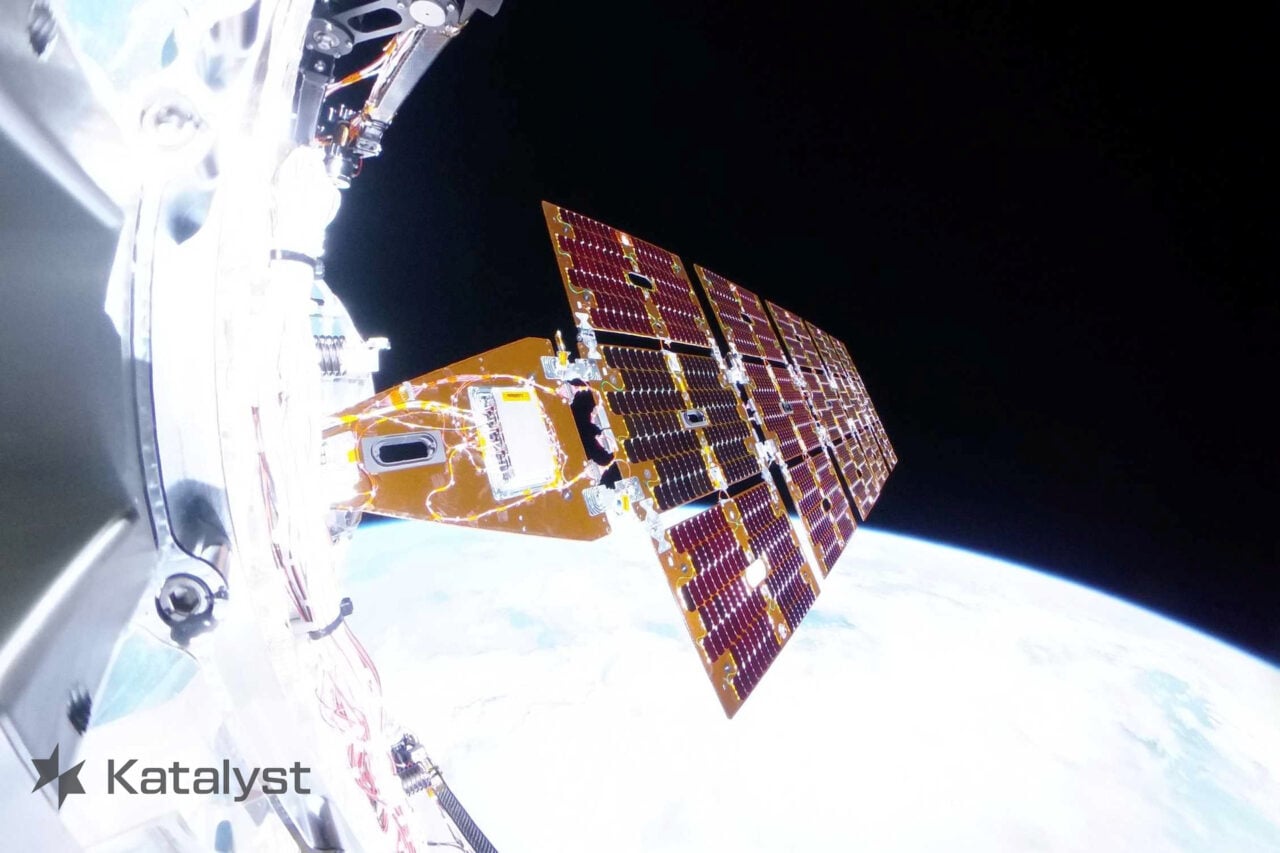
NASA and Katalyst Space said Wednesday that the LINK spacecraft will not capture or boost the Neil Gehrels Swift Observatory to a higher altitude, citing an ongoing attitude control issue [1]. Swift is now expected to re-enter and burn up in Earth's atmosphere later this year [15], and LINK's remaining assignment, rendezvous and proximity operations to demonstrate capabilities for future missions [8], is a reasonable description of the actual frontier in commercial servicing.
The failure was not in the exotic part. Two of LINK's three reaction wheels failed [3]. Reaction wheels use electric motors to hold a spacecraft's orientation and damp its rotation [4]; without them the vehicle began tumbling in late July, which in turn made communications sporadic [2]. There was also some loss of functionality in the thruster system, according to Engadget [6]. NASA said the rest of the spacecraft stayed healthy [5]. Engineers uploaded a flight software update last week meant to stabilize the vehicle enough to continue its approach, and it was not enough [7].
So the three-armed servicer [9] will never exercise its arms. The capability that ended the mission was pointing, the most commodity subsystem on the bus, and it ended the mission before anything about grappling an uncooperative client got tested. Everything downstream of capture, the docking, the boost, the tug, remains unattempted in this program by an American commercial vehicle on this class of target.
The schedule explains a lot. NASA awarded Katalyst the contract in September 2025 with the requirement to build, test and launch inside a year [13]; The Verge reports the award was worth $30 million [14]. LINK flew on July 3, dropped from a Lockheed L-1011 at 12.2 kilometers over Kwajalein Atoll and lofted by a Northrop Grumman Pegasus XL [9], roughly ten months after the award [22]. NASA astrophysics director Shawn Domagal-Goldman called it "a first-of-its kind attempt, developed on an unprecedented timeline driven by the Sun's activity" [19]. Increased solar activity expanded the upper atmosphere, raising drag and accelerating Swift's decay [12]. The customer did not choose the deadline.
Swift itself launched on November 20, 2004 to study gamma-ray bursts [10], was built for a two-year mission, and produced science for 21 years [11], more than ten times its design life [23]. It became a general-purpose multi-wavelength observatory along the way [24], and the boost was supposed to add roughly another decade [17]. NASA Administrator Jared Isaacman said the outcome "is not the outcome we were working toward, but it does not change why this mission was worth attempting" [18]. Timing of the loss is not settled in public: NASA expects re-entry later this year [15], while Gizmodo reports the orbit is likely to decay to burn-up by the end of 2026 [16].
Three things to watch. First, whether a vehicle that tumbled [2] and lost thruster functionality [6] can hold formation closely enough for the proximity data to be worth anything, since that is now the entire return on the contract [8]. Second, what NASA does about rapid response to sudden cosmic events, which it says it will prioritize while leaning on existing missions to fill the gap [20]. Third, whether the stated lessons for servicing, refueling and debris remediation [21] show up as changed requirements on the next award rather than as language in a press release.
Ranked by verification strength, evidence, and original report placement.
NASA and Katalyst Space announced Wednesday that, due to an ongoing commercial spacecraft attitude control issue, the LINK spacecraft will not capture or boost an agency satellite to a higher altitude to extend its science mission as planned.
LINK will still attempt to conduct rendezvous and proximity operations with the Neil Gehrels Swift Observatory to demonstrate key capabilities for the future of space exploration, with NASA and Katalyst gathering as much data as possible for future satellite servicing missions.
LINK experienced attitude control issues in late July that caused it to spin uncontrollably in orbit and resulted in sporadic communications.
The three-armed LINK spacecraft took off on July 3 aboard a converted Lockheed L-1011 aircraft from Kwajalein Atoll and was launched into space from an altitude of 12.2 kilometers using a Northrop Grumman Pegasus XL rocket.
NASA Administrator Jared Isaacman said: "This is not the outcome we were working toward, but it does not change why this mission was worth attempting."
NASA's Neil Gehrels Swift Observatory launched into low-Earth orbit on November 20, 2004 to study gamma-ray bursts.
Follow any of these and your For You feed starts watching them — no settings page required.
Evidence-backed comparisons of source perspectives and observed adoption signals. Read the methodology
Which Builder, Operator, and Investor concerns the observed source mix emphasized—not a truth score.
Evidence, demonstrated adoption, hype gap, incentives, and confidence are assessed independently, each on its own current evidence. How these are measured.
Well-sourced primary announcement with named officials and subsystem detail
Five independent outlets report the same NASA/Katalyst announcement, with a quoted NASA statement, two named officials, specific failure modes (two of three reaction wheels, thruster degradation), dated launch and anomaly events, and a stated contract value. The main gap is root cause: Katalyst has not said why the wheels failed, and one source's claim that all other systems stayed healthy conflicts with two others reporting thruster loss.
One flight article; primary objective failed, backup demo pending
Adoption of in-orbit servicing here rests on a single government-funded flight: LINK launched, reached orbit, lost attitude control, and had its capture-and-boost objective cancelled. The only remaining demonstrable use is a rendezvous and proximity operations attempt that had not yet occurred as of publication, and no other deployments, customers, or repeat missions appear in the sources.
Capability rhetoric modestly ahead of what flew
Official framing emphasizes advancing capabilities America will need for satellite servicing and lessons feeding refueling and debris remediation tooling, while the demonstrated result is a vehicle that lost attitude control before capture and whose consolation objective is still pending. The gap is modest rather than large because every source states the failure plainly, the mission was pre-labelled high-risk, and The Verge explicitly weighs the $30 million against a fruitless outcome.
Both principals need the failure read as productive learning
NASA leadership and a venture-stage contractor each have direct reputational and commercial stakes in reframing a cancelled $30 million rescue as a smart risk and a source of transferable lessons, and much of the cluster's forward-looking language comes verbatim from their statements. Sources do not disclose Katalyst funding, follow-on award prospects, or NASA budget context, so the incentive read is inferred from the visible statements alone.
High confidence on facts, lower on forward value
The event, timeline, failure mode and expected Swift reentry are firmly established across five outlets and official statements. Confidence is held below the top band by the unstated root cause, the contested vehicle-health detail, the nine-month versus ten-month schedule characterisations, and the fact that the remaining rendezvous demonstration had not happened when these pieces published.
science
NASA's $30 million Swift rescue ends without a capture, and Hubble is next in the queue6 distinct publishers
science
Two robots in orbit will decide whether satellites stop being disposable1 distinct publisher
science
Four Congressional Space Medals of Honor close out the first crewed SLS and Orion flight1 distinct publisher
science
Katalyst's servicer spent its fuel on its own tumble instead of raising NASA's Swift telescope1 distinct publisher
Distinct publishers with included, body-backed reporting in this cluster.
arstechnica.com
1 article · August 19, 2026
engadget.com
1 article · August 20, 2026
gizmodo.com
1 article · August 20, 2026
interestingengineering.com
1 article · August 20, 2026
theverge.com
1 article · August 20, 2026