Science1 publisherNot yet confirmed elsewhere2 min readPublished
Microglia in a dish need the Parkinson's risk protein GPNMB to nibble toxic clumps off living neurons
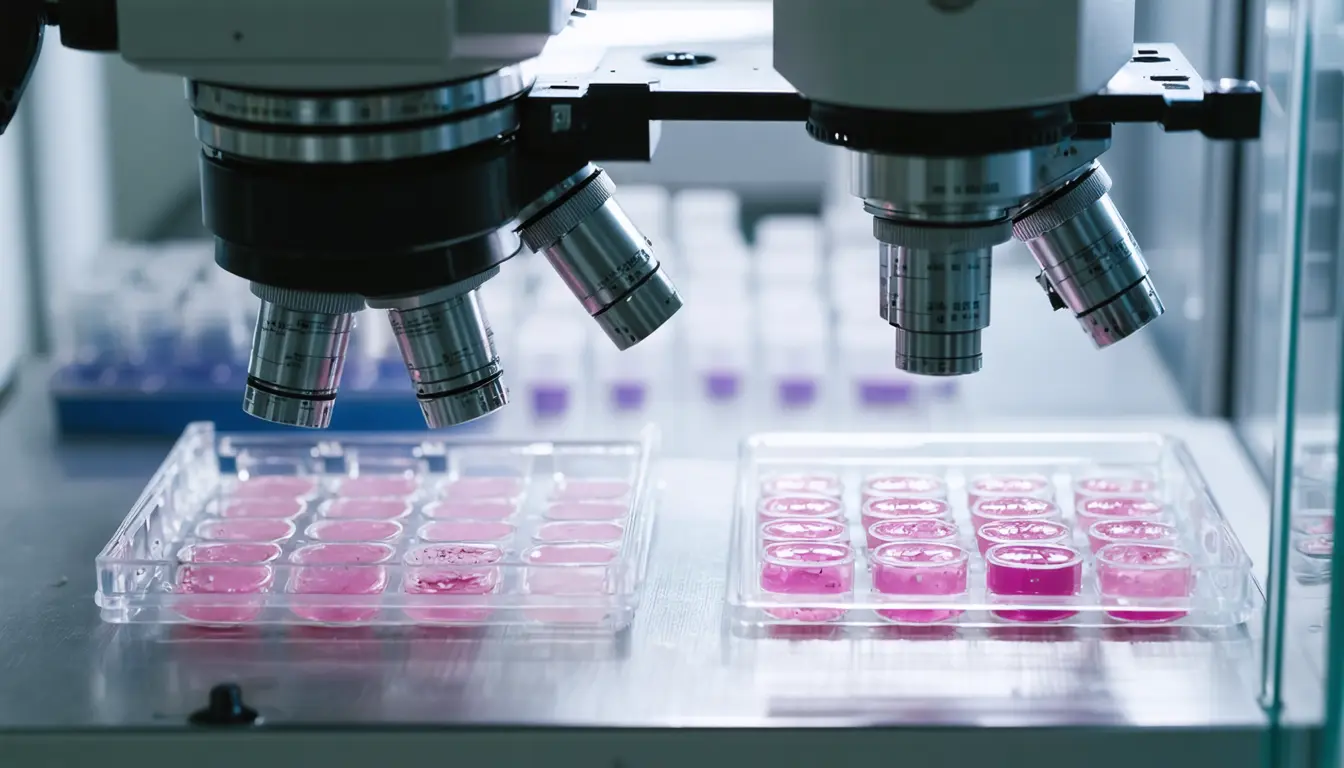
Oxford researchers report human microglia nibble alpha-synuclein clumps off living dopamine neurons in stem-cell cultures, a process that needs GPNMB. A gene flagged by genome-wide studies now has a testable role in the brain's immune cells, though so far only in a dish.
The Scientist · Science desk
What happened
- High-resolution imaging showed microglia removing only the membrane pockets that held the aggregates, leaving each neuron's cell body and axonal network intact.
- Single-cell RNA sequencing traced the clearance to one transcriptionally distinct subpopulation of activated microglia.
- GPNMB, earlier tied to Parkinson's risk by genome-wide association studies, binds alpha-synuclein directly, according to the Oxford team.
- A P2RY12 sensing receptor, a CD22 inhibitory checkpoint and an IL-10 brake regulate the nibbling and keep it from becoming runaway inflammation.
Compiled by The ScientistSomething wrong?How this is made
Why it matters
- capability Researchers now have a cell-based readout, microglial clearance of alpha-synuclein, against which the GPNMB variants linked to Parkinson's risk can be tested one by one.
- decision Anti-inflammatory approaches that suppress microglia across the board would need to show they spare the GPNMB-dependent subset the authors call neuroprotective.
- precedent The human neuron-and-microglia co-culture gives other Parkinson's risk genes a setting in which to be checked for a role in immune clearance.
"What is striking is the precision of this response," said Hung-Ju Chueh of the University of Oxford, the study's first author [14]. "The microglia were not simply engulfing damaged neurons but instead removing parts of the neuron containing aggregated alpha-synuclein, suggesting that, at certain stages of disease, microglia help neurons dispose of potentially harmful material." [14]
Chueh's qualifier, "at certain stages," is the careful part of that sentence. In healthy tissue, microglia survey the brain, prune synapses and clear debris. In chronic neurodegeneration, their persistent activation drives inflammation that speeds neuronal death [13]. A culture has no disease course, so it cannot show when in a patient the helpful version of the cell is active.
Parkinson's affects more than 10 million people, and its defining damage is the death of dopamine neurons in the substantia nigra as alpha-synuclein misfolds into clumps [6][16]. Whether human microglia could help those neurons shed the burden without destroying them had been an open question [17]. To watch it directly, the team grew both cell types from human induced pluripotent stem cell lines [8]. They made the pathology two ways, so no result rests on one artificial setup: a tripled alpha-synuclein gene, and preformed fibrils that template misfolding of the neurons' own protein [9].
Neuroscience News, carrying the university's account, says the work solves "a long-standing genetic mystery" [3][15]. I think that claims more than a dish experiment can deliver. Binding and clearance in culture show what GPNMB can do in human microglia [2][1]. Whether it does the same in a patient's substantia nigra is a separate question.
The same outlet headlined the story as microglia that "rescue" dopamine neurons [18]. Its account describes trogocytosis, the removal of aggregate-filled pieces of neurons that stay alive [5][4]. The press account does not give effect sizes: how much aggregate was cleared, how neurons fared beside these microglia compared with cultures lacking them, or how far clearance dropped without GPNMB.
On this evidence I would treat the GPNMB pathway as a lead for animal and human-tissue work, with one caution attached. A drug that pushes the clearance harder would be pressing against the CD22 checkpoint and IL-10 brake that, in the team's account, keep the response from turning into neurotoxic inflammation [12].
What to watch
- Whether the full paper reports how much aggregate the microglia cleared and whether neurons survived longer with them than without them.
- Whether GPNMB-dependent trogocytosis turns up in animal brains or in post-mortem Parkinson's tissue, the first test of the pathway outside a dish.
Clarity's read
What the record supports and how the coverage leans. The claims behind it follow.
Reality
- Evidence35
- Adoption
- Insufficient
- Hype gap+40
- Incentives55
- Confidence40
Claim ledger
Ranked by verification strength, evidence, and original report placement.
- [1]
The Parkinson's risk protein GPNMB is required for microglia to bind and clear toxic alpha-synuclein clumps.
ReportedSupportedSource: University of Oxford account, via Neuroscience News2 sources— create a free account to open themView cited source - [2]
GPNMB binds directly to alpha-synuclein and is required for microglia to effectively clear aggregates.
ReportedSupportedSource: University of Oxford account, via Neuroscience News2 sources— create a free account to open themView cited source - [3]
Neuroscience News says the study solves a long-standing genetic mystery by showing that GPNMB is required for microglia to bind and clear toxic clumps.
ReportedSupportedSource: Neuroscience News image caption2 sources— create a free account to open themView cited source - [4]
Researchers at the University of Oxford discovered that human microglia can selectively prune away toxic alpha-synuclein aggregates from dopamine-producing neurons without destroying the host nerve cells.
- [5]
The microglia use trogocytosis, a precise cellular nibbling mechanism, from the Greek trogo, meaning to gnaw or nibble.
- [6]
Parkinson's disease affects more than 10 million individuals globally.
- [7]
GPNMB (glycoprotein non-metastatic melanoma protein B) was previously linked to Parkinson's risk via genome-wide association studies.
- [8]
The Oxford team generated human induced pluripotent stem cell lines and co-cultured human dopamine neurons alongside human microglia.
- [9]
The team modeled alpha-synuclein pathology two ways: by alpha-synuclein gene dosage elevation (triplication), and by seeding cultures with exogenous preformed alpha-synuclein fibrils that template misfolding of native neuronal protein.
- [10]
High-resolution imaging showed that instead of engulfing entire dying neurons by phagocytosis, the microglia selectively nibbled off membrane pockets enclosing the aggregated protein, eliminating the pathology while leaving the broader axonal network and cell body intact.
- [11]
Single-cell RNA sequencing showed the clearance was driven by a distinct, transcriptionally defined subpopulation of activated microglia.
- [12]
The clearance is controlled by sensing receptors (P2RY12), inhibitory checkpoints (CD22) and an interleukin-10 autocrine brake that prevents runaway neurotoxic inflammation.
- [13]
Under physiological conditions microglia survey brain tissue, prune synapses and clear debris; during chronic neurodegeneration their persistent activation drives inflammatory signaling that accelerates neuronal death.
- [14]
"What is striking is the precision of this response. The microglia were not simply engulfing damaged neurons but instead removing parts of the neuron containing aggregated alpha-synuclein, suggesting that, at certain stages of disease, microglia help neurons dispose of potentially harmful material."
- [15]
The Neuroscience News article lists its source as the University of Oxford.
- [16]
Parkinson's disease is defined by the selective death of dopamine-producing neurons in the substantia nigra, driven largely by misfolding and aggregation of alpha-synuclein into toxic clumps.
- [17]
Whether human microglia can intervene constructively to rescue dopamine neurons from alpha-synuclein burden without destroying the neurons had remained an open question.
- [18]
Neuroscience News headlined the story 'Microglia Rescue Vulnerable Dopamine Neurons in Parkinson's'.
ReportedInsufficientSource: Neuroscience News headline2 sources— create a free account to open themView cited source - [19]
The findings identify a distinct, neuroprotective microglial subtype that shields neurons in Parkinson's disease.
ReportedInsufficientSource: University of Oxford account, via Neuroscience News2 sources— create a free account to open themView cited source
Sources
1 independent publisher whose own reporting we read for this story.
- neurosciencenews.comMicroglia Rescue Vulnerable Dopamine Neurons in Parkinson’s
1 article · October 7, 2026
Topics and entities
Follow any of these and your For You feed starts watching them — no settings page required.
Topics
- MicrogliaFollow
- iPSC disease modelsFollow
- Parkinson's diseaseFollow
- NeurodegenerationFollow
Entities
- University of OxfordFollow
- GPNMBFollow
- Alpha-synucleinFollow
- Neuroscience NewsFollow
- Hung-Ju ChuehFollow