Revised union law drags Honam's 800 trillion won fab schedule into the bargaining room
Samsung and SK hynix are due to break ground in July next year and finish in 2029, and the engineers who stabilise early yields would have to move out of greater Seoul, which is exactly the reassignment the revised law now puts in play.
The Investor · Invest desk
What happened
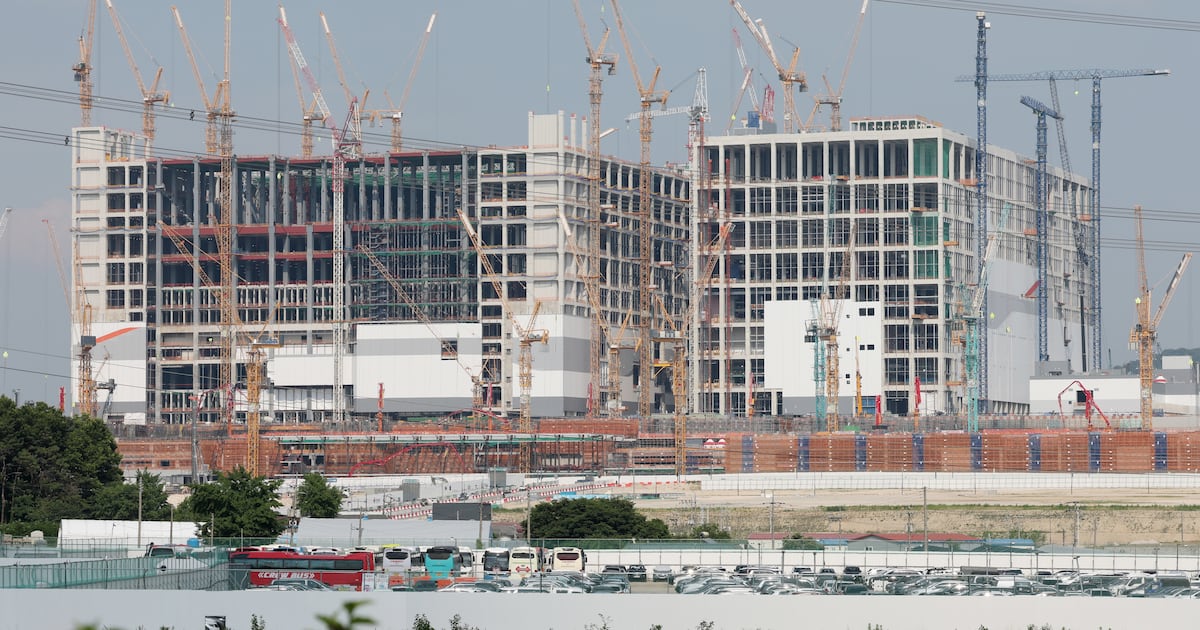
- Executives say the 800 trillion won ($577 billion) semiconductor fab project in Honam, a government priority, now risks being blocked by union demands under the revised Trade Union Act.
- A Korea Enterprises Federation policy paper states that building the Honam plants and deploying personnel to them are not subjects for collective bargaining, according to business sources.
- The federation says the revision widened labour disputes to cover management decisions affecting working conditions, raising the prospect of missed investment windows or projects shifted overseas.
- Samsung Electronics and SK hynix plan to break ground on the Honam plants in July next year, with completion targeted for 2029.
- Samsung Electronics Union, the company's largest, has declared it will put Honam-related issues on the table in its 2027 bargaining, citing the revised law.
Why it matters
- decision Capex planners now hold an unpriced schedule option on Honam, and the cheap hedge is to commit the next module where the staffing rules are already settled.
- constraint The state's usual levers cannot reach the binding input, since what a new fab needs is experienced engineers moved out of greater Seoul rather than more utilities or zone designation.
- exposure Because the speed of the yield ramp is where the return on hundreds of trillions of won sits, a reassignment dispute reaches earnings and not merely the calendar.
- contradiction Business groups treat the managerial boundary as erased while the Supreme Court's high-level management judgment doctrine remains unoverturned, so the read turns on which of the two the guidelines codify.
The binding input at a new leading-edge fab is the transfer of engineers with years of hands-on time at the greater Seoul plants into a site that has never run a wafer, because how fast yields improve after start-up is what decides whether an investment of hundreds of trillions of won earns anything [6][7]. One industry official put the failure mode plainly, saying that power and water can arrive and the plant can still end up an enormous shell if skilled workers cannot be deployed on time [18]. Relocation is the awkward middle of all this. Britain confines protected disputes to employment terms and the US Supreme Court in 1981 left judgments such as closing a division with the company [11][12], and even in Germany and Japan, where capital investment is exclusive management prerogative, consultation still covers compensation for disadvantages such as relocation and housing support [13], which is what a move from greater Seoul to Honam is.
Call 800 trillion won $577 billion and you have written down about 1,386 won to the dollar [15], but the calendar is the more interesting arithmetic. Ground breaks in July next year against a 2029 completion [5], roughly thirty months, and 800 trillion won spread evenly over thirty months would run at about 27 trillion won a month [16], a pace nobody is claiming, which tells you the figure covers a build-out extending past the first completion and therefore across several bargaining rounds. The first is already booked, since Samsung's largest union says Honam goes on the 2027 table, the same year the shovels are meant to go in [8][17].
This is probably wrong, but I read the Korea Enterprises Federation paper as a bid rather than a forecast: a lobby asking for an exemption in guidelines that are still being drafted [1][2], written while the Supreme Court's holding that a new plant is high-level management judgment stands unoverturned [10], and tabling a demand is not yet a protected right to strike over it. One path is that the guidelines adopt something like Park Ji-soon's distinction between restructuring reassignment premised on job cuts and expansion reassignment following new investment [14], and the question closes cheaply. Or the guidelines stay quiet, the first test case works through the courts across 2027 to 2029, which happens to be the ramp window. Or the union trades Honam reassignment for relocation money, and a veto turns into a line item.
The allocation point is what planners act on first, because the marginal decision is not Honam or nothing but Honam against a site whose staffing rules are settled, and the federation itself named projects shifting overseas as the outcome [4]. Until the March revision, capital investment and the staffing that follows it were outside industrial action entirely [9]. Nothing about Korean construction got dearer this year; the variance around the schedule widened, and in cutting-edge processes the ramp is the return [7]. What would prove this reading wrong: an enforcement guideline that names expansion-driven reassignment as excluded, followed by a 2027 settlement whose only Honam content is a housing allowance.
What to watch
- Whether the enforcement guidelines are published before the July groundbreaking or after ground is broken and leverage has moved.
- The first court test of what "management decisions that affect working conditions" covers under the revised act.
- Any Samsung or SK hynix announcement of capacity elsewhere landing in the same window as a Honam schedule change.
Clarity's read
What the record supports and how the coverage leans. The claims behind it follow.
Reality
- Evidence34
- Adoption
- Insufficient
- Hype gap+38
- Incentives82
- Confidence42
Claim ledger
Ranked by verification strength, evidence, and original report placement.
- [1]
Korean business groups are pressing the government to write explicit exemptions into new enforcement guidelines for the revised Trade Union Act, warning that investment in strategic industries could stall entirely if new projects and essential staffing decisions become subject to strikes.
- [2]
The Korea Enterprises Federation said in a recent policy paper on labor issues that "the construction of semiconductor plants in Honam and the deployment of personnel are not subjects for collective bargaining", according to business sources on the 30th.
- [3]
Executives say the 800 trillion won ($577 billion) semiconductor fab project in the Honam region, a government priority, risks being blocked by union demands, leaving Korea behind in the race for advanced technology.
- [4]
The federation said the revised law widened the scope of labor disputes to cover "management decisions that affect working conditions", and that in strategic industries such as semiconductors this could mean missed investment windows or projects shifted overseas.
- [5]
Samsung Electronics and SK hynix plan to break ground on the Honam plants in July next year, with completion targeted for 2029.
- [6]
Bringing an advanced fab up to normal operation requires deploying engineers with years of experience at existing plants in the greater Seoul area to stabilize early yields, the share of usable chips in total output.
- [7]
In cutting-edge processes, how quickly yields improve after start-up determines whether an investment of hundreds of trillions of won succeeds.
- [8]
Samsung Electronics' largest union, the Samsung Electronics Union, declared it would put Honam-related issues on the table in 2027 bargaining, citing the revised law.
- [9]
Until the law was revised in March this year, corporate capital investment and the staffing that follows were not subject to industrial action.
- [10]
Korea's Supreme Court has consistently held that decisions such as building a new plant amount to a "high-level management judgment" and are in principle outside the scope of collective bargaining, but the revised law brought management decisions within the scope of disputes, erasing that boundary and creating uncertainty over interpretation.
- [11]
Britain limits legally protected trade disputes to employment terms such as wages, hiring and dismissal, work allocation and discipline, so strikes over management judgments such as new investment fall outside legal protection.
- [12]
In the United States, the Supreme Court ruled in 1981 that management judgments such as closing a division are the company's own prerogative, while wages and working hours are mandatory subjects of bargaining.
- [13]
Germany and Japan treat capital investment as an exclusive management prerogative, with consultations covering only compensation for disadvantages to workers' living conditions, such as relocation or housing support, and strikes over investment decisions themselves are difficult to find.
- [14]
Park Ji-soon, a professor at Korea University Law School, said restructuring-type reassignment premised on job cuts and new investment-type reassignment for business expansion are legally entirely different in character, and that the new guidelines must state clearly that expansion-driven reassignment following new investment and plant construction is excluded from the scope of labor disputes.
- [15]
Describing the project as 800 trillion won and $577 billion implies an exchange rate of about 1,386 won to the dollar.
- [16]
A July 2027 groundbreaking to a 2029 completion is roughly thirty months, and 800 trillion won spread evenly across thirty months would be about 27 trillion won a month.
- [17]
The 2027 bargaining round the Samsung union has flagged falls in the same calendar year as the planned Honam groundbreaking.
- [18]
An industry official said that even if the government supplies power and water, the plant could end up an enormous shell if the most important element, skilled workers, cannot be deployed on time, with a real risk of handing market leadership to global rivals.
Get this ledger inside ChatGPT. Ask about any of our stories and the answer brings its figure, each claim’s verdict and the sources. Free, no account.
Sources
1 independent publisher whose own reporting we read for this story.
- en.sedaily.comLabor Law Fears Threaten Korea's 800 Trillion Won Chip Push
1 article · August 30, 2026
Topics and entities
Follow any of these and your For You feed starts watching them — no settings page required.
Topics
Entities
- Korea Enterprises FederationFollow
- Samsung ElectronicsFollow
- SK hynixFollow
- Samsung Electronics UnionFollow
- Revised Trade Union Act (Korea)Follow
- Park Ji-soonFollow
- Honam semiconductor fab projectFollow