Kenyan researchers find C. auris resistant to all four antifungal drug classes in a surgical patient
Kenyan researchers report C. auris resistant to all four major antifungal classes in a 28-year-old surgical patient. The authors argue it evolved resistance independently of the 2022 case, and Gizmodo notes that containment still stops outbreaks.
The Product Desk
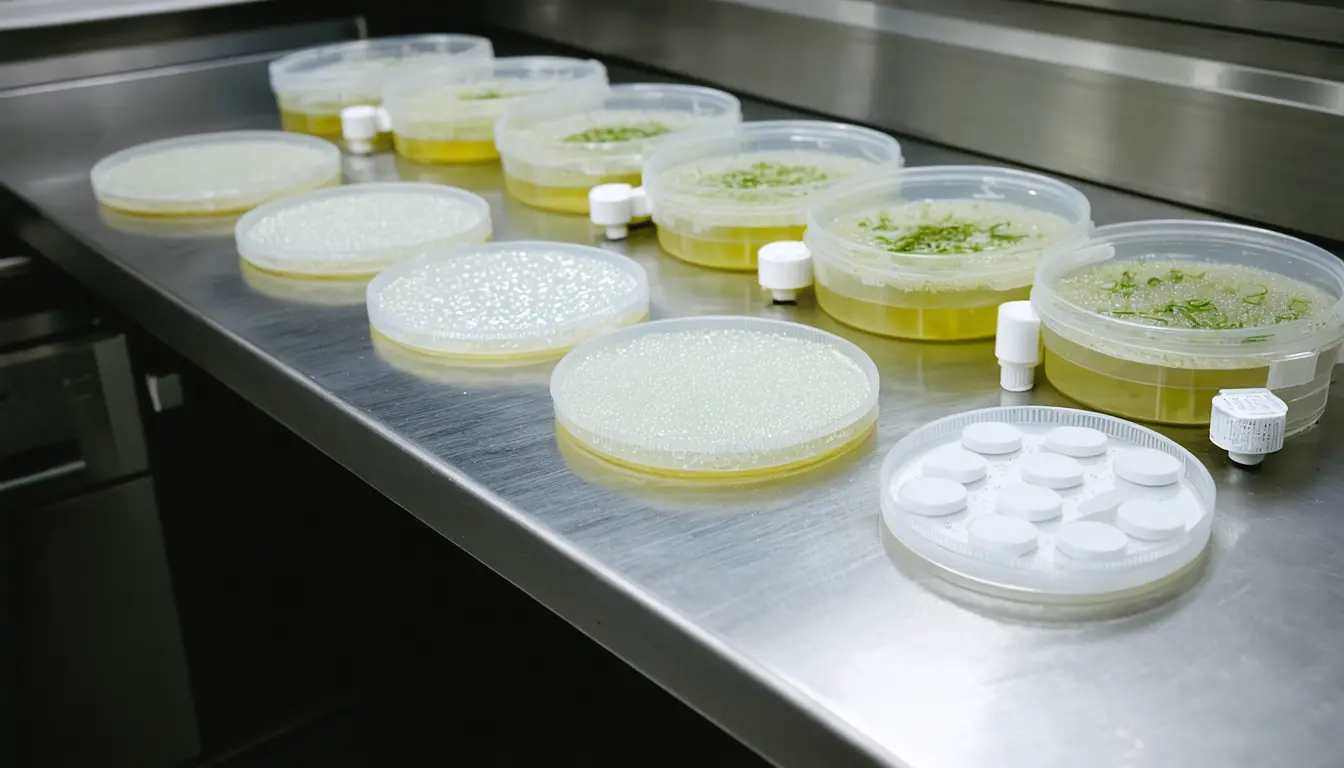
Key figures: at least 6,304 U.S. C. auris cases reported in 2024, the highest number seen yet; C. auris documented in at least 50 countries; the Kenyan case resists all four major antifungal types.
| Figure | Value | Note | Claim |
|---|---|---|---|
| U.S. C. auris cases reported in 2024, at least | 6,304 cases | the highest number seen yet | 6 |
| Countries, at least | 50 countries | 6 | |
| Antifungal types resisted | 4 major types | 8 |
What happened
- The woman had elective inpatient surgery, developed a hospital-acquired surgical-site infection, and stayed ill on antibiotics until a swab of wound pus showed C. auris.
- A 2022 case resistant to all four classes was reported earlier, which the researchers say makes this only the second documented pan-resistant case in the world.
- Genome sequencing showed the Kenyan strain carries resistance mutations that differ from those found in the 2022 case.
- C. auris is documented in at least 50 countries, and the U.S. reported at least 6,304 cases in 2024, the highest count yet.
Why it matters
- exposure Hospitals without access to newer antifungals have the least to fall back on if an isolate like this turns up after an elective procedure.
- contradiction Coverage saying the fungus keeps learning rests on one patient's strain and a hedged inference from sequencing, so the headline claims more than the paper does.
- decision Infection-prevention leads at surgical hospitals have to settle in advance whether a resistant result starts control measures by itself or waits for a request.
A culture result comes back from the lab, and someone has to decide what the ward does with it. In this case the hospital was told about the strain's resistance, in the authors' words, to "facilitate implementation of C. auris-specific infection prevention and control measures" [4]. The report does not detail what ultimately happened to the patient [5].
The headline over Gizmodo's coverage says the fungus "Keeps Learning How to Beat Every Drug We Throw at It" [7]. The evidence is narrower. It is one patient's strain, and the researchers say they cannot fully rule out that it came from the 2022 strain. They argue it more likely evolved pan-resistance on its own [10]. Gizmodo's own warning is conditional: if pan-resistance is happening regularly, one of these strains could eventually spread widely [14]. The researchers say this would be only the second documented case [8]. Two cases do not show regularity, so we would call "independent" a fair reading of the sequencing and "keeps learning" unproven.
The authors also say where the risk sits. They wrote that the strain's "resistance to four major antifungal classes highlights the escalating threat of untreatable fungal infections, particularly in settings with limited access to novel antifungal agents" [2]. For those hospitals, a four-class result may leave no further drug to try.
Gizmodo points to what still works. Outbreaks can be stopped with containment measures that do not involve antifungals [12]. Fully untreatable infections are likely to be especially rare [11]. Scientists are also working on other interventions, such as vaccines [13].
The audience for all of this is the infection-prevention lead at a hospital that does elective surgery, and the lab director who feeds that person. Two tests sort the situation. One is whether each C. auris isolate gets tested against all four classes. The other is whether a resistant result starts control measures on the ward without anyone having to ask for them. A result with no automatic trigger sits in a chart. A trigger with no result means containing blind.
We would wire the two together, so that a resistant result starts control measures on its own. The cost is that some patients will get those measures when their strain would have responded to drugs.
What to watch
- Whether further pan-resistant C. auris isolates are reported, and whether their resistance mutations match the 2022 case or the Kenyan one.
- Whether the authors or the hospital publish the patient's outcome and say if the control measures held.
- Whether U.S. C. auris case counts for 2025 exceed the 6,304 reported for 2024.
Clarity's read
What the record supports and how the coverage leans. The claims behind it follow.
Reality
- Evidence50
- Adoption
- Insufficient
- Hype gap+35
- Incentives
- Insufficient
- Confidence40
Claim ledger
Ranked by verification strength, evidence, and original report placement.
- [1]
Scientists in Kenya detailed a case of Candidozyma auris (C. auris) in a 28-year-old patient whose infection was resistant to all major types of antifungal drugs.
- [2]
The authors wrote in Scientific Reports that the strain's "resistance to four major antifungal classes highlights the escalating threat of untreatable fungal infections, particularly in settings with limited access to novel antifungal agents".
- [3]
The woman had elective inpatient surgery, developed a hospital-acquired infection at the surgical site, stayed ill despite antibiotics given for a potential bacterial infection, and a swab of her wound pus showed C. auris.
- [4]
According to the report, the hospital was made aware of the strain's resistance to "facilitate implementation of C. auris-specific infection prevention and control measures."
- [5]
The report does not detail what ultimately happened to the patient.
- [6]
At least 6,304 U.S. cases of C. auris were reported in 2024, the highest number seen yet, and the fungus has been documented in at least 50 countries.
- [7]
Gizmodo's headline on the story is "This Deadly Fungus Keeps Learning How to Beat Every Drug We Throw at It".
- [8]
At least one confirmed case of an infection resistant to all four major antifungal types was reported in 2022; the researchers say the Kenyan case would be only the second such pan-resistant case documented in the world.
- [9]
Sequencing the genome of the patient's strain showed it carries resistance mutations different from those found in the 2022 case.
- [10]
The researchers cannot fully rule out that their case originated from the earlier strain, but they argue it is more likely that this lineage of C. auris independently evolved pan-resistance on its own.
- [11]
Fully untreatable infections of C. auris are likely to be especially rare for the time being.
- [12]
C. auris outbreaks can still be stopped with proper containment measures outside of antifungals.
- [13]
Scientists are working to develop other kinds of interventions for C. auris, such as vaccines.
- [14]
Gizmodo wrote that if pan-resistance is happening regularly, there is always the risk that one of these strains will eventually spread widely and make C. auris even more difficult to deal with.
Get this ledger inside ChatGPT. Ask about any of our stories and the answer brings its figure, each claim’s verdict and the sources. Free, no account.
Sources
1 independent publisher whose own reporting we read for this story.
- gizmodo.comThis Deadly Fungus Keeps Learning How to Beat Every Drug We Throw at It
1 article · October 15, 2026
Topics and entities
Follow any of these and your For You feed starts watching them — no settings page required.
Topics
- Antifungal resistanceFollow
- Hospital-acquired infectionsFollow
Entities
- Candidozyma aurisFollow
- Scientific ReportsFollow
- GizmodoFollow