ScienceNot yet confirmed elsewhere1 publisher2 min readPublished
Candida auris cells that outlast antifungals carry multiple copies of their genome
A team led by the University of Exeter and City St George's found that Candida auris cells surviving antifungal drugs had copied their entire genome. The authors say that could lead to new ways to tackle a fungus on the WHO critical priority list.
The Scientist · Science desk
What happened
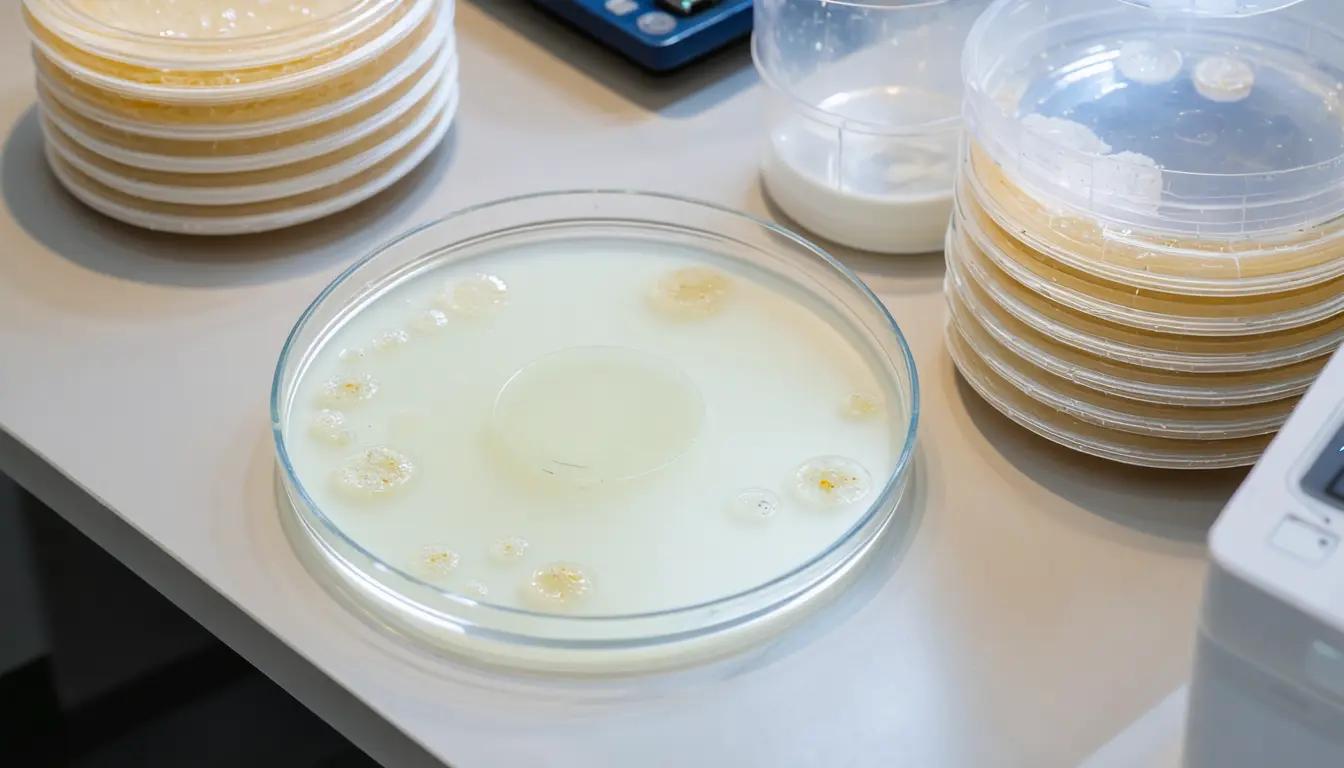
- The discovery began by accident: plates set up for a resistance test were left incubating past the required period, and cells had grown in the extra time.
- The survivors split into two populations, some growing slowly and others growing rapidly.
- The rapidly growing cells carried a wide range of mutations in CRZ1, a gene studied in other organisms for its role in governing cell wall synthesis.
- Further tests confirmed that CRZ1 mutants grow rapidly, and their cell walls appeared to be unaffected by antifungal drugs.
- The study is set to appear in Nature Communications and is already available on the bioRxiv preprint server.
Why it matters
- constraint The team's own laboratory tests rated the isolates not resistant and said the drugs should have worked, so a resistance readout alone did not predict these survivors.
- exposure Gifford, an intensive care physician, said: "If infection enters a vulnerable patient's bloodstream, there is a 45% death rate." A survival route hidden from resistance tests would matter in bloodstream infections like these, if it operates in patients.
- decision Treatment research is the next step the team itself names. Murphy said: "Our discovery means we need to now look at new ways of treating people and eradicating this deadly fungus from hospitals."
The survivors appeared under very high drug concentrations [6]. Dr. Sarah Murphy, a co-first author, said, "We were amazed to find there was a tiny population of cells that appeared over several days and continued to grow." [5]
Dr. Hugh Gifford, the first author, said, "we did not identify any of the DNA mutations that we might have expected." [7] The cells had made multiple copies of their entire genome instead [8]. Gifford said other fungi have used that trick in the past, but it is not well known in C. auris [8].
The authors' account is that copying the genome raises the odds of a mutation that lets the fungus evade the drug [12]. In our view the CRZ1 data fit that account. A wide range of different mutations in one gene is what repeated selection on that gene would leave behind [10], and the mutants grew fast with cell walls that appeared unaffected by the drugs [11].
The fungus was tested against very high concentrations [6]. How often cells do this at lower doses, or inside a patient, is still an open question. The write-up as reported does not name the drugs, count the isolates or show that genome copying produced the CRZ1 mutations.
Whether CRZ1 or genome copying makes a usable drug target is a later question. The authors say the finding could lead to new ways to tackle the fungus [15].
What to watch
- The Nature Communications paper: which drugs were used, how many isolates were tested, and what share of cells survived.
- Whether the combination treatments the team is now considering are tested against genome-copying and CRZ1-mutant cells.
- Whether genome duplication turns up in Candida auris isolates taken from patients, not only in plates exposed to very high drug doses.
Clarity's read
What the record supports and how the coverage leans. The claims behind it follow.
Reality
- Evidence45
- Adoption
- Insufficient
- Hype gap+15
- Incentives
- Insufficient
- Confidence50
Claim ledger
Ranked by verification strength, evidence, and original report placement.
- [1]
A team led by the University of Exeter and City St George's, University of London, found that Candida auris creates multiple versions of its entire genome to survive antifungal treatment.
- [2]
The study is set to appear in Nature Communications and is currently available on the bioRxiv preprint server.
- [3]
The team was testing for drug resistance when a researcher accidentally left plates of cells incubating longer than the required test period, and cells had unexpectedly grown during the additional time.
- [4]
Murphy said the team set out to investigate why antifungal drugs weren't working to kill Candida auris, despite laboratory tests showing that the isolates were not resistant and that the drugs should have been effective.
- [5]
Murphy said: "We were amazed to find there was a tiny population of cells that appeared over several days and continued to grow."
- [6]
The team tested the fungus against very high concentrations of antifungal drugs.
- [7]
Gifford said: "First, we did not identify any of the DNA mutations that we might have expected."
- [8]
Surviving cells had made multiple copies of their entire genome, which Gifford said is a trick other fungi have used in the past but not one that is well known in C. auris.
- [9]
The survivors formed two populations, some growing slowly and others growing more rapidly.
- [10]
The more rapidly growing cells contained a wide range of mutations in CRZ1, a gene studied in other organisms for its role in governing cell wall synthesis.
- [11]
Further tests confirmed the rapid growth of CRZ1 mutants, and their cell walls appeared to be unaffected by antifungal drugs.
- [12]
According to the report, the fungus survived antifungal treatment by creating multiple versions of its own genome, increasing its chances of mutating to evade the drug and survive.
- [13]
Candida auris is on the World Health Organization's critical priority fungal pathogens list.
- [14]
Gifford, an intensive care physician, said: "If infection enters a vulnerable patient's bloodstream, there is a 45% death rate."
ReportedSupportedSource: Dr. Hugh Gifford, first author and intensive care physicianView cited source - [15]
Study authors say their findings unlock a new mechanism that allows Candida auris to adapt to antifungal treatment and survive, which could lead to new ways to tackle the fungus.
- [16]
Murphy said: "Our discovery means we need to now look at new ways of treating people and eradicating this deadly fungus from hospitals."
Sources
1 independent publisher whose own reporting we read for this story.
- phys.orgCandida auris copies its entire genome to survive antifungal treatment, research reveals
1 article · October 13, 2026
Topics and entities
Follow any of these and your For You feed starts watching them — no settings page required.
Entities
- Candida aurisFollow
- City St George's, University of LondonFollow
- University of ExeterFollow
- Nature CommunicationsFollow
- World Health OrganizationFollow