LeadershipNot yet confirmed elsewhere1 publisher3 min readPublished
China's companion rules make attachment a compliance problem, and Doubao chose deletion
ByteDance pulled Doubao's AI companion rather than age-gate it. The rule it complied with defines the restricted product by how users keep coming back, which is the metric the feature was built on.
The Board Room · Leadership desk
What happened
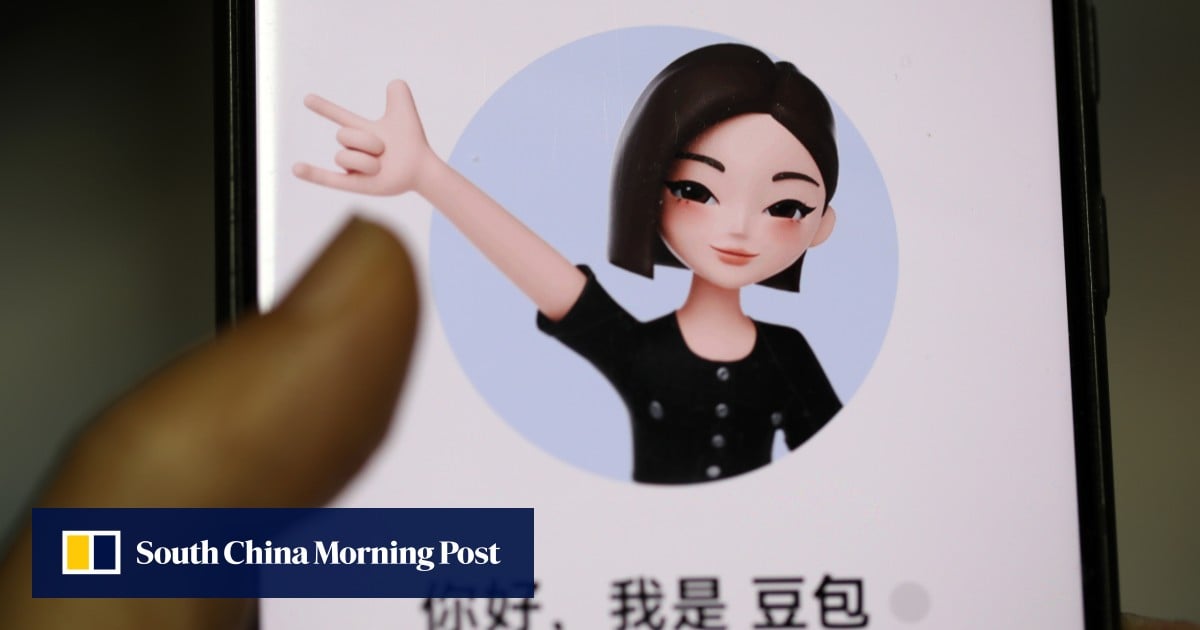
- ByteDance switched off the AI companion feature in its Doubao chatbot, according to the Guardian.
- Several major providers, Doubao among them, removed the companion function altogether to ensure compliance.
- Regulators cite chatbots fostering emotional dependence or addiction, and warn against services that replace social interaction.
Why it matters
- constraint The exemption is written around session pattern, not content, so a team whose success metric is daily return through self-disclosure is describing the restricted category in its own dashboard.
- decision Age gating was the narrower path and ByteDance did not take it, which makes whole-feature removal the default answer for any product whose emotional surface cannot be split by user age.
- exposure The people who absorb a companion shutdown are the ones who used it daily, and their distress lands publicly on the operator rather than on the regulator.
- contradiction The same state restricting continuous emotional interaction is pushing AI health assistants toward full primary-care coverage by 2030, leaving the boundary to be settled by how a product is labelled.
The load-bearing phrase in the July rules is not the ban on minors. It is the exemption for services that do not involve "continuous emotional interaction" [6]. That draws the compliance line through session design rather than through model output. A product can be faultless in what it says and still sit inside the restricted category, because the category is defined by the pattern of return. Zhao Wei, the 19-year-old law student the Guardian spoke to, had talked to her AI boyfriend every day since she created him in January [1]. A consumer AI team would call that retention. The government calls it emotional dependence [5].
That is what moves attachment risk out of communications and into product governance. Guardrails address behaviour, and age assurance addresses audience. Beijing's stated objection, per the Guardian, is to services that replace social interaction [5], and Nancy Dai of City University of Hong Kong reads the deeper worry as demographic: with birth and marriage rates falling, a satisfying and low-cost substitute for intimacy may leave young people less motivated to pursue real relationships and parenthood [13]. No safety review reaches that. A companion with a clean incident log and a devoted user base is precisely the object of the rule.
ByteDance's response shows what compliance costs once the boundary sits there. The rules required a ban for minors plus restrictions on chatbots marketed to adults [3]. Doubao dropped the function for everyone [4], which is wider than the text demands [7]. Whether age assurance on an emotional surface was judged unreliable, or the permitted adult version was not worth operating, the reporting does not say. The disclosed price either way is the entire feature, plus the reaction: the shutdown drew outrage online, and in July one user was publicly begging ByteDance not to take the agent down [8].
It was also withdrawn into rising demand rather than falling. About 20% of Chinese households are single-person, a share expected to pass 30% by 2030 [11], roughly half again as many on that measure [15]. A state media survey published in March found nearly half of young people had turned to a virtual companion when they felt lonely [12].
The perimeter is not stable either. The national health commission published guidelines last year on promoting AI in healthcare, with health assistant apps to provide "full coverage" for primary health by 2030 [9], and Liang Ge of the University of Manchester says the government has already recognised such applications as a vital part of everyday life [10]. A daily health assistant that an elderly user confides in has the same session shape as the thing just removed. So classification is where this gets argued. What a product is officially for becomes the document that decides whether it is restricted or deleted.
What to watch
- Whether any Chinese provider ships a compliant age-gated adult companion, which would show the restricted version is actually operable.
Clarity's read
What the record supports and how the coverage leans. The claims behind it follow.
Reality
- Evidence44
- Adoption62
- Hype gap+12
- Incentives58
- Confidence48
Claim ledger
Ranked by verification strength, evidence, and original report placement.
- [1]
Zhao Wei, a 19-year-old law student, created an AI boyfriend called Wang Ye on ByteDance's Doubao chatbot in January and had been talking to him every day; she was heartbroken when she heard he would be switched off.
- [2]
ByteDance shut down Doubao's companion feature last month, according to the Guardian.
- [3]
New rules introduced on 15 July ban AI companions for minors and mandate certain restrictions for chatbots marketed to adults.
- [4]
Some major providers including Doubao removed the companion function entirely to ensure compliance.
- [5]
The Chinese government says it is worried about chatbots fostering "emotional dependence or addiction" in users, and has warned companies against offering services that "replace social interaction".
- [6]
The new rules include large loopholes for AI services that are deemed educational or "which do not involve continuous emotional interaction".
- [7]
Doubao's action went beyond the rule's minimum requirement: the rule bans companions for minors and restricts adult-marketed chatbots, while Doubao removed the companion function for all users.
- [8]
The shutdown prompted outrage on social media; one user wrote in July, "I'm begging, please don't take down the Doubao AI agent."
- [9]
Last year the national health commission published guidelines on promoting AI in healthcare, saying that by 2030 health assistant apps would provide "full coverage" for primary health.
- [10]
Liang Ge, a lecturer in digital sociology at the University of Manchester, says the government has already recognised that AI companions or AI-related applications are a vital part of citizens' everyday life.
- [11]
About 20% of households in China are made up of people living alone, and that share is expected to surpass 30% by 2030.
ReportedInsufficientSource: The Guardian2 sources— create a free account to open themView cited source - [12]
A survey published in March by Chinese state media found that nearly half of young people had turned to a virtual companion when they felt lonely.
ReportedInsufficientSource: state media survey, via The Guardian2 sources— create a free account to open themView cited source - [13]
Nancy Dai, associate professor at City University of Hong Kong, says that with falling birth and marriage rates there may be an additional concern that if AI becomes an increasingly satisfying and low-cost substitute for human intimacy, young people could become less motivated to pursue real-world romantic relationships, marriage and parenthood.
ReportedInsufficientSource: Nancy Dai, City University of Hong Kong, via The Guardian2 sources— create a free account to open themView cited source - [14]
China's rules on AI chatbots are the most sweeping to be implemented on a national scale.
ReportedInsufficientSource: The Guardian2 sources— create a free account to open themView cited source - [15]
The projected rise in single-person households, from about 20% of households to more than 30% by 2030, is an increase of at least 10 percentage points, or roughly half again as large a share.
Sources
1 independent publisher whose own reporting we read for this story.
- theguardian.comIn China, talking to AI is normal. Now the government fears it might replace human intimacy
1 article · August 25, 2026
Topics and entities
Follow any of these and your For You feed starts watching them — no settings page required.