LeadershipNot yet confirmed elsewhere1 publisher2 min readPublished
Citroen revives the 2CV as an electric city car it aims to sell for under £15,000
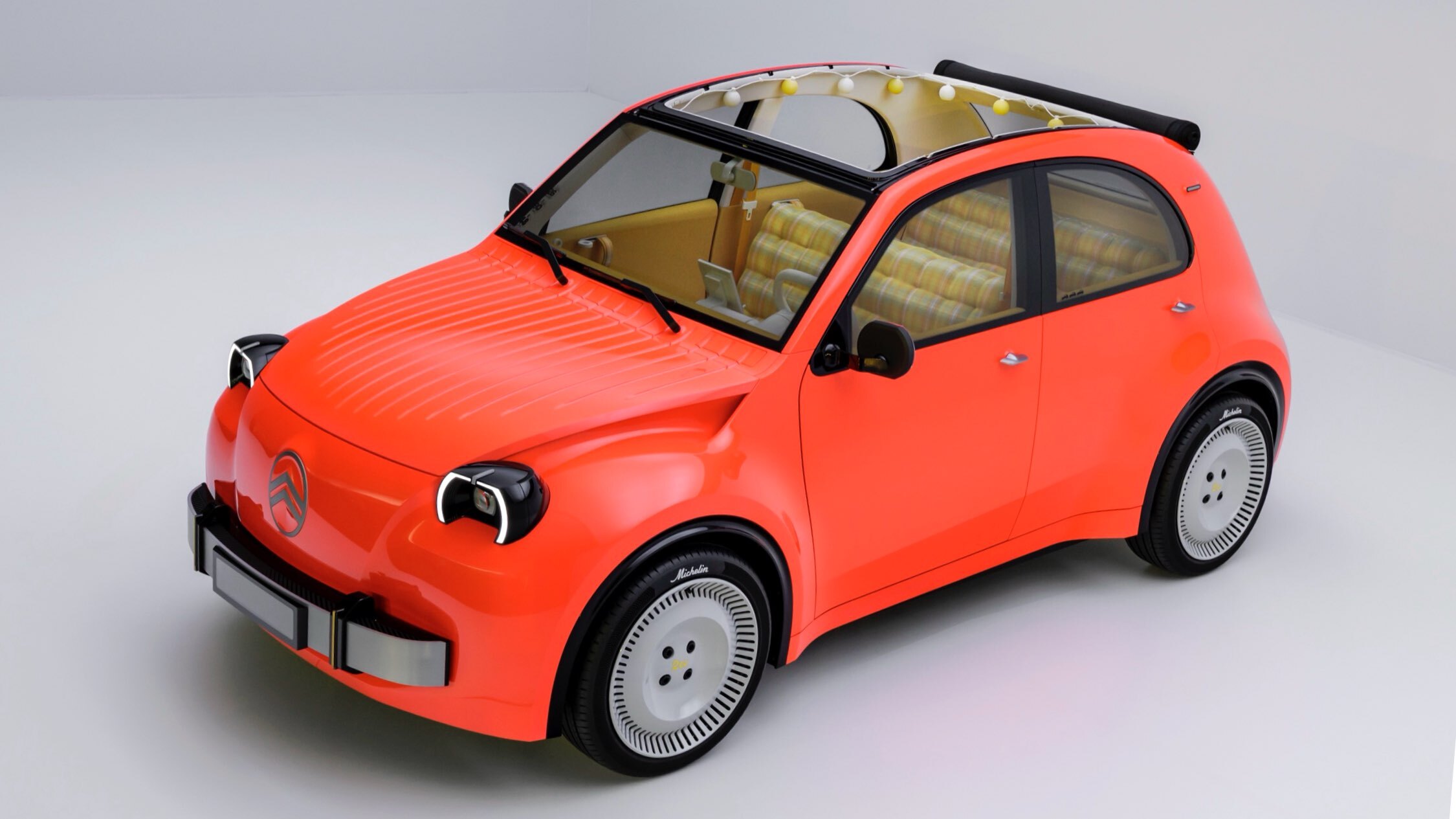
Citroen unveiled an electric revival of its 2CV as a concept at the Paris Motor Show, with a sub-£15,000 version planned for showrooms in 2028. It is the latest European attempt to lean on brand heritage as cheaper Chinese EVs crowd the market.
The Board Room · Leadership desk
Exposure map of four carmakers. Citroen has brought back its 2CV brand to boost EV sales. Renault revived its 5, 4 and Twingo names as EVs; VW sells the retro ID-Buzz. Ford is working on an EV expected to be the Fiesta. VW's late-1990s Beetle revival had limited success.
- decision Citroen Has brought back its 2CV brand to boost sales of electric cars in a difficult market, claim 1
- precedent Renault and VW Renault has revived its 5, 4 and Twingo names as EVs; VW sells the retro ID-Buzz, a throwback to the T2 Transporter, claim 10
- capability Ford Working on an EV widely expected to be called the Fiesta, claim 10
- precedent VW Beetle VW brought back the Beetle in the late 1990s, with limited success, claim 11
| Who | How | Kind | Claim |
|---|---|---|---|
| Citroen | Has brought back its 2CV brand to boost sales of electric cars in a difficult market | decision | 1 |
| Renault and VW | Renault has revived its 5, 4 and Twingo names as EVs; VW sells the retro ID-Buzz, a throwback to the T2 Transporter | precedent | 10 |
| Ford | Working on an EV widely expected to be called the Fiesta | capability | 10 |
| VW Beetle | VW brought back the Beetle in the late 1990s, with limited success | precedent | 11 |
What happened
- The original 2CV stayed in production for more than 40 years, passing from a utilitarian countryside runabout into a cult classic favoured by hippies and counter-culturalists.
- The electric concept keeps the old car's signature cues, among them high flared wheel arches, a tall curved roof and eye-like headlights.
- Renault has already revived its 5, 4 and Twingo names as electric cars, VW sells the retro ID-Buzz, and Ford is readying an EV widely expected to be called the Fiesta.
- Chief executive Xavier Chardon called the car 'a modern, ingenious and refreshing response to the mobility challenges of tomorrow.'
Why it matters
- capability A familiar badge is an asset Chinese entrants cannot replicate, so Citroen and its European rivals gain a point of difference that cutting prices alone cannot buy.
- precedent A reborn nameplate is no guarantee of sales, as VW's late-1990s Beetle revival showed by meeting only limited success.
- constraint Styling and a storied name only get the car noticed; whether it sells at volume turns on matching rival EVs on range, features and everyday usefulness.
This car reaches for heritage without giving up on price. The original 2CV went on sale in 1948, as Europe was recovering from the Second World War, built as a cheap, robust way for French farmers and country folk to get around [6]. That was eighty years before the version Citroen wants on showroom floors [19]. The company means the electric revival to be inexpensive too [7]. David Leggett, automotive editor at Global Data, said a reimagined 2CV "should give a big nod to its ancestor - especially on price and design simplicity as well as visual cues" [17].
The pressure behind the revival is real. Leggett said "many in the industry believe the big automotive players in Europe ... face a very serious existential threat from aggressive Chinese manufacturers" [14]. Rachel Burgess, senior editor of Autocar, said reaching back for an old name is "a brilliant differentiator from all-new car brands" [12]. "An older audience might remember the originals and feel warmly towards them, and a younger audience might find an appeal in the retro aspect," she said [13].
The badge gives the car a history. A low price cannot. Dr Paul Nieuwenhuis, an automotive researcher and author, said that in "a world where a wave of credible decent quality Chinese EVs are hitting Europe, linking European designs back to their history while using the latest powertrain technology is something the Chinese cannot do" [15]. "The Chinese can establish new design trends, but there is limited history there," he said [16].
What to watch
- Whether the production 2CV due by 2028 keeps the sub-£15,000 target once it leaves the concept stage.
- Whether Citroen releases range, battery and final design, none of which the concept specified.
- Whether Renault's revived 5 and VW's ID-Buzz turn heritage styling into actual sales volume.
Clarity's read
What the record supports and how the coverage leans. The claims behind it follow.
Reality
- Evidence45
- Adoption3
- Hype gap+25
- Incentives35
- Confidence50
Claim ledger
Ranked by verification strength, evidence, and original report placement.
- [1]
Citroen has brought back its 2CV brand in a bid to boost sales of electric cars in a difficult market.
- [2]
The new 2CV was unveiled at the Paris Motor Show as a small city runabout with retro styling that harks back to the original.
- [3]
The 2CV is a concept car, not yet ready to go on sale, with a plan to have a version in showrooms by 2028.
- [4]
Citroen and other European brands are exploiting their heritage to sell modern cars as they face mounting competition from Chinese manufacturers.
- [5]
a modern, ingenious and refreshing response to the mobility challenges of tomorrow
- [6]
The original Citroen 2CV launched in 1948, as Europe was recovering from World War Two, designed as a cheap, robust way for French farmers and country folk to get around.
- [7]
The new electric 2CV is expected to sell for less than 15,000 pounds.
- [8]
The original 2CV remained in production for more than 40 years and went from being a utilitarian tool for the countryside to a cult classic, a favourite of hippies and counter-culturalists.
- [9]
The concept shares styling with the original, including high flared wheel arches, a tall curved roof and eye-like headlights that recall the 'deux chevaux' or 'two horses'.
- [10]
Renault has revived its 5, 4 and Twingo names as EVs, with the Renault 5 E-Tech echoing the original; VW sells the retro ID-Buzz, a throwback to the T2 Transporter; and Ford is working on an EV widely expected to be called the Fiesta.
- [11]
VW brought back the Beetle in the late 1990s, with limited success.
- [12]
It's a brilliant differentiator from all-new car brands
- [13]
An older audience might remember the originals and feel warmly towards them, and a younger audience might find an appeal in the retro aspect
- [14]
Many in the industry believe the big automotive players in Europe ... face a very serious existential threat from aggressive Chinese manufacturers
- [15]
In a world where a wave of credible decent quality Chinese EVs are hitting Europe, linking European designs back to their history while using the latest powertrain technology is something the Chinese cannot do
ReportedSupportedSource: Dr Paul Nieuwenhuis, automotive researcher and author (BBC)View cited source - [16]
The Chinese can establish new design trends, but there is limited history there
ReportedSupportedSource: Dr Paul Nieuwenhuis, automotive researcher and author (BBC)View cited source - [17]
A reimagined Citroen 2CV should give a big nod to its ancestor - especially on price and design simplicity as well as visual cues
- [18]
But it also needs to be a credible modern electric car in terms of functionality and features, with widespread appeal
- [19]
Eighty years separate the 1948 launch of the original 2CV from Citroen's 2028 showroom target for the electric version.
Sources
1 independent publisher whose own reporting we read for this story.
- bbc.co.ukCitroen revives historic 2CV for an electric age
1 article · October 11, 2026
Topics and entities
Follow any of these and your For You feed starts watching them — no settings page required.
Topics
- Automotive heritage brandingFollow
- Electric VehiclesFollow
- Chinese EV competition in EuropeFollow