Science1 publisherNot yet confirmed elsewhere3 min readPublished
Wildfire smoke has clawed back a quarter of 40 years of clean-air gains, and desk jobs are not exempt
A Georgia Tech economist puts the erosion at more than half in many Western states, with health damages running to $130 billion a year. The productivity losses are the part nobody books.
The Scientist · Science desk
What happened
- Wildfires in the United States are getting bigger and the season is getting longer, fueled by hotter and drier weather from climate change.
- Casey Wichman, an associate professor in Georgia Tech's School of Economics, says wildfire smoke can harm people's health and create economic costs through air pollution even when fires are hundreds of miles away.
- A healthy Air Quality Index reading is between zero and 50, but when wildfire smoke blows in and settles over cities the AQI can reach levels of 500 or more.
- Poor air quality changes where and how people spend their time and money, reduces productivity even for those working indoors, and increases health care costs.
- Wichman said environmental regulations like the Clean Air Act dramatically improved US air quality over the past 40 years, but as wildfire season becomes the new normal, wildfire smoke is eroding those gains.
Compiled by The ScientistSomething wrong?How this is made
Why it matters
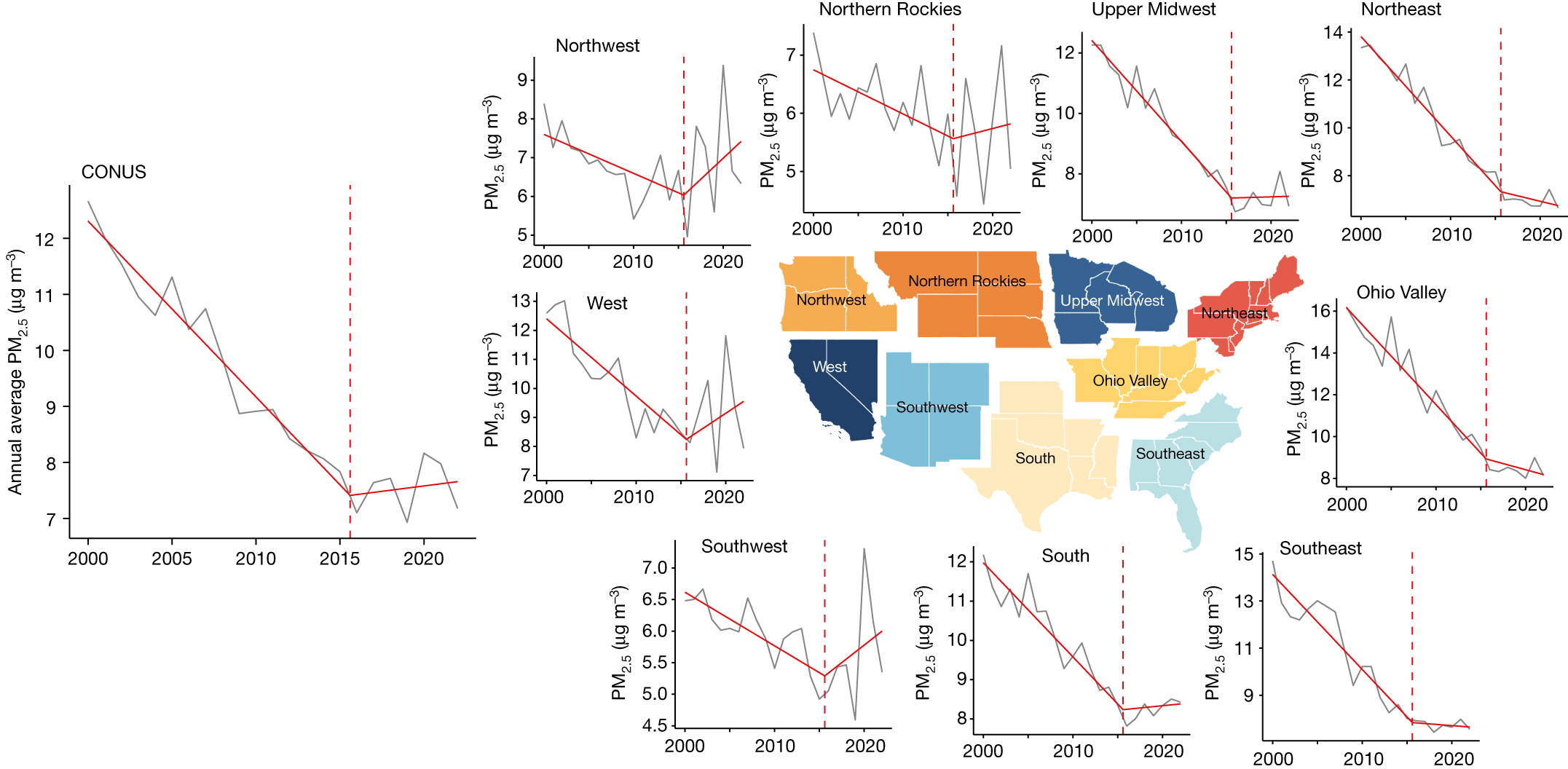
Casey Wichman, an associate professor in Georgia Tech's School of Economics, has set out the economic accounting of wildfire smoke, and the headline number is a reversal: recent research he cites finds smoke has erased about a quarter of the air-quality progress made in previous decades nationally, and more than half in many Western states [s1 c6][4]. That matters because the gains being undone were the product of four decades of regulation under the Clean Air Act, which Wichman says dramatically improved air quality before smoke began eroding it [7].
Put crudely, if that improvement accrued at a steady rate, a quarter of it is roughly ten years of progress handed back [19]. The accrual was almost certainly not steady, so treat that as a scale check rather than a measurement.
The mechanism is not local. Wichman notes that smoke can damage health and impose economic costs through air pollution even when the fire is hundreds of miles away [4]. A healthy Air Quality Index reading sits between zero and 50; when smoke settles over a city, AQI can reach 500 or more [5]. Fires themselves are getting bigger and the season longer, driven by hotter and drier weather from climate change [3].
Three cost channels are worth separating. The first is demand: on peak pollution days people stay inside and stop spending in the local economy [9], so businesses that depend on foot traffic see fewer customers and outdoor events such as festivals, races and sporting events get canceled [10].
The second is the one that tends to fall out of the ledger. Polluted air makes it harder to focus and make decisions, and there is evidence that even short exposures reduce productivity; Wichman's example is baseball umpires, who make more mistakes when pollution is worse [1]. He is explicit that remote work is not a hedge: there is no perfect filter between a home and the outdoors, so a desk job still absorbs the exposure and the productivity loss [11]. Outdoor sectors take the visible hit instead, with agriculture and construction losing labor participation when workers take the day off or firms cancel work on safety grounds [12]. Wichman's own caveat is that these productivity effects are harder to measure and less likely to be included in the overall cost of wildfires [13].
The third channel is the one with published dollars attached. A study in Science of the Total Environment estimated that short-term exposure to wildfire smoke costs Americans $11 billion to $20 billion a year, and long-term exposure $76 billion to $130 billion a year in health-related damages, including hospital admissions, respiratory and cardiovascular illness and premature deaths, in 2010 dollars [2]. The chronic figure runs roughly six and a half to seven times the acute one [15], which is a useful corrective for anyone budgeting around bad-air weeks rather than bad-air decades.
The incidence is uneven. Wichman argues the heaviest exposure falls on lower-income households in service and consumer-facing industries, who cannot move work online and cannot afford an unpaid day even when they want one [14].
Watch the operational tell. Wichman expects more work-from-home flexibility, more disruption to outdoor labor and more school cancellations as high-smoke days become routine, with lost wages, delayed projects and reduced activity following [17]. His comparison is a snow day: hazardous roads, canceled school, a city that shuts for a couple of days [18]. The difference is that snow days do not compound over a lengthening season.
Clarity's read
What the record supports and how the coverage leans. The claims behind it follow.
Reality
- Evidence38
- Adoption
- Insufficient
- Hype gap+22
- Incentives58
- Confidence41
Claim ledger
Ranked by verification strength, evidence, and original report placement.
- [1]
Breathing polluted air makes it harder to focus and make decisions, and there is evidence that people exposed to air pollution even for a short time are less productive; for example, when air pollution is worse, baseball umpires make more mistakes.
ReportedSupportedSource: Casey Wichman2 sources— create a free account to open themView cited source - [2]
A study published in Science of the Total Environment estimated that short-term exposure to wildfire smoke costs Americans $11 billion to $20 billion per year, while long-term exposure costs $76 billion to $130 billion per year in health-related damages, including hospital admissions, respiratory and cardiovascular illnesses, and premature deaths, in 2010 dollars.
ReportedSupportedSource: study published in Science of the Total Environment2 sources— create a free account to open themView cited source - [3]
Wildfires in the United States are getting bigger and the season is getting longer, fueled by hotter and drier weather from climate change.
- [4]
Casey Wichman, an associate professor in Georgia Tech's School of Economics, says wildfire smoke can harm people's health and create economic costs through air pollution even when fires are hundreds of miles away.
- [5]
A healthy Air Quality Index reading is between zero and 50, but when wildfire smoke blows in and settles over cities the AQI can reach levels of 500 or more.
- [6]
Poor air quality changes where and how people spend their time and money, reduces productivity even for those working indoors, and increases health care costs.
- [7]
Wichman said environmental regulations like the Clean Air Act dramatically improved US air quality over the past 40 years, but as wildfire season becomes the new normal, wildfire smoke is eroding those gains.
- [8]
Wichman is an affiliate of Georgia Tech's Climate, Environment, and Resource (CLEAR) Economics Lab and teaches a course on the economics of climate change.
- [9]
Wichman said that on days with peak air pollution events people tend to stay inside more, so they are not going out and spending money that supports the local economy.
- [10]
When AQI is high, businesses that rely on foot traffic receive fewer customers, and outdoor events such as festivals, races or sporting events might be canceled due to air quality concerns.
- [11]
Wichman said that even working from home or holding a desk job does not avoid exposure, because there is not a perfect filter between a home and the outdoors, and that reduces productivity at work.
- [12]
High AQI levels from wildfire smoke reduce labor participation in outdoor workplaces such as agriculture and construction, where workers may take the day off to reduce exposure or companies cancel work over safety concerns.
- [13]
Wichman said that although work is being done on the social cost of wildfires, many productivity impacts are harder to measure and less likely to be included in the overall cost of wildfires.
- [14]
Wichman said higher levels of exposure fall disproportionately on lower-income households working in service or consumer-facing industries, who cannot shift their work to be virtual or cannot afford to take a day off work even if they would prefer to.
- [15]
The long-term wildfire smoke health damage estimate is roughly 6.5 to 6.9 times the short-term estimate at the corresponding ends of each range.
- [16]
According to recent research cited by Wichman, wildfire smoke has erased about a quarter of the air-quality progress made over previous decades, and more than half in many Western states.
ReportedInsufficientSource: recent research cited by Casey Wichman2 sources— create a free account to open themView cited source - [17]
Wichman expects that as high-smoke days become more common there will be more flexibility with work-from-home arrangements, more disruptions to outdoor labor and more school cancellations, and that more frequent shutdowns mean more lost wages, delayed projects and reduced economic activity.
ReportedInsufficientSource: Casey Wichman2 sources— create a free account to open themView cited source - [18]
Wichman compared smoke shutdowns to snow days: hazardous roads, canceled school, people not wanting to drive, and a city that shuts down for a couple of days.
ReportedInsufficientSource: Casey Wichman2 sources— create a free account to open themView cited source - [19]
If the air-quality improvement of the past 40 years had accrued at a constant annual rate, the quarter of it erased by wildfire smoke would be equivalent to about 10 years of progress.
Sources
1 independent publisher whose own reporting we read for this story.
- phys.orgHow does wildfire smoke affect the economy?
1 article · August 18, 2026
Topics and entities
Follow any of these and your For You feed starts watching them — no settings page required.
Topics
Entities
- Casey WichmanFollow
- Georgia Institute of TechnologyFollow
- Climate, Environment, and Resource (CLEAR) Economics LabFollow
- Air Quality IndexFollow
- Clean Air ActFollow
- Science of the Total EnvironmentFollow