Invest8 publishersWidely confirmed3 min readPublished
Alito's recusal leaves Exxon and Suncor needing five of eight justices to stop Boulder's climate suit
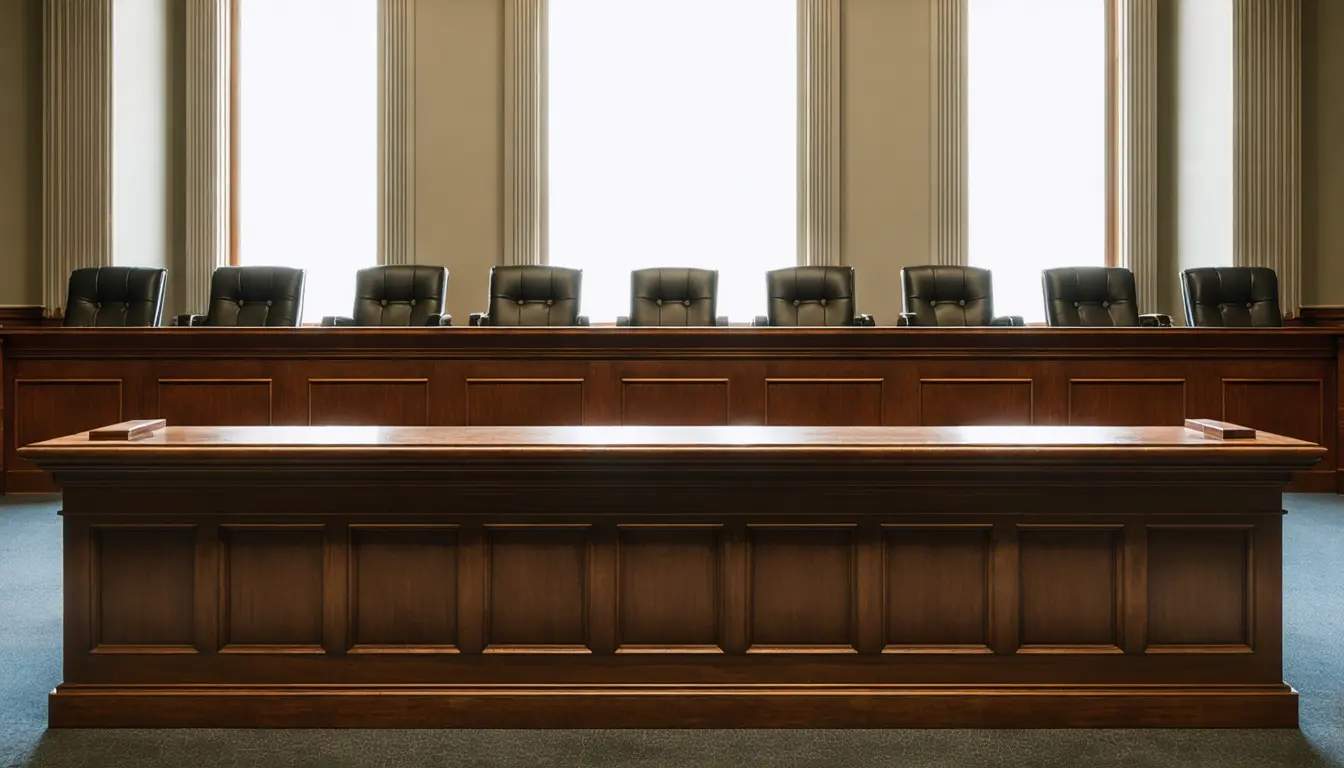
Justice Samuel Alito's recusal means a 4-4 Supreme Court split would keep Boulder's climate suit against Exxon Mobil and Suncor alive in state court. Dozens of similar city and county suits turn on the same ruling, and the companies warn the damages could run to billions of dollars.
The Investor · Invest desk
What happened
- Boulder sued Exxon Mobil and Suncor in 2018 under state law, alleging their production and deceptive marketing of fossil fuels contributed to climate change.
- The companies failed to move the case to federal court, lost a motion to dismiss, and lost again at the Colorado Supreme Court before appealing.
- The Trump administration backs the companies, and principal deputy solicitor general Sarah Harris said the suit "egregiously exceeds" constitutional limits on state authority.
- Alito's 2025 financial disclosure lists stakes in ConocoPhillips and Phillips 66 but none in Exxon or Suncor, and the court gave no reason for his recusal.
Compiled by The InvestorSomething wrong?How this is made
Why it matters
- constraint Producers cannot end the litigation without five votes from a bench that sounded divided, so a fractured court works in Boulder's favour.
- precedent A ruling that lets Boulder proceed invites the copycat filings Roberts predicted, roughly doubling the number of local-government suits producers would have to defend.
- cost Because the case has never been tried, survival means producers keep paying to litigate dozens of suits while any damages verdict waits on a trial.
Three of the four outcomes the reports describe keep Boulder's case in Colorado [26]. A tie leaves the Colorado Supreme Court's ruling in place, and the case could come back to the justices later [6]. A win for Boulder clears the way for its claims and for similar ones elsewhere, though ABC reported that it would likely not be the final word [5]. The court also asked both sides whether it has jurisdiction to review the Colorado ruling at all [4]. NBC reported that one possibility is a dismissal, which would let the litigation continue [20]. The fourth outcome is a majority for Exxon Mobil and Suncor. Boulder needs four votes [1], and with eight justices sitting the companies need five [25]. Their win could rest on the narrower holding that the Clean Air Act preempts state claims, or on the broader constitutional bar that Kannon Shanmugam, arguing for the companies, asked for [22].
The questioning gave each side something. Brett Kavanaugh cited four of the court's decisions dating back to 1972 [12]. "We don't have to reinvent the wheel, because we've said this multiple times," he said [13]. Sonia Sotomayor asked, "The Clean Air Act does not regulate marketing or advertising of fuel, correct?" [27] Ketanji Brown Jackson told the administration's lawyer, "It feels like we don't really know enough to be confident that the theories that you are proposing are actually applicable here" [10]. Elena Kagan compared the suit to the tobacco and opioid cases. "I'm waiting to see the distinction," she said [21]. She also said a preemption ruling could be "the more natural and simpler route" if the court sides with the companies [22].
I'd treat survival as the base case because most of the routes lead there [26]. Routes are not votes, though, and the strongest counter-case comes from Kagan herself. A narrow preemption holding is the easiest kind of opinion for a divided court to get five justices to sign. Kavanaugh is already there [12]. Chief Justice John Roberts questioned whether the suit was anything other than "an effort to reduce emissions" [23]. He also got Shanmugam to concede that in some situations a person acting in one state can be sued under the law of the state where the harm happens. "We would concede that," Shanmugam replied [17]. My view is wrong if five justices sign a Clean Air Act preemption opinion.
If the case survives, Boulder gets a hearing on the facts. Mayor Aaron Brockett said the effort "we started in this exact location eight years ago" had reached the Supreme Court, with "hopefully the next step of having a full hearing in court" [28]. The companies deny the allegations and warn that this suit and others like it could bring damages in the billions of dollars if they go to trial [19]. The reports do not give a dollar figure for the damages sought.
The number of plaintiffs is the other variable. NBC counts more than two dozen similar suits by cities and counties [14]. Roberts told Boulder's lawyer that if the city prevails, "a municipality in every single state will file a lawsuit, they'll probably copy your pleadings" [16]. Shanmugam put the ceiling far higher, warning that "some 90,000 municipalities across the country will have the ability to make national and international energy policy by asking juries to impose catastrophic damages on selected fossil-fuel producers" [18].
What to watch
- Whether five justices join a Clean Air Act preemption opinion, the narrower route Kagan described and the outcome that ends Boulder's case.
- New municipal filings after any ruling that lets Boulder proceed, which would test Roberts' prediction of a suit in every state.
- The litigation over the EPA's effort to eliminate greenhouse gas regulations under the Clean Air Act, the statute the companies and the administration say governs these claims.
Clarity's read
What the record supports and how the coverage leans. The claims behind it follow.
Reality
- Evidence82
- Adoption
- Insufficient
- Hype gap+10
- Incentives60
- Confidence72
Perspective Coverage
8 publishers- Builder
- Builder 18%
- Operator
- Operator 47%
- Investor
- Investor 35%
Claim ledger
Ranked by verification strength, evidence, and original report placement.
- [1]
Justice Samuel Alito recused himself from the case without explanation, so Boulder needs only four votes to win.
- [2]
Eight of the court's nine justices heard nearly two hours of oral arguments in Suncor Energy v. Commissioners of Boulder County.
- [3]
No reason was given for Alito's decision to sit out the case. His 2025 financial disclosure shows individual holdings in ConocoPhillips and Phillips 66; he did not report holding individual stocks in Exxon Mobil or Suncor Energy.
- [4]
The Supreme Court asked lawyers for both sides to address whether it has jurisdiction to review the Colorado Supreme Court's decision.
- [5]
A victory for Boulder would clear the way for its claims, and dozens of similar cases elsewhere, to move forward in state courts but would likely not be the final word in the dispute.
- [6]
If the court were to gridlock 4-4, the case would proceed in state court and potentially return to the justices again later.
- [7]
Boulder filed its lawsuit against Exxon and Suncor in 2018, raising claims under state law that the companies' production and allegedly deceptive marketing of fossil fuels contributed to climate change.
- [8]
The case has not yet gone to trial in Colorado.
- [9]
Exxon and Suncor unsuccessfully tried to move the case to federal court, were denied dismissal by the Boulder County District Court, and lost at the Colorado Supreme Court before appealing to the U.S. Supreme Court.
- [10]
Justice Ketanji Brown Jackson said review was "premature," telling Harris: "It feels like we don't really know enough to be confident that the theories that you are proposing are actually applicable here."
- [11]
The Trump administration is backing Exxon and Suncor; principal deputy solicitor general Sarah Harris said Boulder's lawsuit "egregiously exceeds" constitutional limits of state authority.
- [12]
Justice Brett Kavanaugh repeatedly said that four Supreme Court decisions dating back to 1972 make clear that interstate air and water pollution are matters of federal law.
- [13]
"We don't have to reinvent the wheel, because we've said this multiple times," Kavanaugh said.
- [14]
The decision could have broad ramifications for more than two dozen similar lawsuits brought by cities and counties around the country.
- [15]
Boulder's lawsuit is one of dozens filed by states and local governments against energy companies in state courts seeking money damages for climate-related harms.
- [16]
Chief Justice John Roberts said: "Presumably, if you prevail, just the next day, a municipality in every single state will file a lawsuit, they'll probably copy your pleadings, and then there will be at least 50, you know, different cities ... causes of action filed."
- [17]
Roberts asked Shanmugam whether he would concede that in some situations an individual whose conduct in State B causes harm in State A can be sued under the law of State A; Shanmugam replied, "We would concede that."
- [18]
Shanmugam said: "If Boulder's claims are allowed to go forward, some 90,000 municipalities across the country will have the ability to make national and international energy policy by asking juries to impose catastrophic damages on selected fossil-fuel producers."
- [19]
The companies deny the allegations and warn that if the Boulder lawsuit and others like it move forward to trial, energy companies could face crippling damages in the billions of dollars.
- [20]
One possibility is that the court simply dismisses the case, which would allow litigation to continue.
- [21]
Justice Elena Kagan likened the suit to tobacco and opioid litigation: "I'm waiting to see the distinction," said Kagan.
- [22]
Kagan said a ruling that state lawsuits are pre-empted by the Clean Air Act could be "the more natural and simpler route" if the court sides with the companies; that would be the narrower of two paths, with Shanmugam pushing for a broader ruling that state lawsuits are prohibited under the Constitution.
- [23]
Roberts seemed skeptical that the lawsuit was anything other than what he called "an effort to reduce emissions."
- [24]
Roberts' estimate of at least 50 suits is roughly double the more than two dozen similar local-government suits NBC counts.
- [25]
With eight justices sitting and a 4-4 tie leaving the Colorado ruling in place, Exxon and Suncor need a five-vote majority to end the case.
- [26]
Of the four outcomes described (Boulder win, 4-4 tie, dismissal, company majority), three leave the case proceeding in state court.
- [27]
Justice Sonia Sotomayor said: "The Clean Air Act does not regulate marketing or advertising of fuel, correct?"
- [28]
Boulder Mayor Aaron Brockett said: "It's taken a long time to get to this point, but it feels very positive that that effort that we started in this exact location eight years ago has gotten to the stage of going to the Supreme Court, and then hopefully the next step of having a full hearing in court."
- [29]
The Trump administration's EPA has made recent efforts to eliminate greenhouse gas regulations under the Clean Air Act, an issue being litigated.
Sources
8 independent publishers whose own reporting we read for this story.
- abcnews.comJustices divided over climate change case and liability for oil producers
1 article · October 5, 2026
- arstechnica.comBig Oil asks Supreme Court to kill climate lawsuits before trial
1 article · October 6, 2026
- cbsnews.comSupreme Court wrestles with energy companies' bid to block major climate-change lawsuit
1 article · October 5, 2026
- eos.orgSupreme Court Opens New Term with Major Climate Case
1 article · October 5, 2026
- mezha.netВерховний суд США розгляне прохання ExxonMobil і Suncor Energy зупинити кліматичний позов Боулдера
2 articles · October 5, 2026
- nbcnews.comNew Supreme Court term begins with justices stumped by climate change case
1 article · October 5, 2026
- theguardian.comUS supreme court to hear big oil’s bid to block climate damage lawsuits
1 article · October 5, 2026
- vox.comThe Supreme Court is looking for a way to kill climate lawsuits
1 article · October 5, 2026
Topics and entities
Follow any of these and your For You feed starts watching them — no settings page required.
Topics
- Federal preemptionFollow
- Judicial recusalFollow
- Climate Liability and Superfund LegislationFollow
Entities
- Kevin RussellFollow
- Brett KavanaughFollow
- Boulder, ColoradoFollow
- Exxon MobilFollow
- Suncor EnergyFollow
- Kannon ShanmugamFollow
- Elena KaganFollow
- Clean Air ActFollow
- Sonia SotomayorFollow
- Samuel AlitoFollow
- Ketanji Brown JacksonFollow
- U.S. Supreme CourtFollow
- John RobertsFollow