ScienceNot yet confirmed elsewhere1 publisher2 min readPublished
Healthy-looking tissue beside leaf miner mines already photosynthesizes less in horse chestnut
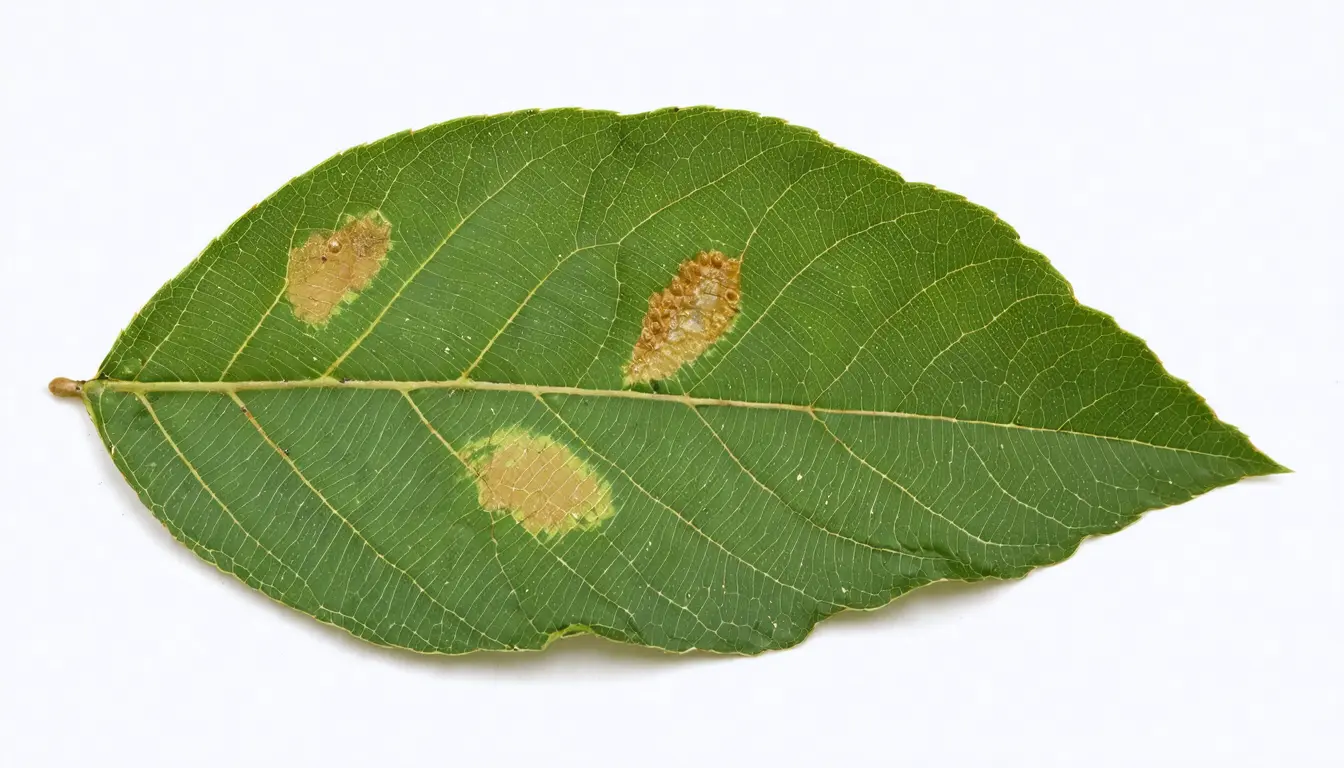
Horse chestnut tissue beside leaf miner mines photosynthesizes less while it still looks healthy, ELTE and Semmelweis University researchers report. Last author Katalin Solymosi says chlorophyll fluorescence imaging may detect larvae while damage is still invisible.
The Scientist · Science desk
What happened
- Defense-related chemistry in the leaf also shifts in response to the larvae, and the team tracked changes in phenoloid metabolism, whose compounds include some that help plants resist environmental stress.
- In damaged areas the leaf gradually loses the ability to regulate water loss, so the remaining tissue dries out and the cells and chloroplasts that photosynthesize are damaged too.
- At first the plant activates defense processes, but as larvae eat more tissue that response is exhausted, the remaining photosynthetic tissue breaks down, and the leaf browns and drops early.
- Since its first description in North Macedonia in 1986, the moth has spread over nearly all of Europe.
Why it matters
- decision Park managers deciding when to protect trees get a candidate signal that has yet to be validated: the authors describe better timing as something early detection could help with in the future.
- capability Fluorescence imaging is reported to reveal altered tissue before the eye can, which gives researchers a measurable stage between larval feeding and browning.
- constraint Sampling covers 10 urban parks in two cities, so how far the pattern holds across the moth's range over almost all of Europe is not shown.
The design is the useful part, because it sets two kinds of healthy-looking tissue side by side. "We collected samples from horse chestnut trees in 10 urban parks in Budapest and Szombathely between 2021 and 2025. We compared tissue from healthy, intact leaves with visually intact areas surrounding larval mines, as well as with leaf sections showing early- and late-stage damage," said Enkhjin Enkhbileg, a Ph.D. student and first author of the paper [9]. That makes four groups of tissue [13]. If the intact area beside a mine differs from a healthy leaf, the larva's reach extends past the cells it eats. The team reports that it does [3].
The larvae feed mainly on the palisade parenchyma, the upper layer of the leaf, whose cells hold numerous chloroplasts [8]. Eating those cells removes them from the leaf's photosynthesis. The reported change is in neighbouring tissue that still looks healthy, where cell and chloroplast structure is altered and photosynthetic activity falls [3]. The researchers combined microscopy with measurements of photosynthesis and phenoloid metabolism to follow the stages [10].
One qualification on "before damage shows." The intact areas were sampled around larval mines [9], so a larva was already feeding in each mined leaf. The lead time on offer is the gap between a larva feeding and the tissue around it looking damaged. The report gives neither the length of that gap nor the number of leaves sampled. Whether the gap is long enough to change when anyone sprays is the open question.
Katalin Solymosi leads the larger project at ELTE and is last author [1]. "Chlorophyll fluorescence imaging may make it possible to detect the presence of larvae at stages when the damage is still invisible to the naked eye," she said [12]. Her wording is conditional. What the study reports is narrower: fluorescence imaging can reveal changes that are not yet visible [11]. Whether that signal distinguishes leaf miner from other stresses on the same tree has not been shown.
In our view the description of tissue change is the better-supported half of the paper, since it rests on microscopy, photosynthesis and phenoloid measurements from ten parks in two cities [9][10]. The timing claim is a hypothesis, and the authors word it as one. They say that catching early signs could eventually let damage be spotted sooner and plant protection be timed better [14], and in the longer term contribute to more targeted use of plant protection products [15].
What to watch
- Field tests of chlorophyll fluorescence imaging on standing trees, including against other stresses that also change leaf function.
- A measured lead time, in days, between larval feeding and visible damage in the surrounding tissue.
- Any trial that times protection measures on an imaging signal and compares leaf loss with conventional timing.
Clarity's read
What the record supports and how the coverage leans. The claims behind it follow.
Reality
- Evidence55
- Adoption
- Insufficient
- Hype gap+10
- Incentives
- Insufficient
- Confidence55
Claim ledger
Ranked by verification strength, evidence, and original report placement.
- [1]
Researchers from Eötvös Loránd University (ELTE) and Semmelweis University studied what happens to horse chestnut leaves attacked from within by the horse chestnut leaf miner; the work is published in Plant Stress and is part of a larger project led by Katalin Solymosi of ELTE, who is last author.
- [2]
The functioning of the horse chestnut leaf changes while the damage is still barely visible to the naked eye.
- [3]
Changes also occur in leaf tissue surrounding the mines, even when these areas still appear healthy to the naked eye: the structure and functioning of cells and chloroplasts are altered, and photosynthetic activity decreases.
- [4]
The plant's defense-related metabolism also changes in response to the larvae; the researchers tracked changes in phenoloid metabolism, and some of the compounds involved help protect plants against environmental stress.
- [5]
In damaged areas the leaf gradually becomes less able to regulate water loss, so the remaining tissue dries out, which also damages the functioning of cells and chloroplasts involved in photosynthesis.
- [6]
The plant initially responds by activating defense processes, but as larvae consume larger areas this defense response becomes exhausted, the remaining photosynthetic tissue breaks down, and the leaf turns brown and falls prematurely.
- [7]
The horse chestnut leaf miner was first described in North Macedonia in 1986 and has since spread across almost the whole of Europe.
- [8]
The larvae primarily consume cells of the palisade parenchyma, a tissue layer in the upper part of the leaf whose cells contain numerous chloroplasts.
- [9]
"We collected samples from horse chestnut trees in 10 urban parks in Budapest and Szombathely between 2021 and 2025. We compared tissue from healthy, intact leaves with visually intact areas surrounding larval mines, as well as with leaf sections showing early- and late-stage damage," said Enkhjin Enkhbileg, a Ph.D. student and first author of the published paper.
- [10]
The researchers used microscopic analyses, together with measurements of photosynthesis and phenoloid metabolism, to track how the leaf changes at different stages of the damage.
- [11]
Chlorophyll fluorescence imaging can reveal changes that are not yet visible to the naked eye.
- [12]
"Chlorophyll fluorescence imaging may make it possible to detect the presence of larvae at stages when the damage is still invisible to the naked eye," said Solymosi, last author of the publication.
- [13]
The sampling design compares four categories of tissue: healthy intact leaves, visually intact areas around larval mines, early-stage damage and late-stage damage.
- [14]
Detecting these early signs could in the future help identify damage sooner and improve the timing of plant protection measures.
- [15]
The possibility of detecting damage at an early stage could also, in the longer term, contribute to more targeted use of plant protection products.
Sources
1 independent publisher whose own reporting we read for this story.
- phys.orgBefore leaf miner damage shows, horse chestnut leaves alter how they function
1 article · October 13, 2026
Topics and entities
Follow any of these and your For You feed starts watching them — no settings page required.