Hong Kong opens Embodied AI hub where mainland robot makers can train for international scenarios
Hong Kong opened its first Embodied AI International Applications Hub on Oct. 15 with seven technology partners and eight scenario partners. Crypto Briefing reported two funding plans alongside it, HKD 1 billion for AI subsidies and HKD 10 billion for an industrial fund.
The Investor · Invest desk
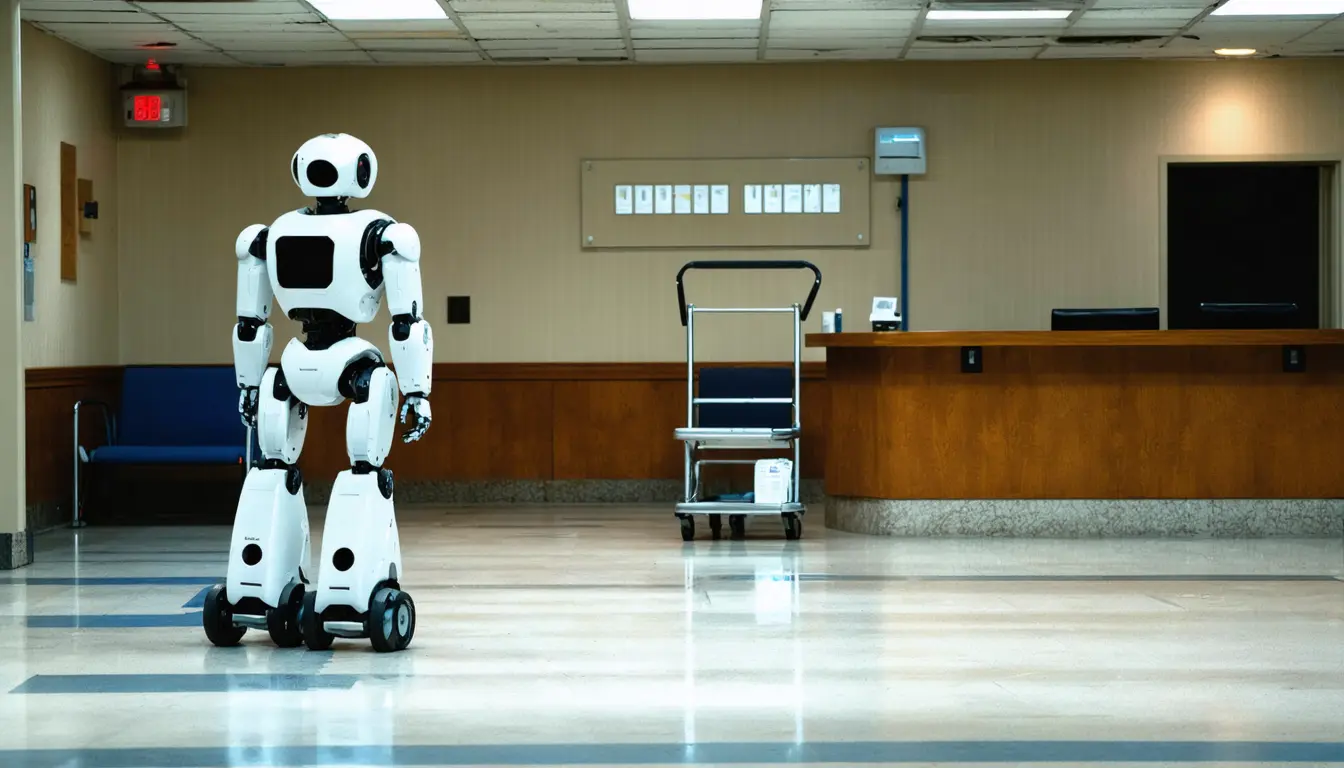
Key figures: the hub launched with 15 named partner slots, seven technology and eight scenario; it targets 5 sectors; and it averages 1.6 scenario partners per sector, eight partners across five sectors.
| Figure | Value | Note | Claim |
|---|---|---|---|
| Named partner slots at launch | 15 partners | seven technology, eight scenario | 9 |
| Sectors the hub targets | 5 sectors | 4 | |
| Scenario partners per sector, on average | 1.6 partners | eight partners across five sectors | 10 |
What happened
- The hub sits under the HKPC's industrial AI and robotics centre and uses simulated real-world settings to test and optimise robot designs ahead of potential global roll-outs.
- It targets five sectors: manufacturing, smart logistics, retail services, inspection and maintenance, and public services.
- Technology partners bring the robots and software, and scenario partners supply the environments and use cases the robots are tested against.
- The Chinese University of Hong Kong set up the city's first full-stack embodied AI lab in May 2026, five months before the hub.
- Secretary for Innovation, Technology and Industry Sun Dong called the opening a major milestone and pledged further government support.
Why it matters
- Who has to decide decision Mainland robot makers can now rehearse international deployments in the hub's simulated settings before choosing whether to pay for pilots abroad.
- What it costs cost The HKD 10 billion fund is ten times the HKD 1 billion subsidy top-up and is still to be prepared, so the public bill is a plan today and falls on HKPC and the government.
- What it limits constraint Eight scenario partners across five sectors averages 1.6 per sector, so some sectors may offer one test environment.
- What it sets up precedent Sun Dong's pledge of further government support makes more funding announcements the expected next step.
Crypto Briefing is the source for both funding figures. HKPC plans to add HKD 1 billion to its AI subsidy scheme in 2026 [11], and the government will prepare a HKD 10 billion industrial fund for AI and humanoid-robotics investment [12]. Neither figure is committed yet.
The pitch to mainland makers fits in two sentences from the opening ceremony in Kowloon Tong [1]. "Hong Kong's application scenarios have an international characteristic," said Sunny Tan, HKPC chairman [7]. "For many mainland robot manufacturers, they can train their robots for international application scenarios without leaving the country here," he said [8].
We think the buyer is the mainland maker's overseas budget, or rather the part of it that would go to pilots abroad, and every robot that rehearses in Kowloon Tong is one that is not queued at a foreign test site. That is an inference from Tan's words. Neither report gives a fee, a budget for the hub or a count of robots tested.
The hub may work as described: the seven technology partners and eight scenario partners, 15 names in all [9], use simulated real-world settings to test designs ahead of potential global roll-outs [3]. Or it becomes a showcase with little repeat testing. Or the partners are there for the subsidy, and activity tracks the HKD 1 billion.
We think the third deserves the most suspicion, because the only cash attached to the hub is public: a subsidy top-up and a fund still to be prepared [11][12]. We would be wrong if, a year on, partners are paying for test time or announcing overseas contracts that cite results from the hub.
What to watch
- Which eight organisations are the scenario partners, and how they split across the five sectors.
- Whether the HKD 10 billion fund gets a confirmed size, launch date and eligibility rules.
- Whether HKPC publishes usage figures for the hub, such as robots tested or test hours booked.
Information, not investment advice. This story is general information about companies and markets, drawn from cited reporting. It is not a recommendation to buy, sell or hold any security; check the cited sources before acting.
Clarity's read
What the record supports and how the coverage leans. The claims behind it follow.
Reality
- Evidence50
- Adoption
- Not scored
- Hype gap+20
- Incentives60
- Confidence55
Claim ledger
Ranked by verification strength, evidence, and original report placement.
- [1]
Hong Kong opened its first Embodied AI International Applications Hub on October 15, 2026, housed in the Hong Kong Productivity Council (HKPC) Building in Kowloon Tong.
- [2]
The hub is starting with seven technology partners, including Unitree Robotics, Galbot and Robotera, plus eight scenario partners.
- [3]
The hub, housed under the HKPC's industrial AI and robotics centre, features simulated real-world environments where the companies can test and optimise their latest robotic designs ahead of potential global roll-outs.
- [4]
The hub focuses on five sectors: manufacturing, smart logistics, retail services, inspection and maintenance, and public services.
- [5]
Technology partners bring the robots and the software; scenario partners supply the environments and use cases those robots are tested against.
- [6]
Secretary for Innovation, Technology and Industry Sun Dong said the hub marked a major milestone in Hong Kong's efforts to align with national initiatives to advance in embodied AI and robotics, and pledged further government support to promote development in the field.
- [7]
"Hong Kong's application scenarios have an international characteristic," said Sunny Tan, HKPC chairman, at the opening ceremony.
- [8]
"For many mainland robot manufacturers, they can train their robots for international application scenarios without leaving the country here," Tan said.
- [9]
The hub launched with 15 named partner slots in total, seven technology and eight scenario.
- [10]
Eight scenario partners across five sectors averages 1.6 scenario partners per sector.
- [11]
HKPC plans to add 1 billion HKD to its AI subsidy scheme in 2026.
- [12]
The government will prepare a 10-billion-HKD industrial fund aimed at supporting investment in AI and humanoid robotics.
- [13]
In May 2026 the Chinese University of Hong Kong set up the city's first full-stack embodied AI lab, five months before the hub opened.
- [14]
The proposed HKD 10 billion industrial fund is ten times the HKD 1 billion subsidy top-up.
Get this ledger inside ChatGPT. Ask about any of our stories and the answer brings its figure, each claim’s verdict and the sources. Free, no account.
Sources
2 independent publishers whose own reporting we read for this story.
- cryptobriefing.comHong Kong opens Embodied AI hub to court the global robotics industry
1 article · October 15, 2026
- scmp.comHong Kong vies for role in robotics boom with launch of embodied AI hub
1 article · October 15, 2026
Topics and entities
Follow any of these and your For You feed starts watching them — no settings page required.
Topics
- Hong Kong tech policyFollow
- Humanoid RoboticsFollow
- Embodied AIFollow