Hippocampal neurons carried word-type information in patients under general anesthesia
Neurons in the hippocampus of anesthetized epilepsy-surgery patients carried information about word types and upcoming words, Baylor researchers report in Nature. The result bears on whether language processing needs consciousness, though the recordings show what neurons encode and leave comprehension open.
The Scientist · Science desk
What happened
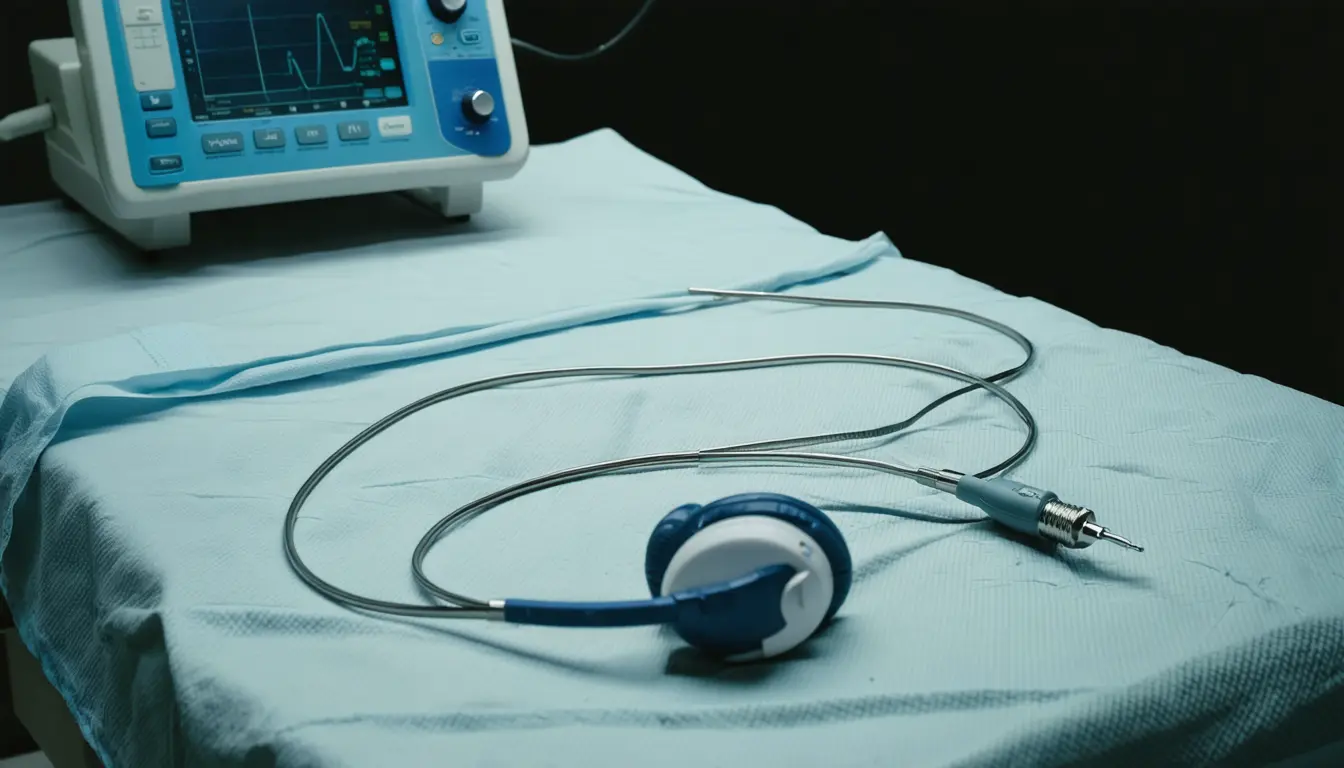
- Baylor used Neuropixels probes to record from hundreds of individual hippocampal neurons while the patients were under general anesthesia.
- In a tone test, the neurons responded differently to odd sounds and got better at telling them apart as the session went on.
- When short stories were played, distinct activity patterns carried information about nouns, verbs and adjectives.
- The researchers read the improving tone response as a sign of neural plasticity, a basic learning process, in patients who could not report anything.
Why it matters
- What doesn't add up contradiction The release calls the unconscious brain "far more capable than scientists previously realized", yet its own key sentences say the brain "appeared to anticipate" and that results "suggested" plasticity.
- What it limits constraint The recordings cover one brain structure in epilepsy-surgery patients, so they leave open whether other regions or other people show the same signals under anesthesia.
- What's now possible capability Baylor says the work could feed technologies that help people communicate after neurological injury. That is a stated possibility in the release, not a demonstrated device.
The improvement in the tone test is the easier result to interpret. A response that sharpens over a session is not a fixed reflex to sound onset, and the researchers read it as neural plasticity [8].
The story result needs more care. The researchers say the word-category patterns suggest the hippocampus was responding to meaningful features of language [11]. Sheth, a neurosurgeon at Baylor St. Luke's Medical Center [13], put the prediction finding this way: "The brain appears to anticipate what comes next in a story, even without conscious awareness," [15] said Sheth.
That sentence is a reading of a decoding result. Information that can be used to predict upcoming words [12] is something an analyst extracts from recorded neurons. The decoding does not show whether the brain used that information for anything.
The Baylor summary of the Nature paper [2] does not give the number of patients, how anesthetic depth was confirmed, or whether awake patients served as a comparison. Those details decide how strong the word-category result is, since hundreds of neurons [4] can come from few patients or many.
Sheth said: "Our findings show that the brain is far more active and capable during unconsciousness than previously thought." [14] We think the data as described support a narrower sentence. Under general anesthesia, hippocampal neurons carry information about word class [10] and about what comes next [12]. If anesthetic depth held and the same pattern appears outside the hippocampus, the assumption that language processing needs consciousness would be hard to keep. From one structure, it is a suggestive result.
The recording method may end up mattering more than the finding. The researchers say Neuropixels probes had not previously been used to investigate this region in this way [5].
What to watch
- Whether the word-category and next-word signals show up in recordings from regions outside the hippocampus.
- Whether another group reproduces the result with independent recordings in anesthetized patients.
- Whether Baylor tests the communication-technology idea in patients with neurological injuries.
Clarity's read
What the record supports and how the coverage leans. The claims behind it follow.
Reality
- Evidence50
- Adoption
- Not scored
- Hype gap+35
- Incentives40
- Confidence50
Claim ledger
Ranked by verification strength, evidence, and original report placement.
- [1]
Baylor researchers report that under general anesthesia the human brain can analyze language, recognize different types of words, and predict what comes next in a story.
- [2]
The findings were published in the journal Nature.
- [3]
The researchers studied patients undergoing epilepsy surgery while under general anesthesia.
- [4]
The team used Neuropixels probes to monitor electrical signals from hundreds of individual neurons in the hippocampus.
- [5]
According to the researchers, Neuropixels technology had not previously been used to investigate this particular brain region in this way.
- [6]
The first experiment played a series of repeating tones, occasionally interrupted by a sound that differed from the others.
- [7]
Under anesthesia, hippocampal neurons responded differently to the unexpected sounds, and the cells became better at distinguishing the unusual tones as the experiment continued.
- [8]
The researchers say the improvement suggested the hippocampus was showing signs of neural plasticity, the brain's ability to change its responses through experience.
- [9]
The team then played short stories to the anesthetized patients while recording from hippocampal neurons.
- [10]
Distinct patterns of neural activity contained information about different categories of words, including nouns, verbs and adjectives.
- [11]
The researchers say the word-category result suggested the hippocampus was responding to meaningful features of language rather than simply detecting that sounds were occurring.
- [12]
Neural activity also carried information that could be used to predict upcoming words in a sentence.
- [13]
Sheth is a professor and Cullen Foundation Endowed chair of neurosurgery at Baylor and a neurosurgeon at Baylor St. Luke's Medical Center.
- [14]
"Our findings show that the brain is far more active and capable during unconsciousness than previously thought," said Dr. Sameer Sheth.
- [15]
"The brain appears to anticipate what comes next in a story, even without conscious awareness," said Sheth.
- [16]
The release says the findings could provide new insights into how the brain processes memories and language, potentially leading to advances in technologies that help people communicate after neurological injuries.
- [17]
The release says the findings suggest that the unconscious brain is far more capable than scientists previously realized.
- [18]
The release says that, even though the patients were unconscious, their brains appeared to anticipate how the language unfolding around them might continue.
Get this ledger inside ChatGPT. Ask about any of our stories and the answer brings its figure, each claim’s verdict and the sources. Free, no account.
Sources
1 independent publisher whose own reporting we read for this story.
- sciencedaily.comMysterious brain activity under anesthesia challenges what we know about consciousness
1 article · October 15, 2026
Topics and entities
Follow any of these and your For You feed starts watching them — no settings page required.
Topics
- AnesthesiaFollow
- NeuroscienceFollow
- Consciousness and self-world boundaryFollow
Entities
- ScienceDailyFollow
- Benjamin HaydenFollow
- NeuropixelsFollow
- NatureFollow
- Baylor College of MedicineFollow
- Sameer ShethFollow