Science1 publisherNot yet confirmed elsewhere3 min readPublished
Himalayan monal shifts its call pitch amid human noise in a Kedarnath sanctuary valley
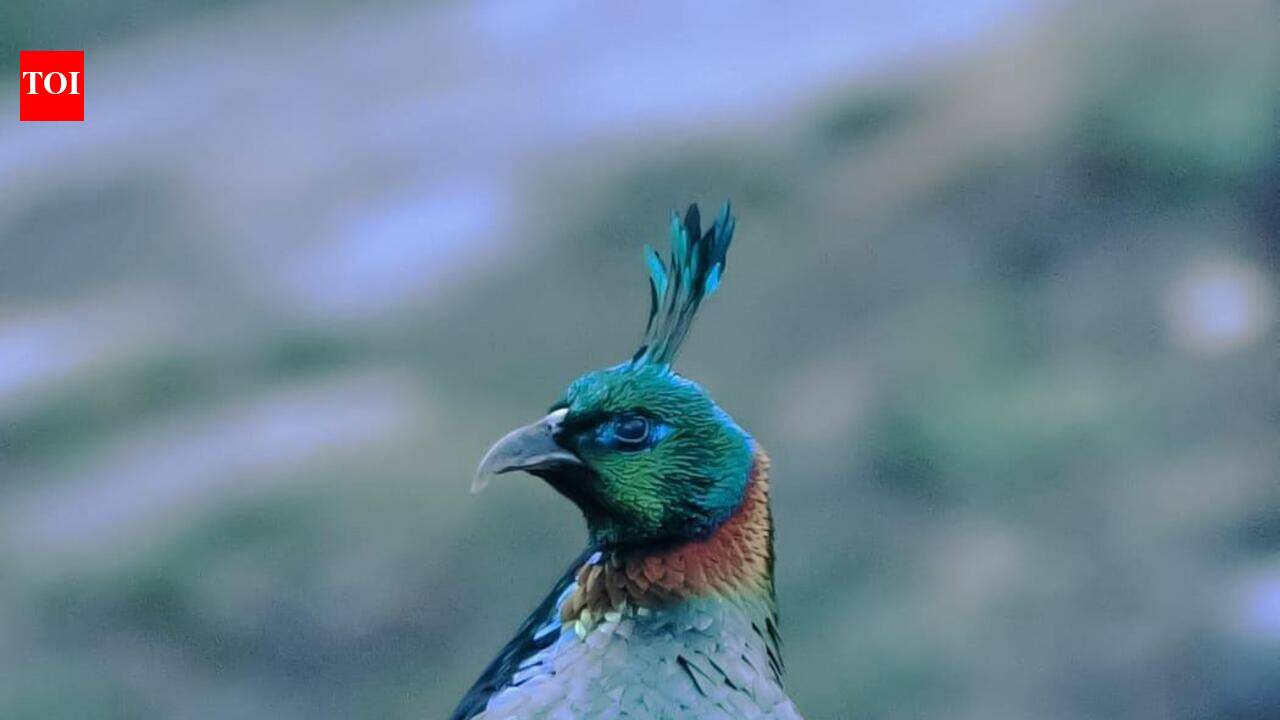
Garhwal University researchers say the Himalayan monal is changing its call pitch in a noisy Kedarnath valley, in one of two studies run over five years. Lead researcher Rajeev Lochan offers the bird as a warning sign for other mountain species, a case the studies can raise but cannot test, since as reported both measure only the monal.
The Scientist · Science desk
What happened
- The companion study projects that climate change will keep shrinking and destabilising the monal's habitat across the Indian Himalayas through 2100 under multiple scenarios.
- That projection assumes the bird will still need the climate found in today's alpine meadows, an assumption the BBC calls reasonable but not certain.
- The habitat study warns that monal populations would split into disconnected pockets, cutting breeding between groups and raising the risk of local extinction.
Compiled by The ScientistSomething wrong?How this is made
Why it matters
- constraint With two valleys as the comparison, any site difference besides noise stays tangled with the pitch result until recordings are repeated in more places.
- exposure If the alpine-climate assumption holds, isolated monal groups face higher odds of local extinction, a risk the study says is already present.
- precedent Lochan's indicator framing sets up the next test: surveys of other birds in the same valleys to see whether the disturbances he describes carry over.
Of the two studies, run over five years [7], the voice result comes from a field comparison. Rajeev Lochan, Dinesh Kumar Sharma and Anand Kumar worked in two valleys of the Kedarnath Musk Deer Sanctuary [2]. According to the BBC, the monal is changing its pitch to be heard over human noise in a busy valley [1]. You cannot switch noise on and off for a wild pheasant, so comparing places is the practical way to get a contrast. The weakness is that there are only two sites. Anything else that differs between the valleys, such as slope, vegetation or the number of birds, moves along with the noise. The BBC account does not give the number of calls recorded, the size of the pitch change or which way it went.
The habitat study is a projection. The team modelled where conditions suit the monal across Uttarakhand and Himachal Pradesh, using the same kind of global climate models and emissions scenarios that the IPCC uses in its assessments [4]. Under several scenarios, the suitable habitat keeps shrinking and destabilising through 2100 [3]. The model assumes the bird will need the same climate it finds in alpine meadows today, an assumption the BBC calls reasonable but not certain [5]. If the monal can tolerate more than it currently uses, the projected losses are too large. If the assumption holds, the study says populations would break into disconnected pockets. That would mean less breeding between groups and a higher risk of long-term decline or local extinction [6].
Tourism comes into the story mostly through Lochan's own account. The BBC sums up one study as finding that crowding in the meadows above the tree line is forcing the birds uphill [10]. A climate model cannot show on its own who is doing the pushing. Lochan named both causes at once. "These birds are now slowly moving upwards in the Himalayas as the snow is melting and vegetation is growing, making the area accessible to them. They are anyway being pushed upwards as their natural habitats in alpine meadows are being encroached upon by humans," he said [9]. The BBC reports that rapid infrastructure expansion over the past decade has opened up more places and raised visitor numbers [14]. To separate the human share of the upslope move from the warming share, you would need bird counts set against counts of people.
Lochan said the team chose the monal, Uttarakhand's state bird [8], for its narrow range. It moves with the seasons between the lower montane belt and the high alpine zone, and he calls it a key indicator of ecosystem health in the north-western Himalayas [11]. "If the species is facing issues on this particular landscape, there might be a chance that the ecological disturbances are affecting other birds too," he said [12]. Vishal Singh, an environmental practitioner in the region, framed it as a question: "These two studies give a useful warning for other more vulnerable species - if the monal is forced to change both its voice and its address, how are the more sensitive species responding?" [13]
I think the choice of indicator is sensible. A bird that moves between two altitude zones is exposed to disturbance in both [11]. As reported, though, the studies measure the monal alone, so any answer to Singh's question has to come from surveys of the more sensitive species themselves. Singh's own diagnosis is broader. "There are a lot of factors at play but at a broader level, the problem is that the economic development of the region is not aligned to its ecological integrity," he said [15].
What to watch
- The noise study's own figures: how many calls were recorded, how large the pitch change was, which direction it ran, and what the second valley's noise level was.
- Repeat recordings across more valleys, or in the same valleys before and after seasonal peaks in visitors, that would separate noise from other site differences.
- Surveys of other alpine birds in the Kedarnath sanctuary that test whether the monal's responses predict theirs.
Clarity's read
What the record supports and how the coverage leans. The claims behind it follow.
Reality
- Evidence55
- Adoption
- Insufficient
- Hype gap+15
- Incentives
- Insufficient
- Confidence50
Claim ledger
Ranked by verification strength, evidence, and original report placement.
- [1]
The second study says the monal is changing its pitch to cut through human noise in a busy valley.
ReportedSupportedSource: BBC summary of the study2 sources— create a free account to open themView cited source - [2]
The second study was conducted by Rajeev Lochan, Dinesh Kumar Sharma and Anand Kumar, who work at Hemvati Nandan Bahuguna Garhwal University, in two valleys in Kedarnath Musk Deer Sanctuary in Uttarakhand.
- [3]
According to the first study, climate change is projected to continue shrinking and destabilising the Himalayan monal's habitat across the Indian Himalayas through 2100 under multiple climate scenarios.
ReportedSupportedSource: First study, as reported by BBC2 sources— create a free account to open themView cited source - [4]
The researchers modelled how climate change could shift the monal's suitable habitat across Uttarakhand and Himachal Pradesh, based on the kind of global climate models and emissions scenarios used for IPCC assessments.
- [5]
The model assumes that the bird needs the current climate set-up that exists in alpine meadows in the future too, which the BBC describes as a reasonable but not certain assumption.
- [6]
The first study says monal populations would be scattered in disconnected pockets, reducing chances of breeding between groups and increasing risks of long-term decline or local extinction, which is already a threat.
ReportedSupportedSource: First study, as reported by BBC2 sources— create a free account to open themView cited source - [7]
Researchers from Uttarakhand conducted two separate studies over five years which flagged key threats to the Himalayan monal.
- [8]
The monal is a pheasant native to Himalayan mountain forests; it is the state bird of India's Uttarakhand state and the national bird of Nepal.
- [9]
"These birds are now slowly moving upwards in the Himalayas as the snow is melting and vegetation is growing, making the area accessible to them. They are anyway being pushed upwards as their natural habitats in alpine meadows are being encroached upon by humans," Lochan said.
- [10]
According to the BBC summary, one study found that the birds are forced to move higher in the mountains as their natural habitat in the alpine meadows above the tree line gets crowded.
- [11]
Rajeev Lochan, lead researcher of both studies, said they chose the monal because it has a narrow habitat range, moving seasonally between the lower montane zone and high-elevation alpine zones, making it a key indicator of ecosystem health in the north-western Himalayas.
ReportedInsufficientSource: Rajeev Lochan, told the BBC2 sources— create a free account to open themView cited source - [12]
"If the species is facing issues on this particular landscape, there might be a chance that the ecological disturbances are affecting other birds too," said Lochan.
ReportedInsufficientSource: Rajeev Lochan, quoted by BBC2 sources— create a free account to open themView cited source - [13]
"These two studies give a useful warning for other more vulnerable species - if the monal is forced to change both its voice and its address, how are the more sensitive species responding?" says Vishal Singh, an environmental practitioner working on ecology and climate issues in the Himalayas.
ReportedInsufficientSource: Vishal Singh, quoted by BBC2 sources— create a free account to open themView cited source - [14]
Rapid infrastructure expansion in the past decade has made more places in the region accessible, increasing footfall and disrupting wildlife.
- [15]
"There are a lot of factors at play but at a broader level, the problem is that the economic development of the region is not aligned to its ecological integrity," Singh said.
ReportedInsufficientSource: Vishal Singh, quoted by BBC2 sources— create a free account to open themView cited source
Sources
1 independent publisher whose own reporting we read for this story.
- bbc.co.ukA beautiful Himalayan bird is changing its voice due to human activity, research shows
1 article · October 6, 2026
Topics and entities
Follow any of these and your For You feed starts watching them — no settings page required.