Invest1 publisher3 min readPublished
Hassett's case against another Fed hike rests on a three-month inflation window
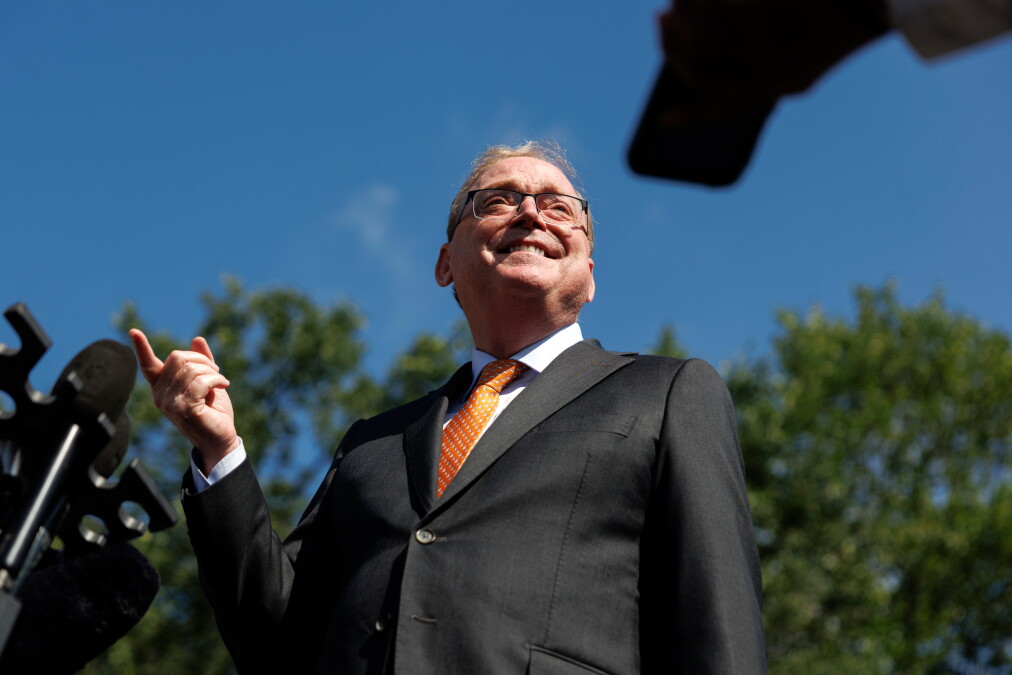
Kevin Hassett, the White House's top economist, says three-month core inflation near 2% leaves the Fed little room to raise rates. Wednesday's August PCE release will test his window on the inflation gauge the Fed itself prefers.
The Investor · Invest desk
What happened
- Speaking at the Economic Club of New York, Hassett said further Fed rate increases could make monetary policy more restrictive than officials intend.
- At this month's FOMC meeting, 16 of the 18 officials who submitted quarterly forecasts projected at least one more quarter-point hike before year-end.
- Hassett has said hawkish comments from FOMC members came from officials President Trump did not appoint, and that this shows continuing problems with Fed independence.
- Hassett was on the short list of potential Fed chair appointees earlier this year.
Compiled by The InvestorSomething wrong?How this is made
Why it matters
- exposure Hassett has cast the officials Trump did not appoint as the independence problem, so if they vote for another hike, the White House accusation is already on the record.
- decision Because Hassett named restoring independence as Warsh's priority, the chair's next hike vote will be read as a public answer to the White House's definition of that independence.
- precedent This is the administration's latest argument against higher rates, so each inflation release before the next FOMC meeting can be expected to draw a White House reading of its own.
Hassett put his case into a single sentence. He said that if inflation over the last three months is running around 2%, and interest rates since the early 19th century have been about the inflation rate plus two, then there is not a lot of room for rates to go up from here [2]. Two points on top of 2% puts his benchmark for the policy rate at about 4% [1]. American Banker's account does not give the current target range.
The 2% depends on the window. A 12-month change is built from twelve monthly readings, while a three-month annualized rate takes three and scales them up by four, so any single month moves it about four times as much [3]. Hassett's case for the short window is that 12-month headline figures are skewed by energy prices and carry trends that are months old [3]. He also conceded the other side. "If you look at three-month annualized right now, then everything's right around the Fed's target, but if you do it another way, then it's not. And whether they should do it their way or I should do it my way is, you know, something for the seminar room," he said [4].
His 2% is also a core CPI figure [1]. The Fed's preferred gauge is PCE, and the August reading is due Wednesday [5]. That one print will be a third of any three-month PCE figure that ends in August [2].
If the three-month PCE figure also lands near 2%, Hassett has his argument on the Fed's own measure, and the officials projecting at least one more quarter-point hike this year would be doing so with their preferred gauge at target [6]. If August runs hot, the window he chose magnifies that month by the same factor of four [3]. The third path is the one Governor Lisa Cook set out in Oakland on Monday. "Of course, the number and magnitude of any future adjustments will be informed by observations of the economy's reaction to our policy actions thus far and the inflation and labor data over the coming months," she said [9].
Hassett also tied the rate question to who runs the Fed. He said there is still some work to do to restore Fed independence, and that he thinks it is a high priority for Fed Chair Kevin Warsh [8].
I think the three-month case is a fair point about stale data, put to work for a conclusion the administration has argued before, and the "seminar room" line admits the window is a choice [4][11]. The best version of his side is his own sentence: "A 12-month change will very often have momentum from 12 months ago that's completely different from what we're seeing," he said [13]. A three-month PCE figure near 2% on Wednesday would put the burden on the hike projections. A figure well above 2% would leave Hassett arguing from a CPI window while the Fed's preferred gauge points the other way [5].
What to watch
- Wednesday's August PCE release: whether the three-month annualized figure sits near 2%, as Hassett's CPI reading does, or well above it.
- Whether the 16 officials who projected at least one more quarter-point hike before year-end back away from that path in speeches after the PCE data.
- Whether Chair Kevin Warsh responds publicly to Hassett's framing of Fed independence as his high priority.