Science1 publisherNot yet confirmed elsewhere2 min readPublished
Niobium carried into a Greenland fjord records thousands of years of NAO-driven precipitation
MARUM-led researchers used niobium in a Greenland fjord core to tie local precipitation to the North Atlantic Oscillation over thousands of years. The paper's title limits that persistent link to the Late Holocene, and its glacier forecast assumes the relationship survives warming.
The Scientist · Science desk
What happened
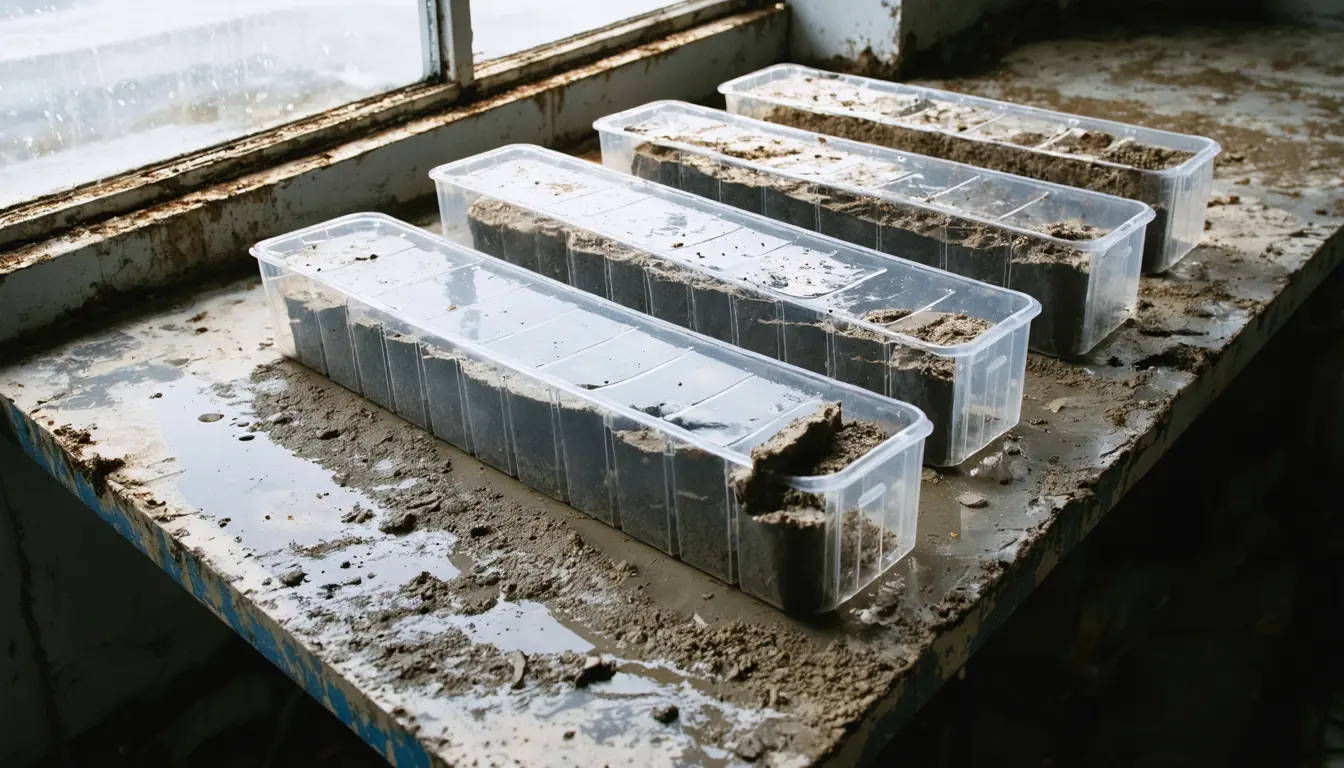
- The sediment core was collected in 2022 from Narsaq Sound in southwestern Greenland during the research expedition MSM 111 BAFFDEEP.
- Niobium concentrations were high after the Greenland Ice Sheet retreated in the early Holocene, about 11,600 years ago.
- Comparing the core with other NAO records, the authors concluded positive phases brought southwestern Greenland more precipitation and lower temperatures.
- Some climate models predict more consistent positive NAO phases under warming, and the summary says that could promote growth of local glaciers in the southwest.
Compiled by The ScientistSomething wrong?How this is made
Why it matters
- capability Fjords draining niobium-rich rock now offer a new precipitation archive, reaching back past the start of instrument records.
- constraint The tracer depends on catchment rock the source calls unusual, so a baseline for the wider ice sheet needs other proxies or other niobium-rich fjords.
- decision Projections for southwestern Greenland's glaciers now hinge partly on which NAO future the models get right, since a persistently positive phase could add precipitation as the region warms.
The hills around Narsaq Sound are unusually rich in niobium, a transition metal that is scarce in seawater and stays stable once it is in the environment [6]. That gives the fjord mud a source label. Extra niobium in the core means more niobium-bearing sediment came off the land, carried in by local glaciers or by the river that drains the catchment [8]. According to the MARUM-led team, niobium sources, usually exploited commercially for steel and electronics, had never before been used to trace past precipitation [13].
The design has one interpretive step built into it. X-ray fluorescence scanning measures how much niobium reached the fjord [7]. Reading that as rain and snow assumes sediment delivery tracks precipitation. The link to the North Atlantic Oscillation came from lining the record up against other records that carry an NAO signal [2]. It agrees with modern measurements: in southern Greenland today, positive NAO phases bring more precipitation and cooler temperatures [10]. Before those measurements began, the effect of large-scale circulation on the ice sheet was poorly understood [11].
"What surprised us most," lead author Johan Faust said, "was the persistence of the signal: We can trace the influence of the North Atlantic Oscillation on southern Greenland's hydroclimate over thousands of years." [3]
How many thousands is the open question, and I would treat the clean baseline as a Late Holocene result for now. The study set out to build a precipitation record across the whole Holocene, roughly the past 12,000 years [1]. The paper's title claims persistent NAO influence on Late Holocene hydroclimate [4]. The strongest niobium values came right after the ice sheet retreated [9], and the sediment that carries the signal is delivered partly by glaciers [8]. The phys.org summary does not report the strength of the correlation, how finely the core is dated, or how the authors separated that early peak from the effects of deglaciation.
The forward-looking claim is conditional, and the summary says so: if the relationship holds in the future, it matters for how the Greenland Ice Sheet behaves [15]. Whether it will hold is untested. A sediment core can show how one fjord responded to the NAO in the past. It cannot test that response on high-latitude coasts that are now warming faster than the global average [12]. The glacier growth raised as a possibility is for local glaciers in the southwest [14], and the evidence is one core from one fjord with unusual bedrock [5][6].
What to watch
- Whether the full Nature Communications paper reports correlation strength and dating resolution, and how it separates the early-Holocene niobium peak from deglaciation.
- Records from other Greenland fjords that test whether the NAO-precipitation link seen at Narsaq Sound holds elsewhere on the ice sheet margin.
- Whether climate models converge on the more persistently positive NAO that the local glacier-growth scenario depends on.
Clarity's read
What the record supports and how the coverage leans. The claims behind it follow.
Reality
- Evidence50
- Adoption
- Insufficient
- Hype gap+15
- Incentives
- Insufficient
- Confidence55
Claim ledger
Ranked by verification strength, evidence, and original report placement.
- [1]
A study led by MARUM scientists, published in Nature Communications, aimed to create a precipitation record extending back through the Holocene, the current warm epoch spanning approximately the past 12,000 years.
- [2]
After comparing the Narsaq Sound record with other records containing an NAO signal, the authors found the only explanation was that over southwestern Greenland precipitation was higher but temperatures lower when the NAO was in a positive phase.
ReportedSupportedSource: phys.org, reporting the authors' conclusion2 sources— create a free account to open themView cited source - [3]
"What surprised us most was the persistence of the signal: We can trace the influence of the North Atlantic Oscillation on southern Greenland's hydroclimate over thousands of years."
ReportedSupportedSource: Johan Faust, lead author, quoted by phys.org2 sources— create a free account to open themView cited source - [4]
The paper is titled 'Persistent influence of the North Atlantic Oscillation on Late Holocene hydroclimate in southwestern Greenland' (Faust et al., Nature Communications, 2026).
ReportedSupportedSource: phys.org publication details2 sources— create a free account to open themView cited source - [5]
The international team used a sediment core collected in 2022 from Narsaq Sound in southwestern Greenland during the research expedition MSM 111 BAFFDEEP.
- [6]
The rocks surrounding Narsaq Sound are unusual in being rich in niobium, a transition metal; niobium concentrations are generally low in the ocean and the element remains stable in the environment.
- [7]
The researchers used X-ray fluorescence (XRF) scanning to search for changes in niobium concentrations in the sediments as a tracer of past precipitation.
- [8]
Elevated niobium concentrations in the core result from increased transport of niobium-bearing sediment to the fjord by local glaciers or by the river draining the surrounding region.
- [9]
Niobium concentrations were high following the retreat of the Greenland Ice Sheet in the early Holocene, around 11,600 years ago.
- [10]
Present-day measurements show a clear relationship between positive NAO phases, increasing precipitation and cooler temperatures in southern Greenland.
- [11]
The impact of large-scale atmospheric circulation patterns on the Greenland Ice Sheet before measurements began remains poorly understood.
- [12]
In high-latitude coastal areas, Arctic amplification means temperatures are rising faster than the global average.
- [13]
This is the first time niobium sources, usually commercially exploited for the steel and electronics industries, have been used as a tracer for past precipitation.
- [14]
Some models predict more consistent positive NAO phases under a warming climate, which may increase precipitation in southwestern Greenland, potentially promoting growth of local glaciers despite ongoing warming.
- [15]
If the NAO-precipitation relationship holds in the future, it has important implications for the future dynamics of the Greenland Ice Sheet.
Sources
1 independent publisher whose own reporting we read for this story.
- phys.orgAtlantic weather pattern shaped southern Greenland's rain and snow for millennia, sediments reveal
1 article · October 8, 2026
Topics and entities
Follow any of these and your For You feed starts watching them — no settings page required.
Topics
- Arctic AmplificationFollow
- North Atlantic OscillationFollow
- Greenland Ice SheetFollow
- PaleoclimateFollow