Science1 publisherNot yet confirmed elsewhere3 min readPublished
Liaoning fossil swimmer was forming a third set of teeth 120 million years ago
Dongoconodon platycauda, a 120-million-year-old swimming mammal from Liaoning, was forming a third generation of teeth, a Nature Communications study reports. The single skeleton cuts against the old assumption that two sets of teeth arose early in mammals, though it cannot show where that pattern began.
The Scientist · Science desk
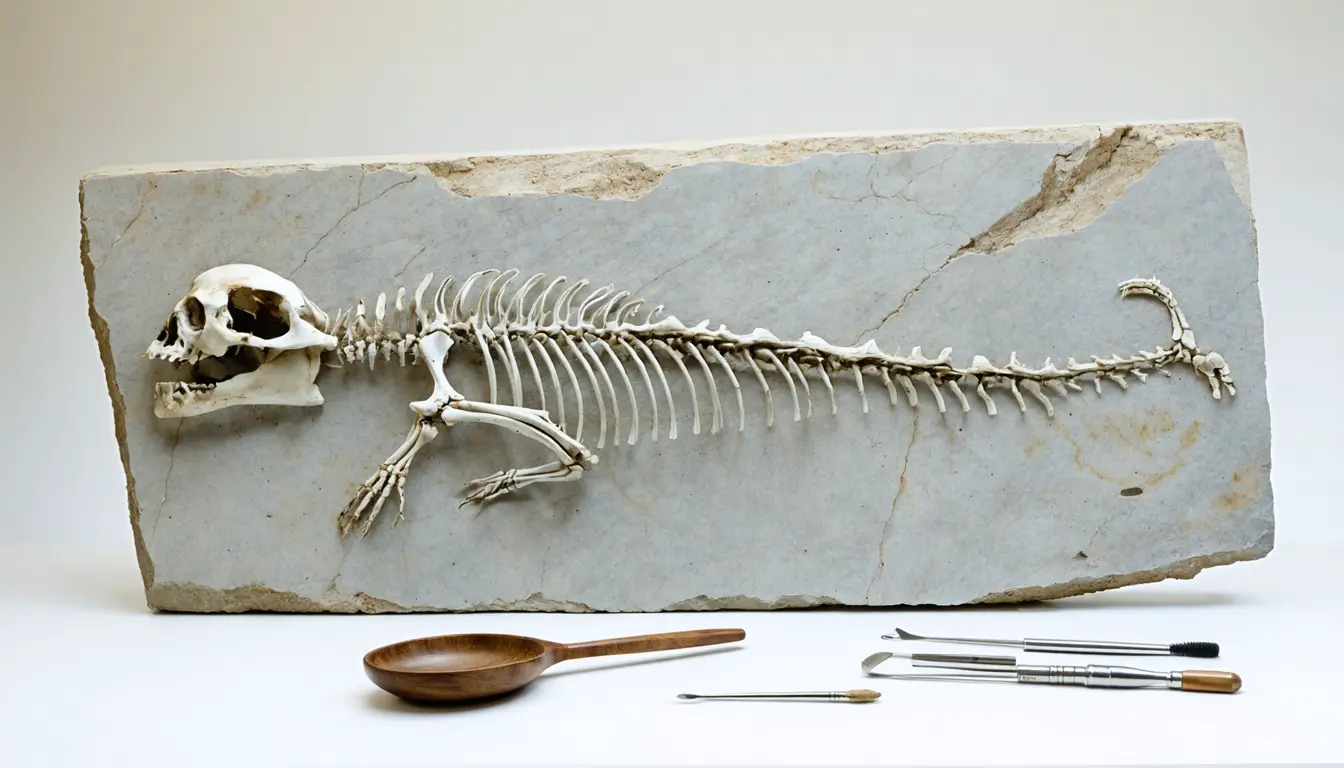
What happened
- A team led by Shundong Bi of Yunnan University examined the skeleton, recovered from Liaoning's Jiufotang Formation in 2016, with high-resolution CT scans.
- A bar of ossified Meckel's cartilage connects the lower jaw to the middle ear bones, which in living mammals are separate from the jaw and used only for hearing.
- Platypus-like flattened finger bones and nutria-like boxy tail bones lead the authors to conclude the animal paddled with its forefeet and steered with its tail.
Compiled by The ScientistSomething wrong?How this is made
Why it matters
- constraint Two sets of teeth can no longer be assumed for every Early Cretaceous mammal, but one jaw cannot show whether repeated replacement was ancestral or re-evolved in this lineage.
- precedent The third generation sat hidden inside the jawbone, so classing other early mammals as two-set replacers now calls for scanning their unerupted teeth first.
- capability The jaw-ear bar proposes a specific order, with cartilage leaving the jaw before the ear bones, that other transitional fossils can now confirm or contradict.
Everything here rests on one skeleton. It came out of the Jiufotang Formation in 2016 [5], and the description appeared in Nature Communications in 2026 [8], about ten years later [18]. One well-preserved specimen is enough to show that a trait existed. It is a smaller base for saying when a trait evolved across mammals, and Phys.org's write-up notes that the whole account concerns a single fossil [20].
The tooth evidence is a snapshot of replacement in progress. CT scans showed teeth that had erupted and were being worn down by chewing, with their replacements still growing inside the jawbone [9]. At one position, a tiny enamel cap sat beneath a replacement tooth. The team takes it as a third generation beginning to form [10]. The same account says evidence of three generations appeared in all four tooth types: incisors, canines, premolars and the front molar-like teeth [11]. The press summary does not say how many positions show a third crown. One cap and a full row of them would justify very different confidence in that sentence.
Humans, dogs, cats and horses are diphyodonts, with baby teeth followed by adult teeth [3]. Paleontologists long assumed that pattern arose early in mammal history [4]. The paper's title calls Dongoconodon a polyphyodont eutriconodontan from the Early Cretaceous [8]. If the third generation holds up, two-set replacement was not universal among mammals 120 million years ago [1]. I think the finding is secure as a description of one animal and provisional as a revision of the rule. The thing this doesn't tell you is the direction of change. One jaw cannot separate an old pattern this lineage kept from one it evolved again, and settling that needs comparable scans of its relatives.
The second finding concerns hearing. The scans show a thin bar of bone, ossified Meckel's cartilage, joining the lower jaw to the middle ear bones [12]. In modern mammals those bones sit free of the jaw and work only for hearing [13]. The fossil suggests the order in which the connection came apart: the cartilage began to detach from the jaw before it separated from the ear bones [14].
The swimming reconstruction is built by comparison with living animals. The team measured the long leg bones and set their proportions against a database of 124 living mammal species [7]. Broad hands and feet with flattened finger bones resemble the webbed feet of platypuses, and the boxy tail bones closely match those of nutria [15]. From that, the authors conclude the animal paddled with its forefeet and steered with its tail [16]. This is an inference from shape. Living swimmers have these proportions; the fossil cannot show the animal swimming. "The new fossil shows adaptations for semiaquatic life, with hands and feet like the platypus that were similarly webbed," the research team wrote [17].
The authors draw a wider conclusion from finding two oddities in one animal. "This diversity indicates that key mammalian traits did not necessarily evolve in a tightly linked fashion," the researchers wrote, according to Phys.org [19].
What to watch
- Whether CT scans of other eutriconodontan jaws turn up unerupted third-generation crowns, which would show whether Dongoconodon is an outlier or typical of its group.
- Whether the full paper documents third-generation crowns at several positions per tooth type or rests mainly on the single enamel cap described in press coverage.
- Further Dongoconodon specimens from the Jiufotang Formation, especially individuals at different growth stages.
Clarity's read
What the record supports and how the coverage leans. The claims behind it follow.
Reality
- Evidence55
- Adoption
- Insufficient
- Hype gap+15
- Incentives
- Insufficient
- Confidence50
Claim ledger
Ranked by verification strength, evidence, and original report placement.
- [1]
Dongoconodon platycauda is a newly discovered semiaquatic fossil mammal from northeastern China that lived around 120 million years ago.
- [2]
The animal had evidence of webbed paddling feet, a rudderlike tail and a third generation of teeth in its jaw.
- [3]
Most mammals, including humans, dogs, cats and horses, are diphyodonts: they get a set of baby teeth and later their adult teeth.
- [4]
Paleontologists long assumed that having two sets of teeth evolved early in mammalian evolution.
- [5]
The fossil was recovered from the Jiufotang Formation in Liaoning, China, in 2016.
- [6]
Researchers led by Shundong Bi from Yunnan University examined the skeleton using high-resolution CT scans.
- [7]
The team measured the long leg bones and compared their proportions against a database of 124 living mammal species to reconstruct how the animal moved.
- [8]
The study, Bi et al., 'A polyphyodont, semiaquatic eutriconodontan mammal from the Early Cretaceous of China', was published in Nature Communications in 2026.
- [9]
Some teeth had already erupted and were being worn down by chewing, while replacement teeth were still developing inside the jawbone.
- [10]
In one tooth position, a tiny enamel cap was found beneath a replacement tooth, suggesting a third generation was forming.
- [11]
Evidence of three generations appeared across all four tooth types: incisors, canines, premolars and front molar-like teeth.
- [12]
Scans revealed a bar of bone, ossified Meckel's cartilage, linking the lower jaw directly to the middle ear bones.
- [13]
In modern mammals the middle ear bones are detached from the jaw and function exclusively for hearing.
- [14]
The fossil suggests the cartilage began to detach from the jaw before it separated from the middle ear bones.
- [15]
Broad hands and feet with flattened finger bones resembled the webbed feet of modern platypuses, and the boxlike tail bones closely match those of modern nutria.
- [16]
The study authors believe the animal used its forefeet to paddle and its tail to steer.
- [17]
"The new fossil shows adaptations for semiaquatic life, with hands and feet like the platypus that were similarly webbed."
- [18]
About ten years passed between the fossil's recovery and the study's publication.
- [19]
"This diversity indicates that key mammalian traits did not necessarily evolve in a tightly linked fashion."
ReportedInsufficientSource: Quoted by Phys.org, presented as the researchers' conclusionView cited source - [20]
The findings come from one fossil; discovering at least two major novelties in a single specimen hints that early mammalian evolution may have been more experimental.
Sources
1 independent publisher whose own reporting we read for this story.
- phys.orgOne ancient swimming mammal fossil and two evolutionary surprises, including a third set of teeth
1 article · October 8, 2026
Topics and entities
Follow any of these and your For You feed starts watching them — no settings page required.