Product1 publisherNot yet confirmed elsewhere3 min readPublished
Google paid up to triple the going rate for fiber that routes around the Red Sea
Google paid two to three times the roughly 6 million euro going rate for backup fiber across Turkey, according to a person familiar with the deal. Most Europe-Asia cloud traffic still crosses the contested Red Sea strait, so the premium buys a route for the day a cable breaks.
The Product Desk
What happened
- Cables on the Red Sea floor carry more than 90% of the data capacity linking Europe and Asia.
- The Houthis seized Yemen's side of the Bab al-Mandab strait in September, including the island of Mayyun.
- Google and Meta have started sending some live traffic over a land route across Iraq that they had held in reserve, the same person said.
- On September 23, Microsoft said it plans to put more than $400 million by 2030 into undersea and overland connections in the Middle East.
- Since September, cloud companies have been telling fiber operators the minimum number of strands they will use and by when, according to IQ Networks adviser Martin Frank.
Compiled by The Product DeskSomething wrong?How this is made
Why it matters
- constraint Adding a second Red Sea cable to a contract buys more capacity on the same path, since nearly every cable crosses the same narrow strait.
- exposure Customers of the four biggest clouds share one physical exposure, because those companies use about three-quarters of the world's international bandwidth.
- cost Providers pay for the bypass up front as capital spending, years before the land routes may carry much traffic.
- decision Teams with cross-region workloads now have to decide whether a failover path that sits dormant until a cut counts as a tested backup.
In March, Iranian drones struck Amazon's data centers in the United Arab Emirates and Bahrain, and bank and payment apps in the region stopped working [9]. Snowflake reported service disruptions [9]. That outage began on land. The Red Sea exposure is a strait less than 32 kilometers wide between Yemen, Djibouti and Eritrea, where the cables enter the sea [2].
On a network diagram, capacity on three cables looks like three routes. Paul Brodsky, senior research manager at TeleGeography, sees it differently. "You can have capacity on multiple cables, but if they're all routed through the same tight expanse of water, suddenly your route resilience isn't looking so resilient," he said. "The repair ship issue is very real." [5]
Contested water makes repairs slow. Three Red Sea cables were damaged in 2024, most likely by the anchor of a cargo ship disabled by a Houthi missile, and the repairs took months while crews waited for permits, Brodsky said [6]. "Depending on the availability of a repair ship, a cable repair might take one to two weeks," Doug Madory, head of internet analysis at Infoblox, told Rest of World. "But the last time there were cable cuts in this body of water, repairs took months because the repair ships needed assurances they would not be fired upon." [7]
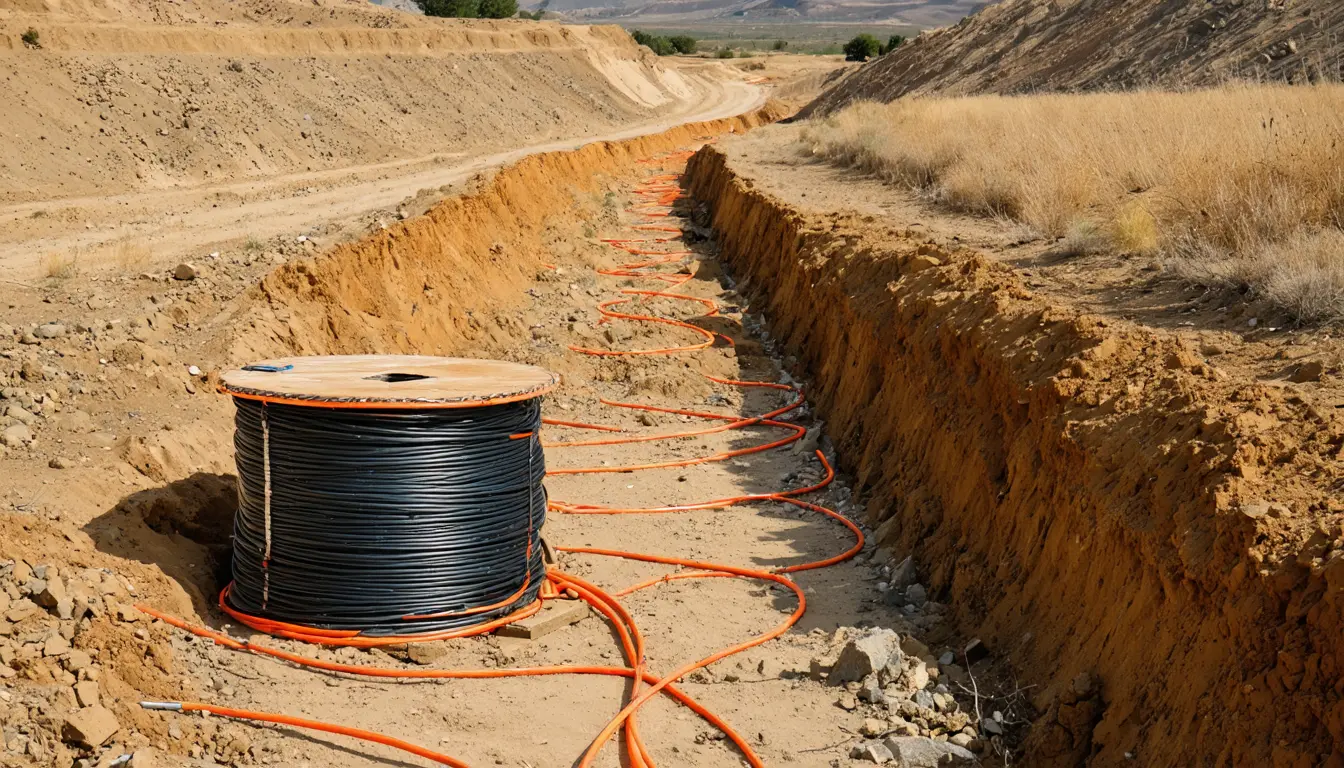
What Google bought is a pair of fiber strands running along Turkish state pipelines [17]. At the price the person familiar with the deal described, the outlay comes to 12 to 18 million euros [19]. Long-distance fiber is usually sold as one upfront payment covering 15 years or more of use, plus a separate annual maintenance fee [3]. Over a 15-year term, the outlay works out to roughly 0.8 to 1.2 million euros a year before maintenance [20]. Google and Meta did not respond to Rest of World's requests for comment [16]. Rest of World's reporting does not include any figure on cloud prices or latency, so any claim that this premium will reach customers is a forecast.
For now, most of the new backup capacity stays idle. Madory expects cloud companies to test their land routes so they are ready, with most data still flowing under the sea until a cable breaks [11]. "Submarine cable routes are much cheaper, which is why they are so preferred," he said. "I would expect land route alternatives to remain dormant until pressed into service due to a cable cut." [12]
For a team running workloads between European and Asian cloud regions, two questions sort the exposure. The first is whether the workload depends on that cross-region path at all. The second is whether it can run for months on a rerouted path, which is how long the 2024 repairs took [6]. Needs the path and cannot wait months: this is the case where the provider's failover route matters, and it is fair to ask which land route carries it and whether it has been tested. Needs the path but tolerates a slow backup: the question moves into the contract, to service credits for a long degradation. Stays inside one region: the strait matters less, though the March outage showed that a regional data center carries risks of its own [9].
What to watch
- Whether the October 5 claim by Saudi-backed government forces to have retaken positions around the strait and Mocha holds against Houthi denials.
- A cable cut at Bab al-Mandab, the event Madory says would press the dormant land routes into service.
- Whether Yemen moves toward what Martin Frank called an Afghanistan scenario, the outcome he said would end cloud companies' hope for a normal administration.
Clarity's read
What the record supports and how the coverage leans. The claims behind it follow.
Reality
- Evidence45
- Adoption35
- Hype gap+15
- Incentives55
- Confidence45
Claim ledger
Ranked by verification strength, evidence, and original report placement.
- [1]
More than 90% of data capacity between Europe and Asia runs through cables under the Red Sea.
- [2]
The Red Sea cables enter the sea at Bab al-Mandab, a strait less than 32 kilometers wide between Yemen and the African nations of Djibouti and Eritrea.
- [3]
Long-distance fiber is usually sold with a single upfront payment covering 15 years or more of use, and buyers also pay a separate annual fee for maintenance.
- [4]
Microsoft said on September 23 that it plans to invest more than $400 million in subsea and land links across the Middle East by 2030.
- [5]
"You can have capacity on multiple cables, but if they're all routed through the same tight expanse of water, suddenly your route resilience isn't looking so resilient," said Paul Brodsky, senior research manager at TeleGeography. "The repair ship issue is very real."
- [6]
Three Red Sea cables were damaged in 2024, most likely by the anchor of a drifting cargo ship disabled by a Houthi missile; repairs took months because crews had to wait a long time for permits, Brodsky said.
- [7]
"Depending on the availability of a repair ship, a cable repair might take one to two weeks," Doug Madory, head of internet analysis at Infoblox, told Rest of World. "But the last time there were cable cuts in this body of water, repairs took months because the repair ships needed assurances they would not be fired upon."
- [8]
Google, Meta, Microsoft, and Amazon use about three-quarters of the world's international internet bandwidth, according to TeleGeography.
- [9]
When Iranian drones struck Amazon's data centers in the United Arab Emirates and Bahrain in March, bank and payment apps in the region stopped working, and Snowflake reported service disruptions.
- [10]
Since the start of September, cloud companies have been telling operators the minimum number of fiber strands they will start using, and by when, said Martin Frank, a strategic adviser at IQ Networks.
- [11]
Cloud companies will likely test their land backups so they are ready if a sea cable breaks, and until then most of their data will keep flowing under the sea, Madory said.
- [12]
"Submarine cable routes are much cheaper, which is why they are so preferred," Madory said. "I would expect land route alternatives to remain dormant until pressed into service due to a cable cut."
- [13]
The Houthis, a U.S.-designated terrorist organization, seized Yemen's side of the strait in September, including the island of Mayyun.
- [14]
On October 5, Saudi-backed government forces said they had retaken key positions around the strait and the port of Mocha, claims the Houthis denied.
- [15]
Almost all major cloud companies are looking for backup routes around the Red Sea, and Google and Meta have started sending some live traffic through a land route across Iraq that they had previously held in reserve, the person said.
ReportedInsufficientSource: Unnamed person familiar with the deal, via Rest of World2 sources— create a free account to open themView cited source - [16]
Google and Meta did not respond to Rest of World's requests for comment by the time of publication.
- [17]
In September, Google bought a pair of fiber strands running along Turkish state pipelines, paying two to three times the roughly 6 million euros that newer lines crossing Turkey are expected to cost, according to a person familiar with the deal who requested anonymity.
ReportedInsufficientSource: Unnamed person familiar with the deal, via Rest of WorldView cited source - [18]
Cloud companies have been hoping Yemen would settle down under a normal administration; what would end that hope is what Martin Frank called an Afghanistan scenario, in which the international community accepts the reality on the ground.
- [19]
Google's outlay for the Turkish fiber strands was roughly 12 to 18 million euros.
- [20]
Spread over a 15-year term, 12 to 18 million euros comes to roughly 0.8 to 1.2 million euros a year before annual maintenance.
Sources
1 independent publisher whose own reporting we read for this story.
- restofworld.orgConflict in the Red Sea is forcing cloud giants to find a new route for the internet
1 article · October 7, 2026
Topics and entities
Follow any of these and your For You feed starts watching them — no settings page required.
Topics
- Cloud InfrastructureFollow
- Subsea CablesFollow
- Red Sea securityFollow
- Network route diversityFollow