Product1 publisher3 min readPublished
Rural data centers get an opportunity-zone tax break tied only to capital spending
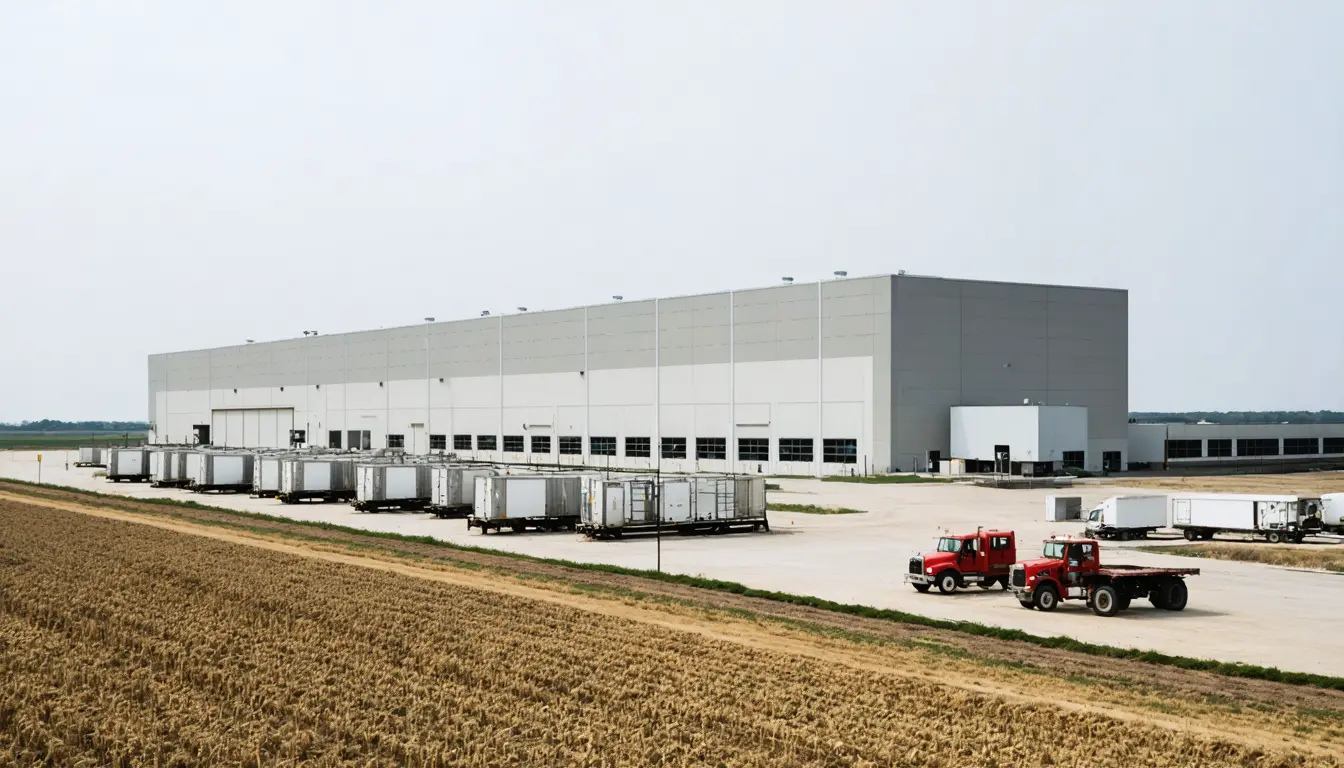
Searchlight Institute counts more than 100 rural data centers in development that could claim a federal opportunity-zone tax break starting January 1. Its analyst says capital investment is the only condition, so any jobs a county wants have to be written into its own deal.
The Product Desk · Product desk
Drafted by a language model from the sources cited here and checked against its claim ledger before publication. How we use AISend a correction
What happened
- Opportunity zones date to the first Trump administration as tax benefits for building in low-income census tracts, and last year's act widened them to draw investment to rural areas.
- Searchlight's count drew on a conservative database of under 700 planned or under-construction projects, while other datasets put US data centers in development closer to 1,500.
- Sitting in a rural opportunity zone does not trigger the benefit on its own; a company has to set up a specialized investment vehicle to start the process.
- Senator Josh Hawley introduced legislation last month that would eliminate opportunity-zone funding for data centers.
Compiled by The Product DeskSomething wrong?How this is made
Why it matters
- contradiction Jason Smith pitches the zones as a rural economic case while Kraschel says data center capital does not guarantee local jobs, so the program can pay out in tracts that see little employment from it.
- exposure Residents near a qualifying site have no reliable way to learn whether it is subsidized, because the claim can stay inside confidential IRS records unless the company volunteers it.
- decision A developer counting the break in a rural site's financial case is betting against Hawley's bill, because its passage would cut data centers out of opportunity-zone funding.
County officials in designated rural tracts who are reading a hyperscale developer's site plan will find that, from January 1, the plan can come with a federal corporate tax benefit attached [1]. The test for the benefit is simple, according to Emily Kraschel, a tax policy analyst at the Searchlight Institute. "Right now, the only requirement to get the benefits is capital investment," she said [4].
Ways and Means Committee chair Jason Smith said in a statement last year that the rules "may significantly lower barriers for large-scale, capital-intensive projects in rural areas," and he named hyperscale data centers as the main example [2]. "The economic case for building data centers in designated rural opportunity zones becomes far more compelling," he said [3]. The benefit itself pays for capital placed in the tract [4]. Kraschel objects to treating those as the same thing. "However, that doesn't guarantee that that money is necessarily creating jobs or creating a local economic boost. You'd be more sure of that with a more traditional factory that requires lots of workers. But with a data center, that assumption goes a little wonky," she said [5].
Whether the break moves capacity is harder to show. Pew found that 13 percent of operating data centers are rural, against about 67 percent of planned facilities [10]. So the pipeline is about five times as rural as the installed base [2], and those plans were in place before the benefit starts [1][10]. WIRED linked the rural tilt partly to data centers leaving urban areas [9]. The law passed last year [6], so developers could have planned around it. The record does not separate the break's pull from a move already underway. Searchlight's 100-plus candidates are more than one in seven of the projects in its own database [1].
Once a project qualifies, outsiders may not be able to tell whether it claimed anything. The break can be confidential IRS data, and WIRED reported it is next to impossible to know which companies pursue it unless they disclose voluntarily [13]. Meta, Amazon, Microsoft and Google all have data centers in development in areas that could qualify. When WIRED contacted them, they seemed eager to distance themselves from another tax break story [14].
I'd sort any proposal on two tests. The first is whether the developer has put headcount or local payments into a signed local agreement. The second is whether it has said if it will claim the federal break. If the answer to both is yes, the county knows what it gets and what the subsidy is. Commitments without disclosure protect the county's terms but leave residents unable to check the federal side. Disclosure without commitments means the county has accepted the assumption Kraschel called "a little wonky" [5]. Two noes means the jobs are taken on faith. My recommendation is to negotiate local terms as if the federal benefit did not exist, because the only federal test Kraschel describes is capital [4]. The tradeoff is that a county asking for more can lose the project to an eligible tract asking for less.
What to watch
- Movement on Senator Hawley's bill; if it passed, data centers would lose opportunity-zone funding before most rural projects finish building.
- Any voluntary disclosure by Meta, Amazon, Microsoft or Google that a rural project is using an opportunity-zone investment vehicle.
- A recount of eligible projects against the larger industry datasets, which would show how far above 100 the true figure sits.