ScienceNot yet confirmed elsewhere1 publisher2 min readPublished
DNA in droppings adds acacia and casuarina to the endangered greater glider's diet
University of the Sunshine Coast researchers found 17 plant species in DNA from 24 greater glider droppings, acacia and casuarina among them. Habitat plans may need a longer tree list, though detection in droppings does not show how much gliders rely on each plant.
The Scientist · Science desk
What happened
- The team ran samples collected across southeast Queensland through a recently developed genetic tool first designed for koalas.
- Associate professor Dominique Potvin said gliders in different areas might be eating different things, a point she said needs more investigation.
- The results appear in the Journal of Mammalogy in a 2026 paper first-authored by Mikaela Bratovic, titled 'The future is feces'.
Compiled by The ScientistSomething wrong?How this is made
Why it matters
- decision Potvin's team intends to recommend which trees to prioritise in glider habitat, so eucalypt-only planting and retention lists are now open to revision.
- constraint A presence list built from 24 samples cannot rank the new plants by importance, so it supports surveying for them sooner than it supports protecting land around them.
- capability Because a koala-derived assay worked on gliders, diet surveys of a nocturnal canopy animal can run on collected droppings without anyone watching it feed.
- constraint If diets differ between areas, one regional food-tree list will suit some populations poorly, and planners would need sampling at the level of individual sites.
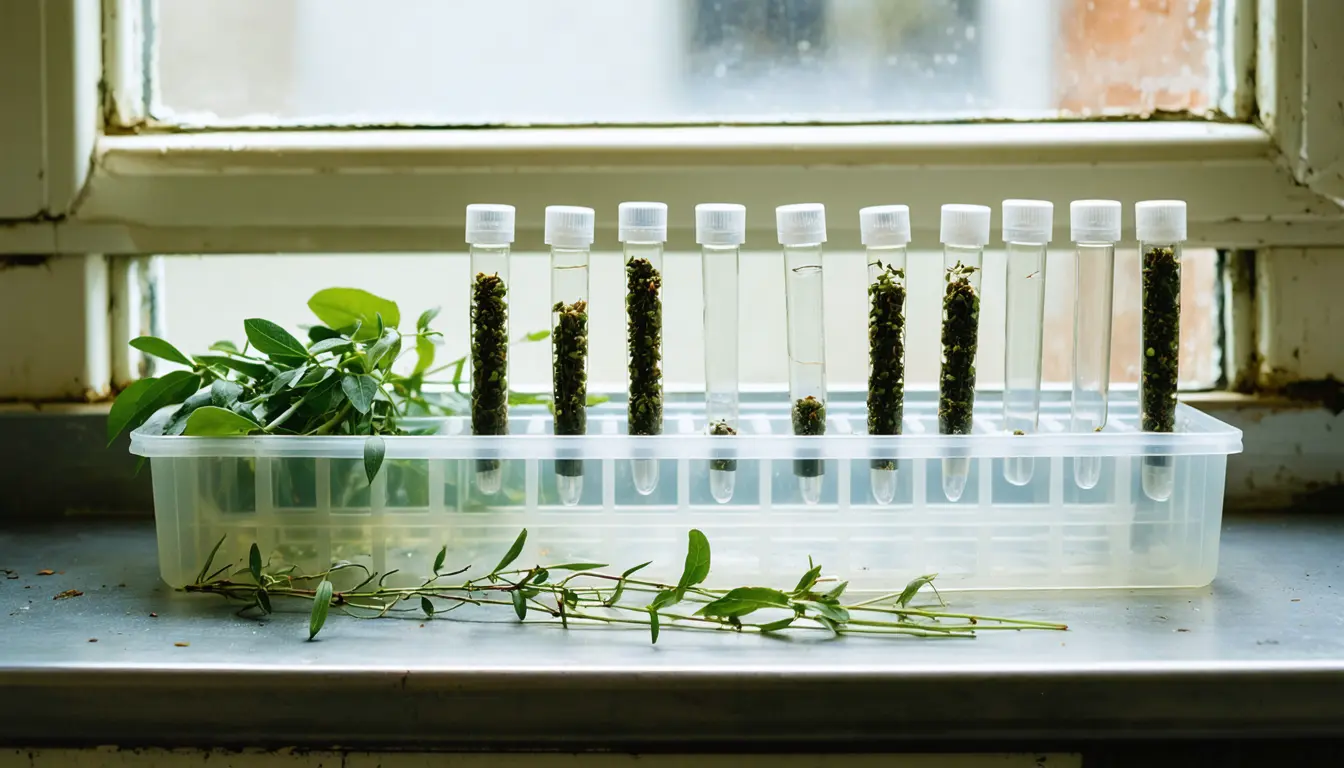
Greater gliders feed at night in the tree canopy [10]. Until this study, working out their diet meant sorting plant fragments by eye from stomach contents or droppings, or noting which trees the animals were seen feeding in [8]. "The methods used previously weren't particularly accurate," said Dominique Potvin, an associate professor at the University of the Sunshine Coast and an author of the paper [9][11]. Sequencing the plant DNA in droppings identifies species without anyone having to recognise a chewed leaf. It also needs no sighting of the animal. The team did not have to build an assay from scratch. It used a recently developed genetic tool originally designed for koalas [6].
The 17 species come from 24 samples [4][5]. That figure is a tally of everything detected across the whole set. The phys.org account does not say how many samples contained each plant, or how many individual gliders the 24 came from. A plant found once, in one dropping, counts toward the 17 the same way a eucalypt found in every sample would.
The comparison is with earlier records. Greater gliders have generally been thought to feed only on eucalyptus foliage, and the sequencing added acacia, casuarina, angophora and corymbia species [1]. "Some of the plant types we found in their diet had never been documented before and were quite unexpected," Potvin said [2]. She stated the main result plainly: "Foremost, greater gliders are not quite the fussy eaters we thought and are open to a wider variety of nutritional sources" [3].
On habitat, Potvin said the findings "could potentially change vegetation strategies" [14]. "The information we've gathered will allow us to recommend what trees need to be prioritized in glider habitats, a vital part of saving a species in decline," she said [13]. I think the result is enough to add these genera to the trees surveyed in glider habitat now. It does not yet show that habitat chosen around eucalyptus leaves out something gliders need. DNA in a dropping shows that a plant was swallowed. It does not show how much was eaten, whether the mouthful was deliberate, or whether a glider would do worse without that plant.
Potvin also raised geography. "Another thing we found was that gliders from different areas might be eating different things, which warrants further investigation," she said [12]. If that holds, a single food-tree list for the region would fit some local populations poorly. The 24 samples were drawn from across southeast Queensland [4], so each area contributes only a fraction of them.
What to watch
- Whether the Journal of Mammalogy paper reports how many of the 24 samples contained each non-eucalypt genus, and how many individual gliders they represent.
- Follow-up sampling that tests Potvin's suggestion that glider diets differ between areas of southeast Queensland.
- The tree-priority recommendations the University of the Sunshine Coast team says it will make for glider habitat.
Clarity's read
What the record supports and how the coverage leans. The claims behind it follow.
Reality
- Evidence50
- Adoption
- Insufficient
- Hype gap+20
- Incentives30
- Confidence45
Claim ledger
Ranked by verification strength, evidence, and original report placement.
- [1]
It has generally been thought that greater gliders feed exclusively on foliage from the eucalyptus genus, but the researchers recorded acacia, casuarina, angophora and corymbia species.
ReportedSupportedSource: Dominique Potvin, quoted by phys.org2 sources— create a free account to open themView cited source - [2]
"Some of the plant types we found in their diet had never been documented before and were quite unexpected,"
ReportedSupportedSource: Dominique Potvin, quoted by phys.org2 sources— create a free account to open themView cited source - [3]
"Foremost, greater gliders are not quite the fussy eaters we thought and are open to a wider variety of nutritional sources."
ReportedSupportedSource: Dominique Potvin, quoted by phys.org2 sources— create a free account to open themView cited source - [4]
University of the Sunshine Coast researchers analysed 24 fecal samples from greater gliders collected across southeast Queensland.
ReportedSupportedSource: phys.org, reporting University of the Sunshine Coast researchView cited source - [5]
DNA sequencing of the samples identified 17 different plant species.
- [6]
The researchers used a recently developed genetic tool that was originally designed for koalas.
- [7]
The results were published in the Journal of Mammalogy (2026) as Mikaela J Bratovic et al, 'The future is feces: using fecal genomic sequencing to understand dietary choices of an endangered arboreal marsupial, the Greater Glider (Petauroides spp.)'.
- [8]
Earlier diet work sifted through stomach contents or droppings to identify plant material by sight, or tried to see which trees greater gliders were eating in.
- [9]
"The methods used previously weren't particularly accurate,"
- [10]
Greater gliders are endangered, nocturnal herbivores that glide from tree to tree.
- [11]
Dominique Potvin is an associate professor at the University of the Sunshine Coast and an author of the paper, which the article calls her latest.
- [12]
"Another thing we found was that gliders from different areas might be eating different things, which warrants further investigation."
- [13]
"The information we've gathered will allow us to recommend what trees need to be prioritized in glider habitats, a vital part of saving a species in decline."
- [14]
Potvin said the DNA findings "could potentially change vegetation strategies".
Sources
1 independent publisher whose own reporting we read for this story.
Topics and entities
Follow any of these and your For You feed starts watching them — no settings page required.
Entities
- University of the Sunshine CoastFollow
- Dominique PotvinFollow
- Greater gliderFollow
- Journal of MammalogyFollow