InvestNot yet confirmed elsewhere1 publisher3 min readPublished
Franklin Templeton asks SEC staff whether on-chain fund trades need 1940 Act pricing exemptions
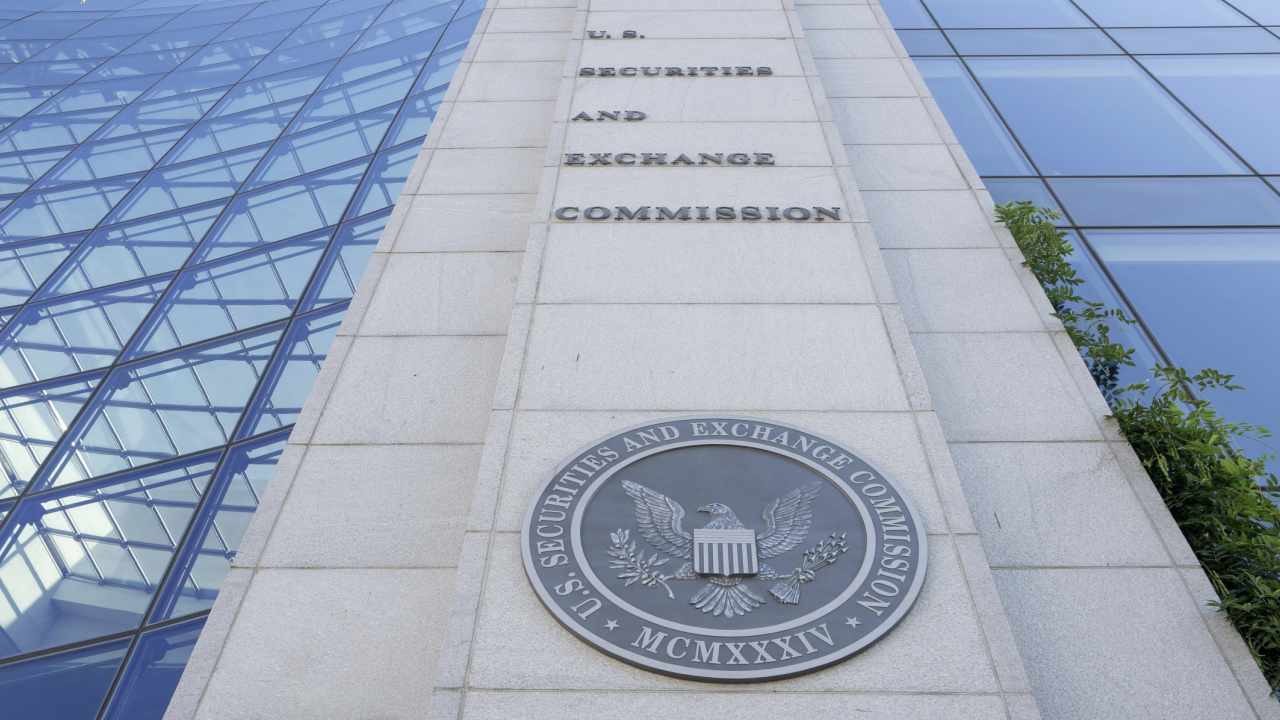
Franklin Templeton, a $1.79 trillion manager, asked SEC crypto staff on Oct. 9 whether exemptions could let tokenized money funds and ETFs trade in blockchain pools. Its questions concern the 1940 Act's rules on fund pricing and pooled assets, which sit outside the SEC's Sept. 17 relief for blockchain venues.
The Investor · Invest desk
What happened
- For its money market fund, Franklin asked whether investors could swap blockchain fund shares for tokenized NMS stocks through a trading pair on a blockchain venue.
- The agenda asks whether those pairs, and service fees charged by liquidity providers, need exemptions from Section 22(d) and Rule 22c-1, the 1940 Act's fund-pricing rules.
- On tokenized ETFs, the agenda considered pairs against another tokenized stock, a permitted payment stablecoin or a tokenized money market fund.
- Franklin also asked whether the liquidity pools themselves need exemptions from investment-company regulation under the 1940 Act.
Why it matters
- constraint Until staff answer on Section 22(d) and Rule 22c-1, a pool cannot pay liquidity providers a fee on fund-share swaps with legal certainty, so nobody yet has a settled reason to supply the other side.
- exposure If staff class liquidity pools as investment companies, whoever runs them faces 1940 Act registration and fund-management duties, and depositors' interests may count as securities under the 1933 and 1934 Acts.
- decision The SEC now has to choose between extending the Sept. 17 exemption into fund law and handling tokenized funds one staff position at a time, as it did for BENJI custody in August.
The Sept. 17 relief is built around stocks. As news.bitcoin.com describes it, the SEC's innovation exemption temporarily lifts certain exchange and dealer requirements for qualifying blockchain venues and liquidity providers. It also permits limited tokenized stock trading through pools open to approved participants [8]. Franklin Templeton took its agenda to the Crypto Task Force 22 days later [17][1], and the agenda included the firm's view of that exemption [3]. Most of the agenda concerns a different statute, the Investment Company Act of 1940 [6][12].
A redeemable fund share is priced by the fund. Section 22(d) generally requires sales at the prospectus price. Rule 22c-1 generally requires trades at the next share value calculated after an order arrives, meaning assets minus liabilities divided by shares outstanding [6]. BENJI tokens are shares of Franklin's government money market fund [15]. A service fee paid to the provider on the other side of a BENJI swap is a charge added to a price the rules tie to the prospectus or the next calculated value [5][6].
The pool is the harder puzzle. An investment company generally pools investors' money to invest in securities, and that classification can bring registration and fund-management requirements [12]. A liquidity pool holds deposited assets to facilitate trading, and each depositor holds an interest representing its position [16]. Those interests raise a second question: whether they need exemptions from treatment as securities under the 1933 and 1934 Acts [13]. In the money-fund pair, a pool classed as an investment company would be a fund holding shares of another fund. A single trading pair can therefore touch three federal securities statutes [18].
Tokenized ETFs add a venue question, because the agenda describes a tokenized securities venue as separate from a national securities exchange [11].
The SEC could settle this in one of three ways. Staff could fold fund-pricing and pool-status relief into the innovation exemption, with conditions modelled on the stock version: trading-volume limits, equivalent shareholder rights, auditable public smart contracts and halts tied to the primary exchange [9]. The narrower route is product by product, like the Aug. 12 no-action position that allowed specified custody arrangements for Franklin funds holding BENJI, subject to safeguards and board oversight [14]. In the third, staff apply the pricing rules as written, and fee-paying fund pairs do not launch in the form Franklin described.
We think the narrow route is likelier for the money fund. The Aug. 12 position shows staff already handling this product through specific, conditioned arrangements [14]. The case against that view is the venue question. If staff accept a tokenized securities venue as its own category [11], one broad exemption would cost the agency less work than a queue of individual positions, and the first route wins.
Franklin reported $1.79 trillion in preliminary assets at Sept. 30 [2] and has kept fund records on a blockchain since FOBXX launched in 2021 [15]. Here it is spending legal time on questions before putting fund shares into pools on these terms. The account does not report any response from staff.
What to watch
- Any staff statement that the Sept. 17 innovation exemption already reaches fund shares in pools without 1940 Act relief; that would show the pricing rules are a smaller obstacle than this piece argues.
- Whether staff treat liquidity pools holding tokenized fund shares as investment companies, or the interests depositors receive as securities.
- Whether the SEC amends the innovation exemption's conditions, such as its trading-volume limits, to cover tokenized money funds and ETFs.
Clarity's read
What the record supports and how the coverage leans. The claims behind it follow.
Reality
- Evidence50
- Adoption20
- Hype gap+5
- Incentives60
- Confidence50
Claim ledger
Ranked by verification strength, evidence, and original report placement.
- [1]
Franklin Templeton met SEC Crypto Task Force staff on Oct. 9 to explore whether regulatory exemptions could allow tokenized money market funds and ETFs to trade through blockchain venues, addressing legal questions about pricing, fees and pooled assets.
- [2]
Franklin Templeton reported preliminary assets under management of $1.79 trillion as of Sept. 30.
- [3]
Franklin Templeton's proposed agenda covered its digital assets business and its perspective on the SEC's innovation exemption.
- [4]
For money market funds, the proposed agenda considered whether investors could exchange blockchain-based fund shares for tokenized National Market System (NMS) stocks through a trading pair on a blockchain venue.
- [5]
Franklin Templeton asked whether providers supplying assets for those trades could charge service fees.
- [6]
Section 22(d) of the Investment Company Act of 1940 generally requires sales of redeemable fund shares at the price stated in the prospectus; Rule 22c-1 generally requires transactions at the next share value calculated after an order arrives, that value being the fund's assets minus liabilities divided by outstanding shares.
- [7]
The agenda asks whether exemptions from Section 22(d) and Rule 22c-1 are needed for the proposed trading pairs and liquidity-provider fees.
- [8]
The SEC's innovation exemption, issued Sept. 17, temporarily exempts qualifying blockchain venues and liquidity providers from certain exchange and dealer requirements, subject to conditions, and permits limited tokenized stock trading through pools accessible to approved participants.
- [9]
Conditions of the innovation exemption include trading-volume limits, equivalent shareholder rights, auditable public smart contracts, and trading halts aligned with the underlying stock's primary exchange.
- [10]
For tokenized ETFs, the agenda considered trading pairs involving another tokenized stock, a permitted payment stablecoin, or a tokenized money market fund, and questioned whether the same fund-pricing provisions require exemptions when liquidity providers charge fees.
- [11]
The agenda describes a tokenized securities venue as distinct from a national securities exchange.
- [12]
The agenda questioned whether liquidity pools themselves need exemptions from investment-company regulation; an investment company generally pools investors' money to invest in securities, and that classification can trigger registration and fund-management requirements under the 1940 Act.
- [13]
The proposed discussion covered depositing specified tokenized assets and receiving liquidity-provider interests, including whether those interests require exemptions from treatment as securities, which could involve relief under the Securities Act of 1933 and the Securities Exchange Act of 1934.
- [14]
An Aug. 12 SEC staff no-action position addressed custody arrangements for Franklin funds investing in BENJI, concerning safekeeping and recordkeeping and allowing specified arrangements subject to safeguards and board oversight.
- [15]
BENJI tokens represent shares of Franklin Templeton's government money market fund; Franklin's blockchain-based fund recordkeeping dates to the 2021 launch of the Franklin Onchain U.S. Government Money Fund, ticker FOBXX.
- [16]
Liquidity pools hold assets that facilitate trading, while liquidity-provider interests represent a depositor's position.
- [17]
Franklin Templeton's Oct. 9 meeting came 22 days after the SEC issued its innovation exemption on Sept. 17.
- [18]
The questions on Franklin Templeton's agenda span three federal securities statutes: the Investment Company Act of 1940, the Securities Act of 1933 and the Securities Exchange Act of 1934.
Sources
1 independent publisher whose own reporting we read for this story.
- news.bitcoin.comFranklin Templeton Explores SEC Relief for Tokenized Fund Trades
1 article · October 9, 2026
Topics and entities
Follow any of these and your For You feed starts watching them — no settings page required.
Topics
Entities
- Franklin TempletonFollow
- SECFollow
- SEC Crypto Task ForceFollow
- BENJIFollow
- Franklin OnChain U.S. Government Money FundFollow
- Investment Company Act of 1940Follow
- MoonPayFollow
- PaywardFollow