Invest2 publishers2 min readPublished
Finland joins France's nuclear deterrence initiative as prediction market lifts NATO-Russia clash odds 2.5 points
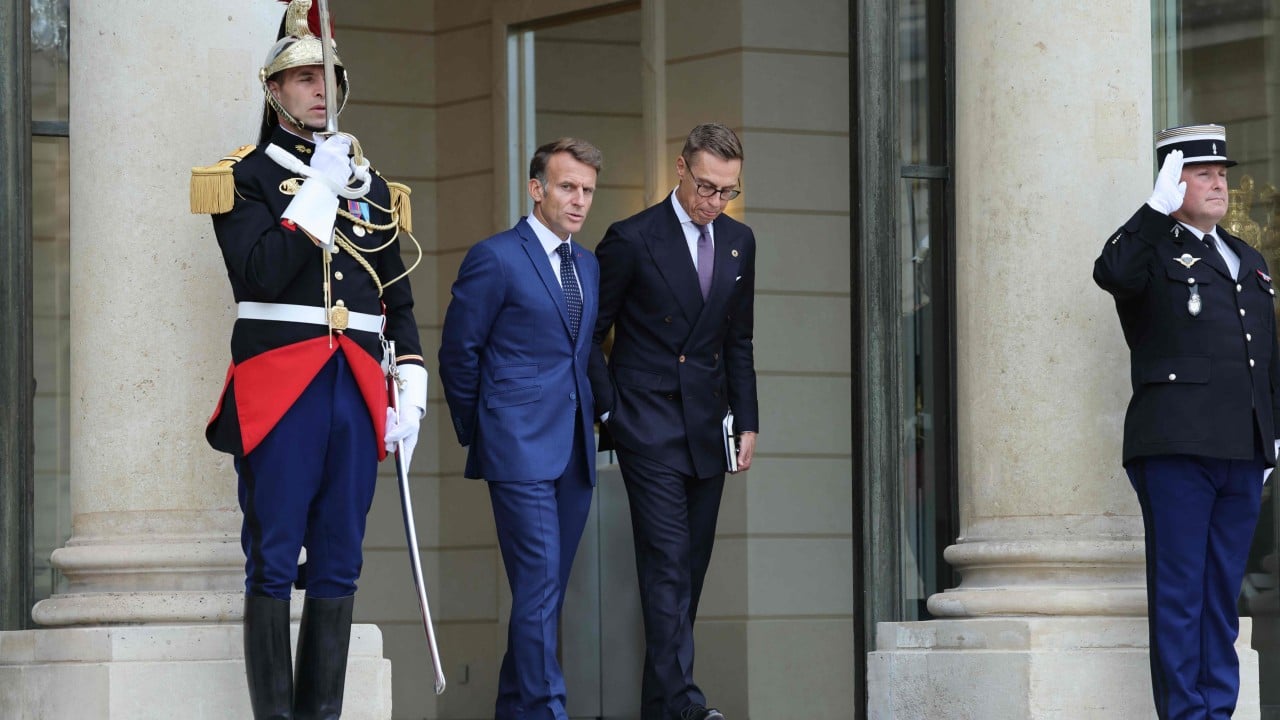
Finland became the tenth member of France's forward deterrence initiative on September 14. Membership costs nothing and puts no warheads on member soil in peacetime, so the clearest price on the news sits in a prediction market.
The Investor · Invest desk
What happened
- Finland joined France's forward nuclear deterrence initiative on September 14, 2026, becoming the tenth member of a framework Macron launched on March 2 with eight countries, among them the UK, Germany and Poland.
- The France-Finland joint statement said a nuclear steering group will be set up in the coming months to begin implementing the cooperation.
- Finnish Defence Minister Antti Hakkanen said the initiative operates independently of NATO, does not create collective defense obligations, and does not require participants to contribute money.
- Finland removed its Cold War-era ban on nuclear weapons in June 2026. The repeal made signing legally possible.
Compiled by The InvestorSomething wrong?How this is made
Why it matters
- cost The entry price is zero cash, so the membership count measures political willingness and not defense budgets; Finland's signature leaves every European procurement line where it was.
- constraint With France holding sole authority over release and deployment, the other nine get consultation and exercises. France keeps the warheads.
- precedent Paris set up a bilateral steering group with Helsinki, so the template for an eleventh joiner is a country-by-country structure with France at the centre of each one.
No French weapons will sit on Finnish soil in peacetime, and Paris keeps every decision over an arsenal it puts at 290 to 370 warheads, the only independent nuclear deterrent in the European Union [7][6]. Split that arsenal ten ways and each participant notionally stands behind an unallocated 29 to 37 warheads [21]. Cryptobriefing described the arrangement as extending the psychological umbrella of the French deterrent without transferring any authority or hardware [12].
The published estimate itself spans 80 warheads, about 28 per cent of its lower bound [22]. What the ten get instead of hardware is dialogue and joint military exercises [5]. "Finland has decided to join forward deterrence," the two countries said in a joint statement on Monday, according to the South China Morning Post [16].
A prediction market did put a number on the week. The 2.5-point rise puts the pre-announcement December level at 18 per cent, a relative increase of about 14 per cent [18][19]. The October 2026 contract held at 8.5 per cent, twelve points below December [14][20]. Cryptobriefing, whose summary says markets suggest the move may increase the perceived likelihood of a NATO-Russia clash, labels the two contracts by month alone and leaves the resolution terms of both unstated [26][27].
Finnish military intelligence reports no immediate military threat, according to the same publisher [15].
Helsinki moved quickly once the legal obstacle went: the ban fell in June 2026 and the signature came about three months later [24]. The framework grew from eight members to ten in the roughly six and a half months from March 2, one joiner about every three months [23]. Finland applied to NATO in 2022 and joined in April 2023 [10]. Because the initiative sits outside the alliance, it can proceed without consensus from all 32 NATO members or American participation [11].
If money follows, it follows the exercises. A temporary deployment of French strategic air forces needs runways, fuel, weapons handling and secure communications on the Finnish side, and the joint statement puts that deployment in the category of the possible [5]. The steering group produces a calendar and the entry price stays zero. Or the exercises pull Finnish infrastructure spending, booked in Helsinki's national budget. Or Russia moves near the 1,340 km border and Finnish spending rises for reasons that have nothing to do with Paris [9]. In my view the first is the base case into 2027, and what would change it is a cost-sharing annex out of the steering group, or a French rotational presence that stops being temporary.
What to watch
- Russia's response and military activity near the Finnish border, which cryptobriefing names as the next input to market perceptions.
- Whether an eleventh country signs, and whether it gets a bilateral structure with France of its own.
- Whether Finland's next defense budget carries a line for hosting French strategic air forces.